ACE Conference 2026

ZeaChem Completes Cellulosic Biorefinery

Joanna Schroeder

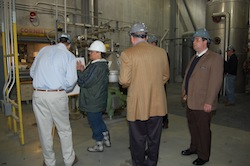
ZeaChem Inc. has announced the completion of its 250,000 gallons per year (GPY) cellulosic ethanol biorefinery in Boardman, Oregon. According the the company, the project was completed on budget and is expected to begin production of cellulosic ethanol by the end of 2012. Earlier this year, the company’s core process was commissioned and the fermentation of sugar feedstocks has been replicated in 40,000 gallon tanks exceeding the company’s targets.

The next step in ZeaChem’s phased development and start-up approach is to begin operations of the integrated facility for cellulosic ethanol production. With the support of a $25 million investment from the U.S. Department of Energy’s Integrated Biorefinery program, ZeaChem has added process components to the core facility enabling the utilization of locally-sourced biomass, including wood and wheat straw, to be fermented and converted into intermediate chemicals and ethanol.

“With construction completed, ZeaChem looks forward to starting integrated operations and the production of cellulosic ethanol this year,” said Jim Imbler, president and chief executive officer of ZeaChem. “We are executing a phased start-up approach to limit risk, stabilize and optimize operations, and ensure safety. ZeaChem is focused on successfully demonstrating integrated operations and commercializing its highly efficient, economical and sustainable biorefining process.”

ZeaChem also announced it has closed its Series C financing totaling $25 million in new equity to advance its business strategy and commercial deployment. Imbler said of the financial support, “We are pleased to expand our investor support to new partners in Asia and Australia, which demonstrates ZeaChem’s global potential for biofuels and bio-based chemicals. ITOCHU and Macquarie have established track records in co-developing energy projects worldwide and the ZeaChem platform is uniquely qualified for this due to our feedstock flexibility and diverse product portfolios. These new international partners provide us with a foundation to expand the company’s operations globally.”

advanced biofuels, Cellulosic, Ethanol, Renewable Energy

Bunge Becomes Cobalt Investor

Joanna Schroeder

The Advanced Biofuels Markets conference is underway in San Francisco and many advanced biofuels companies have been making announcements. One of these companies is Cobalt Technologies who has announced that Bunge Global Innovation has joined its Cobalt’s Series E Preferred Stock round an a strategic investor.

The investment comes on the heels of Cobalt’s agreement with Bunge and specialty chemicals company Rhodia Poliamida e Especialidades Ltda. (“Rhodia”) to operate a pilot plant demonstrating the production of n-butanol utilizing sugarcane bagasse as feedstock at the Laboratório Nacional de Ciência e Tecnologia do Bioetanol facility in Campinas, Brazil. The partners will also work together to develop a co-located, demonstration scale biorefinery at a Bunge sugarcane mill.

“We are pleased to have forged this strategic partnership with Bunge, one of the largest sugar producers in Brazil,” said Bob Mayer, CEO, Cobalt Technologies. “Bunge’s investment and supply of raw material for feedstock will allow us to begin demonstrating the value of our biobutanol technology and help unlock its potential.”

Ben Pearcy, Managing Director, Sugar & Bioenergy and Chief Development Officer of Bunge Limited, added, “Cobalt’s promising technology presents the opportunity to leverage Bunge’s sugarcane processing assets to produce new high-value products that diversify our revenue streams and enhance returns.”

advanced biofuels, Alternative energy, biochemicals, Brazil, Renewable Energy

CESA Releases Clean Energy Development Trends

Joanna Schroeder

This week Clean Energy States Alliance (CESA) has released a comprehensive analysis of state clean energy trends and development. “The Rising Tide of State-Supported Renewable Energy Projects: Results from the CESA Database, 1998-2011,” reports that state clean energy funds have been key major drivers of renewable energy development in the U.S. with nearly 130,000 projects and adding around 4.8 new gigwatts of clean energy to the grid.

“Despite the economic climate, state clean energy funds have continued to demonstrate innovation, support emerging technologies, and advance clean energy markets,” said Mark Sinclair, executive eirector of CESA. “The better news is that, after 13 years of data collection, we feel confident that these industry trends are here to stay.”

The report draws from the CESA National Renewable Energy Database, an ongoing effort to collect and maintain key metrics on investment in renewable energy projects in states that are members of CESA. Data collected includes things such as installed cost and funding leverage across projects and technologies and over time.

Key findings from this year’s CESA Database report include:

  • 2011 saw the most state-funded clean energy projects installed in a single year with 32,734 clean energy projects, an 18 percent increase over 2010 and almost twice the number of projects installed in 2009.
  • Since 1998, states have invested $3.4 billion in public funds in renewable energy projects and successfully leveraged an additional $12.5 billion. Total investment over this period was $15.9 billion.

Projects supported by state clean energy funds are avoiding significant CO2 emissions, and according to the report, each year, these projects generate almost 10.7 million megawatt hours of energy and avoid 8.1 million tons of CO2, the equivalent of taking about 1.4 million cars off the road. The report also features seven clean energy programs that CESA classified as a cut above the rest.

Clean Energy, Electricity, Renewable Energy

Civilian Jet Powered by 100% Biofuel

Joanna Schroeder

On Monday, October 29th, a jet was powered by a 100 percent renewable biofuel produced by Applied Research Associates (ARA) and Chevron Lumas Global (CLG). The two companies partnered with the National Research Council of Canada (NRC), the U.S. Air Force Research Laboratory (AFRL) and Agrisoma Biosciences to to test and analyze the ReadiJet drop-in jet fuel during flight that was produced with ARA’s ISOCONVERSION process.

On-ground tests had been completed prior to the flight and while in the air, additional tests were performed on the fuel powering the Falcon 20 against ASTM and military specifications. As the Falcon 20 flew over Canada’s capitol, a second aircraft was tailing behind collecting additional emissions data that will be analyzed and released in the next few weeks.

Today, I flew the world’s first 100 percent biofuel flight,” said Tim Leslie, one of NRC’s pilots. “We have been working hard with our partners for many months, and it is most rewarding to see it all come together. It is truly inspiring to take this step towards an eco-friendly future.”

Canadian Ministers Honourable Christian Paradis, Minister of Industry, and the Honourable Gary Goodyear, Minister of State (Science and Technology) said of the historic, one-hour flight, “I congratulate the aerospace team at the National Research Council of Canada for achieving today’s milestone in aviation history. This is a perfect example of how government and industry work together to bridge the gap between Canadian innovation and commercialization. The NRC, through our government’s investments, helps support the Canadian economy by enabling its partners to develop and bring effective sustainable energy solutions to market.”

Steven Fabijanski, president and CEO of Agrisoma, who provided the Resonance feedstock for the biofuel, said the flight represented the culmination of a strategic and significant effort within Canada to demonstrate leadership in green aviation. Chuck Red, ARA’s alternative fuels program lead added that the flight unveiled the future of alternative fuels and that is one in which innovation will lead the way to cost competitive, 100 percent alternative fuels in the near future.

advanced biofuels, aviation biofuels, Renewable Energy

Visiting Farmers See Cattle/Ethanol Operation

Cindy Zimmerman

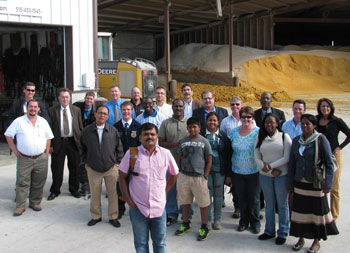
A group of 17 farmers from Canada, Honduras, India, Mexico, New Zealand, Philippines, South Africa, Swaziland, United Kingdom, Uruguay, US, Zambia, and Zimbabwe had the chance to visit a livestock operation with an ethanol plant next door.

The annual Global Farmer Roundtable, organized by Truth About Trade & Technology (TATT), makes Couser Cattle Company a regular stop for the international farmers each year. TATT Chairman Emeritus Dean Kleckner, former president of the American Farm Bureau Federation, is a big supporter of ethanol himself. “I’m a believer in ethanol from corn,” said Kleckner during an interview at World Food Prize, where the roundtable is held each year. “The corn that is used for ethanol, a lot of that comes back to farmers in the form of distillers grains.”

Couser Cattle Company owner Bill Couser was instrumental in starting the farmer-owned Lincolnway Energy ethanol plant in Nevada, Iowa, which is located next to his operation so he can take full advantage of using distillers grains as feed for his livestock.

Distillers Grains, Ethanol, Ethanol News, International, livestock, livestock feed

Novozymes & Beta Renewables Solidify Partnership

Joanna Schroeder

Novozymes and Beta Renewables have joined in a partnership to jointly market and develop cellulosic biofuel solutions. As part of the agreement, Novozymes will acquire a 10 percent share in Beta Renewables, paying approximately $115 million cash for the equity, marketing fees, other intellectual property rights and milestone payments. The partners will offer biofuel companies Novozymes’ Cellic enzymes embedded into Beta Renewables PROSEA engineering and production technology.

“This type of complete offering will significantly de-risk cellulosic biofuel projects financially as well as technologically for our customers,” says Beta Renewables’ Chairman and CEO, Guido Ghisolfi. “It will make cellulosic biofuel projects bankable and accelerate large-scale commercialization of the industry.”

Beta Renewables’ PROESA technology will be used in the cellulosic ethanol plant in Crescentino, Italy where operations are expected to begin by the end of 2012. The plant will begin by producing nearly 13 million gallons of cellulosic ethanol per year from wheat straw along with other biomass-based feedstocks. The plant has a nameplate capacity of 20 million gallons per year. In addition, Beta Renewables has a deal to build a manufacturing plant in Brazil with GraalBio and has also received a $99 million loan guarantee from the USDA to build a biofuels plant in North Carolina.

Peder Holk Nielsen, executive vice president at Novozymes, said, “Large-scale commercialization of cellulosic biofuels is taking off, and this is a fantastic opportunity for Novozymes. Beta Renewables is an extremely committed industry front-runner. They are building advanced biofuel facilities all over the world and, by being their preferred enzyme supplier, Novozymes will gain access to significant new business opportunities. We expect Beta Renewables to be able to contract 15-25 new facilities within the next three to five years. The sales potential for Novozymes from these plants could be up to $175 million.”

advanced biofuels, Alternative energy, Cellulosic, Ethanol, Renewable Energy

SG Biofuels Breakthrough

Joanna Schroeder

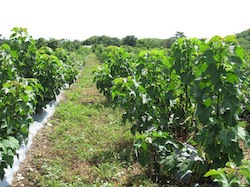
SG Biofuels has expanded it global network of hybrid trial and agronomic research sites with the addition of eight new JMAX Knowledge Centers located in Brazil, Guatemala and India. The company is also expanding it production facility in Guatemala. Current trials are underway in San Diego, California. The company focuses on the the production of Jatropha for use in biofuels, biochemicals and biomaterials.

According to a company statement SG Biofuels’ hybrids are performing better compared to commercial varieties across multiple geographies in terms of plant vigor, health, flowering consistency, stress tolerance and yield. The success validates the ability to produce crude Jatropha oil for less than $99 per barrel in a range of growing conditions.

“The performance of our hybrids in multiple geographies not only validates the strength of our genetics, but our ability to deploy profitable energy crop projects around the world,” said Kirk Haney, president and chief executive officer. “Through our network of JMax Knowledge Centers, we are developing the highest performing hybrids of Jatropha while establishing best agronomic and production practices for deploying those hybrids at commercial scale.”

According to the company, JMax Knowledge Centers are professionally managed trials using experimental design and statistical analysis to evaluate hundreds of hybrids in a range of environmental and agronomic conditions. The centers serve as outdoor classrooms where SGB agronomists and technical teams conduct training and field tours with customers and growers, develop localized agronomic studies and recommendations and develop high performing Jatropha hybrids for commercial deployment. SGB’s hybrids have been developed following five years of research, drawing from a diverse germplasm library including more than 12,000 unique genotypes.

advanced biofuels, Agribusiness, Alternative energy, biochemicals, biomaterials, feedstocks, Renewable Energy

Iowa Biodiesel Production Remains Strong

Joanna Schroeder

Biodiesel production in Iowa remained strong during the 3rd quarter according to the Iowa Renewable Fuels Association (IRFA). Figures released by the Iowa Department of Revenue show that 10 Iowa biodiesel plants claimed tax credits on more than 44.2 million gallons of biodiesel produced from July 2012 through September 2012. Several of the biodiesel plants have reached the tax credit program cap and as a result, the total production numbers were higher than what was submitted for credits.

In 2011, the Iowa Legislature enacted a short-term, modest biodiesel production tax credit to help Iowa’s biodiesel community compete against states that provide large biodiesel incentives. The Iowa program went into effect on January 1, 2012.

As the 4th quarter is in full swing, the federal biodiesel mandate has almost been met causing a slow-down in the industry. Through the end of September, biodiesel sales in the U.S. totaled 843 million gallons, just 157 million gallons shy of the federal mandate for 2012 that set total use at around 1.1 billion gallons. This number was increased for the 2013 mandate to 1.28 billion gallons per year.

“While 4th quarter demand appears to be down somewhat, Iowa produced more than 150 million gallons of biodiesel during the first three quarters of 2012 and is on target to break the biodiesel production record of 169 million gallons set in 2011,” said IRFA Executive Director Monte Shaw. “That is great news for Iowa jobs and farm income. It is also good news for Iowa livestock producers because biodiesel production increases the value of their animals while reducing their feed costs.”

advanced biofuels, Alternative energy, Biodiesel, Iowa RFA

Economist Bruce Johnson To Address NEB Meeting

Joanna Schroeder

Professor of Agricultural Economics at the University of Nebraska/Lincoln, Dr. Bruce Johnson, will be addressing the attendees of the Nebraska Ethanol Board (NEB) meeting tomorrow, October 30, 2012 at 10:00 am CDT at the University of Nebraska East Campus Union in Lincoln. He will be discussing the recently released “2010 Economic Impact of the Nebraska Agricultural Production Complex.” The report focuses on the state’s industries involved in growing, processing and transporting agricultural products, which account for nearly one quarter of Nebraska’s total economy. In addition, Dr. Johnson will address the role of the state’s ethanol industry and prospects for future agricultural growth.

According to statements from NEB, the production and use of ethanol strengthens the state’s economy while lowering fuel costs. Ethanol blended fuels are projected to save Nebraska consumers more than $70 million during 2012. Francisco Blanch, a commodities expert for Merrill Lynch, said that biofuels, like ethanol, lower gas prices by at least 15 percent on a nationwide basis.

“Those energy savings are retained in the domestic economy,” said Steve Hanson, Nebraska Ethanol Board chairman. “The high price of oil and gas is driving up the cost of nearly all consumer products but the ethanol industry is helping to keep the Nebraska economy strong amidst nationwide inflation.”

Phil Lampert, former director of the National Ethanol Vehicle Coalition, will also speak at the Nebraska Ethanol Board meeting. Lampert is nationally recognized for his work to expand the use of E85 and other higher percentage ethanol blends. Lampert will provide an overview of ethanol flex fuel infrastructure development.

Agribusiness, Alternative energy, biofuels, blends, Ethanol

Internationalists Share Views On US Competitiveness

Jamie Johansen

During the recent 2012 Export Exchange a few key leaders in the international market took the stage in a panel to share their perception on United States competitiveness in grain production.

Adel Yusupov, Southeast Asia Regional Director for US Grains Council, served as the moderator for the panel.

Panelists consisted of:
Willis Wu-Yeh Cheng, Chairman, Charoen Pokphand (Taiwan)
Mousa Wakila, General Manager, National Poultry Al Ahlieh (Jordan)
Jamie Rueda, General Manager, Escala (Colombia)
Dennis Inman, Vice President & Commercial Lead, Cargill, Inc.

The panelists were asked to share their candid thoughts on how the United States ranks in grain production and what attributes are most important to them when buying grain. Prices were at the top of all their lists, but they also want reliable market research and stressed that logistics were always a concern. Other items on the list included: consistency, a strong relationship and predictability.

Listen to the International Panel’s presentation here: International Panel at Export Exchange

You can find photos from this years Export Exchange here: 2012 Export Exchange

Agribusiness, Audio, Export Exchange, Exports, International, Production, USGC