ACE Conference 2026

Senate Votes to End Ethanol Blenders Tax Credit

Cindy Zimmerman

The same amendment to end the ethanol blenders tax credit (VEETC) that failed in the Senate on Tuesday passed today on a vote of 73 to 27. The only difference between the two amendments is that Sen. Dianne Feinstein (D-CA) took the lead on it instead of Republican Tom Coburn of Oklahoma who broke procedure to bring it to the floor last week.

The Renewable Fuels Association calls the vote “disappointing, ultimately inconsequential” since the underlying economic development bill to which this amendment is attached is “unlikely to make it to the president’s desk.” American Coalition for Ethanol (ACE) Executive Vice President Brian Jennings added that the votes are “symbolic and will not become law.” Both organizations note that just last month, the Senate voted to protect tax subsidies for the oil industry.

The Senate is now voting on an amendment by Sen. John McCain that would eliminate federal funding for blender pump infrastructure.

ACE, Ethanol, Ethanol News, Government, RFA

Modular Ethanol Production System Wins FiRe Award

Joanna Schroeder

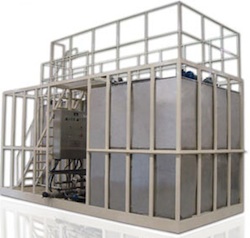
The Future in Review (FiRe) technology conference was held last week and during the event, 11 companies were honored for their “world-changing” technologies. Scientists from around the world submitted more than 1,000 technologies for review and one of the winners was waste-to-energy company Easy Energy Systems (EES). The company’s technology is the Modular Ethanol Production System (MEPS) that turns any organic waste into ethanol. Materials that can be used include waste paper and milk whey. The units are pre-built, small and self-contained and can be shipped anywhere in the world where they are assembled into an ethanol plant.

“To be included as one of the featured companies at this event was a true honor for EES, and we are grateful to have had this opportunity,” said EES chairman and founder, Mark Gaalswyk. “This is an incredible event that does a wonderful job of bringing together the brightest and most innovative people in this industry. We expect to have a big year ahead for getting the MEPS to market, and it couldn’t have started off better than winning this recognition.”

MEPS is different than other large-scale ethanol plants in that it allows farmers, food producers and municipalities the ability to create ethanol from small batches of waste material that would usually be discarded. The patent-pending technology converts soda pop, wood, waste crop residue such as corn corns, food scraps, and more into ethanol.

Future in Review is an annual conference of global leaders, scientists and entrepreneurs aimed at working together to solve world problems.

advanced biofuels, biofuels, Ethanol

Amyris Expands Into Asia, Forms Novvi S.A.

Joanna Schroeder

Amyris is on the move the week announcing today that the company is expanding into Asia via a collaboration with Wilmer International Limited. The partnership will focus on the development and worldwide commercialization of a family of surfactants derived from Amyris Biofene for use in a multitude of products including personal care and consumer packaged goods. Biofene will be designed as a replacement for nonylphenol ethoxylate surfactants (NPEs), a $1 billion per year market. The chemical is becoming highly restricted due to global health and environmental concerns.

“This collaboration represents an important step in the additional geographic diversification of our renewable products business,” said Amyris CEO John Melo. “Wilmar is the leading agribusiness group in Asia. Its integrated business model, rapid growth mode and Asian presence and distribution footprint combined with our breakthrough technology will provide a powerful platform for capturing a portion of the large global surfactants market.”

In other Amyris partnership news, their partnership with Cosan S.A. is moving forward with the creation of a joint venture called Novvi S.A. This Brazilian-based company will develop, commercialize and produce renewable base oils, also using Amyris Biofene geared for the lubricants market. The execution of the Joint Venture Implementation this week is the last step before Novvi S.A. begins operations.

“The formation of Novvi provides another important channel for commercialization of Biofene, and we are pleased to have Cosan as our partner in this,” said Paulo Diniz, chief executive officer of Amyris Brasil. “We expect Novvi to introduce its first products starting next year.”

Nelson Gomes, head of Cosan Lubricants added, “We have completed the market studies and production capabilities assessment and are now ready to operate our joint venture with Amyris. The combination of Amyris’s Biofene infrastructure and technology platform with our feedstock capabilities and supply and distribution infrastructure creates the foundation for Novvi to become the leader in high-performance renewable synthetic base oils.”

biochemicals, Brazil

More Senate Ethanol Votes Today

Cindy Zimmerman

An effort to end the ethanol blenders tax credit continues today in the Senate.

Just two days after an amendment by Sen. Tom Coburn (R-OK) was defeated, the Senate is expected to vote on the same amendment, the effort this time spearheaded by Senator Dianne Feinstein (D-CA). A second amendment by Sen. John McCain (R-AZ) to prohibit federal investment in ethanol blender pumps is also scheduled for a vote. Both amendments would need 60 votes to pass.

Ethanol supporters remain fairly confident one or both of the amendments will fail, and that underlying bill is unlikely to ever become law in any case. The Renewable Fuels Association says the vote will have “all the meaning of a preseason football game.” According to Growth Energy, if the amendments were to pass and be implemented, it would threaten jobs, drive up gas prices, delay development of advanced biofuels, and make the country more reliant on foreign oil. In addition, they believe the Coburn/Feinstein amendment is unconstitutional “because all revenue measures must originate in the House of Representatives.”

The industry continues to support the Ethanol Reform and Deficit Reduction Act introduced last week by Senators John Thune (R-SD) and Amy Klobuchar (D-MN). That bill that would generate $2.5 billion by ending the blenders’ credit or VEETC on July 1, 2011, and allocate $1 billion to deficit reduction and invest $1.5 billion in a blender pump tax credit, cellulosic biofuel tax incentives, a variable VEETC safety-net, and extension of the Small Ethanol Producer Tax Credit.

“The ethanol industry has been proactive in our efforts to reform, unlike the oil and gas industry,” said National Corn Growers Association president Bart Schott. “NCGA supports alternative reform options that will provide a safety net to the industry while reducing the overall cost to the federal government.”

“The ethanol industry has been responsible. We’ve stepped up,” said RFA president Bob Dinneen. “I would challenge any other energy industry to do the same because the nation’s fiscal situation is such that we all need to be at the table.”

The Senate votes are expected to happen around 2:00 p.m. Eastern time.

Ethanol, Ethanol News, Growth Energy, RFA

BYO Ethanol Helps Retailers With Blender Pump Applications

Cindy Zimmerman

BYOThere is funding available for gas retailers to install ethanol blender pumps, the trick is navigating the application process to get it.

That’s where Blend Your Own (BYO) Ethanol can help. The joint effort by the American Coalition for Ethanol (ACE) and the Renewable Fuels Association (RFA) is playing a key role in helping expedite the USDA REAP (Rural Energy for American Program) application process to install more ethanol blender pumps across the country.

RFA Director of Market Development, Robert White says BYO Ethanol has worked hand in hand with the USDA on the application process for 61 new blender pumps to be installed. “BYO has helped guide a number of retailers through the lengthy application process. We worked with states from Hawaii to Pennsylvania and helped walked retailers through the business advantages of blender pumps and the application process. We feel our efforts in helping answer questions and concerns from retailers will go a long way towards helping the USDA achieve the blender pump goals in participating states,” White said.

ACE Vice President of Market Development, Ron Lamberty, says retailers were pleased with the assistance they received from the BYO team. “We helped them navigate the application process, which is a process not familiar to most petroleum retailers. We basically had six weeks to help them walk them through things like establishing budgets and define narratives, locate fuel supply and composing a technical report. By helping with this, the BYO campaign is helping the country reach its renewable fuel goals and break oil’s stranglehold on the market,” Lamberty said.

The USDA announced the REAP fund program for blender pumps this spring. The program’s goal is get 10,000 blender pumps installed across the country in the next five years. The program is a part of the REAP program, which is an effort designed to help spur rural development.

Retailers can find out more about the program at BYOEthanol.com.

ACE, Ethanol, Ethanol News, RFA

Book Review – The H Factor

Joanna Schroeder

Reading books about the renewable energy industry shouldn’t be all about education. That’s why this week I took a “mini” vacation and read the novel “The H Factor,” by L.E. Indianer. This fast pace story closely follows the triumph of two college students attending Georgia Tech University who using hydrogen, create the energy silver bullet. But basking in their invention doesn’t last long – the creators’ lives are threatened by global interests who don’t want hydrogen to succeed.

The students created a patented, cylindrical contraption that cost effectively and efficiently converts water to hydrogen with no emissions. Rather than paying the $1 million plus for a real hydrogen car (the hydrogen fuel cell cars are less), the students’ discovery can be put on any car or truck for less than $10k. For all things oil, this game changer must be quashed at all costs.

Hydrogen is one of the most common and combustible elements known to man and many believe that someday technology will be able to manipulate it in a means that is could save the world. Great premise for a senior thesis deducted the two main characters, students Marc and Gerri who had this discussion to kick off their project.

“Anything that requires oil-based fuel today needs to be replaced by some other energy source, or a combination of sources. There’s no question about it, and H could be the starting point for us,” said Marc.

“Can you imagine not being dependent on foreign oil…oil that produces the billions of dollars that militant Islam is trying to use to destroy our country?” asked Gerri.

Sound familiar? This is the battle cry of the renewable energy industry.

Well needless to say, evil oil wants the world to be dependent on its products and the lengths the oil companies and foreign regime make for some high drama that hits very close to home. While this was a fun, fictional read, lets hope that Indianer is not a clairvoyant, at least in the sense that a silver bullet would be welcome, but not the war that comes with it.

book reviews, Hydrogen, Oil

Friends of the Earth Launches ‘No Sense’ Campaign

Joanna Schroeder

Our ethanol FOE, Friends of the Earth, is back in action with a new TV campaign, “No Sense,” designed to encourage policymakers in DC to dump ethanol subsidies. The campaign was launched just in time for the first Republican presidential debate set to take place in New Hampshire next Monday at St. Anselm College. The campaign is a joint effort between Friends of the Earth and Taxpayers for Common Sense, another organization that has been vocal for months regarding the end of subsidies.

“Corn ethanol is not living up to its promise,” said Erich Pica, president of Friends of the Earth. “Ethanol production requires tons of petrochemicals and diverts land that could be better used for growing traditional food. This country’s ethanol tax credits have increased food prices around the world and made climate pollution even worse.”

Friends of the Earth note that presidential hopefuls Tim Pawlenty and Rick Santorum have already come out of the gates with plans to phase out subsidies. In fact, Pawlenty was bold enough to announce this during his first official campaign stop in Des Moines, Iowa. On the flip side, Mitt Romney and Newt Gingrich favor keeping them in place while Ron Paul and Herman Cain want them ended immediately. The ethanol industry has also agreed that the subsides, such as VEETC should be phased out, but to eliminate them immediately would cause undo harm to the ethanol industry.

Ryan Alexander, president of Taxpayers for Common Sense added, “Ethanol subsidies are a ridiculous waste of taxpayer dollars and do little more than line the pockets of big oil companies. Republican candidates have to decide whether they put America’s taxpayers before their personal political gain.”

If early actions are any indication, then ethanol subsidies should be a hot topic in upcoming election (you can agree or disagree in this week’s poll).

So for all of you DF readers who don’t favor ethanol, here is your chance to voice your opinion – Friends of the Earth has a site for you to send letters to your local newspapers expressing your opinions.

biofuels, Environment, Ethanol, Video

Ecotech Institute Holds Open House for Solar Day

Joanna Schroeder

It’s global renewable energy week. Today is Global Wind Day and Saturday is world SolarDay, at least for those in North America. To celebrate, the Ecotech Institute, the first and only college whose sole focus in preparing Americans to work in green jobs, is hosting an open house on June 18. Since the school installed a solar energy system in January 2011, the system has generated more than 10,000 kilowatt hours of electricity.

One field of study at the EcoTech Institute is its Solar Energy Technology Program designed to educate students about all things solar energy technology. The program has updated facilities, modern labs and small class sizes – all things the school considers ideal for learning. Since opening, more than 300 students have attended the Aurora, Colorado, based school.

The solar curriculum prepares students for various jobs after graduation including construction, installation and repair of solar energy systems as well as working with architect or engineers as they design and install solar projects. For more information about the open house or to learn more about Ecotech Institute programs, click here.

Education, Electricity, Energy, Solar, Wind

Biofuels Benchmarking Annual Report Released

Joanna Schroeder

Christianson & Associates, a CPA and consulting firm for the ethanol, biodiesel and renewable energy industry, today released its 2nd Annual Biofuels Benchmarking Report. The report found several key findings: profitably increased for the industry on average 8 cents; equity to asset ratio increased more than 10 percent; and working capital improvements enabled plants to decrease long-term debt by an average of 20 cents per gallon. The report also found that despite higher corn prices in 2010, margin volatility has decreased.

In an interview with John Christianson, Partner, Christianson & Associates, he said that the past two years have been recovery years for the ethanol industry and plant management has focused on strengthening their balance sheets to prepare for future volatility. Christianson also noted that despite higher commodity prices, margin volatility has improved.

“There have been a lot of unique things happening in the industry and one of them is that we’ve seen a general rise in commodity prices,” said Christianson. “But even though there has been a sharp rise in commodity prices, so has the fuels. Oil price has risen which has brought up ethanol prices as well. So even though commodity prices have risen, we’ve actually had an improved margin ratio and so the margin volatility has been less.”

Other factors that have helped to improve margins include co-products such as distillers grains, corn oil and carbon dioxide.

Listen to my full interview with John Christianson here: Biofuels Benchmarking Report Highlights

This in-depth report analyzes the operational and financial performance of more than 60 ethanol plants in five major “benchmark” areas: overall ethanol industry analysis, regional ethanol plant analysis, production capacity analysis, plant production efficiency analysis, and balance sheet analysis. This year’s financial outlook is much improved and one reason is due to plants improving their risk management while they continue to improve their production efficiencies and energy costs. These two areas will be a focus on Christianson & Associates upcoming 7th Annual Biofuels Financial Conference next week.

As a veteran of the industry I asked John considering the results of the biofuels benchmarking study, what word of advice does he have for the industry to manage risk. “Looking at the operations of an ethanol plant today, one is you have to operate your business within the parameters that you can fundamentally handle the risk, recommended Christianson.

The report is available for free to all benchmarking participants and for a nominal fee for others. You can purchase the report here.


Audio, biofuels, Ethanol News, Ethanol Report, Research

USDA Announces Miscanthus Biomass Projects

Cindy Zimmerman

Giant miscanthus will soon be grown for biomass energy in Missouri and three other states.

Agriculture Secretary Tom Vilsack and Senator Roy Blunt (R-MO) today announced the establishment of two Biomass Crop Assistance Program (BCAP) project areas in Missouri that will produce the dedicated energy crop miscanthus to be used for heat, power, liquid biofuels, and bio-based products.

“We are hopeful that as a result of this announcement we can assist the creation of up to 8250 acres in those two project areas of land that can be used to grow miscanthus,” said Vilsack. Yields for biomass from giant miscanthus are expected to range between 10 and 12 tons of dry matter per acre and can be as high as 15 tons per acre.

biodiesel roy blunt“This energy crop is a crop that will grow on land that is not necessarily the best farmland for anything else,” added Senator Blunt.

Despite the fact that future funding for BCAP is in danger, the $20 million for these projects has already been approved by Congress, and Blunt says this kind of spending benefits the economy. “If you’ve got a program like this where you can take a relatively small amount of money and create a private sector job that helps us solve our energy problem, I’m going to continue to be supportive of those kinds of policies.”

In addition to Missouri, project areas will also be established in Ohio, Arkansas and Pennsylvania. USDA estimates that these project areas and conversion facilities would earn about $50 million per year and create nearly 4,000 jobs by 2014.

Listen to or download the Vilsack-Blunt press conference here: Miscanthus BCAP Projects

More details on the project areas can be found here.

Audio, biomass, feedstocks, USDA