

According to new research from Lux Research, investments in the alternative fuels sector have reached a four-year low of $930 million for alternative fuel start-ups in 2010. However, 2010 was also a record-breaking year for investments to companies with flexible technologies that can use a variety of feedstocks to produce a variety of products at $698 million. Lux says that if this trend continues, then start-ups with less flexible technologies will be forced out of the industry.
“Hedging Bets with Flexibility in Alternative Fuels,” has shown that since 2004 more than $6.4 billion in investments have been made in the alternative energy industry but in recent years, investors are giving more to less. The winners follow one simple principle: flexibility in feedstock or end product. Lux Research analyzed 333 investments in 170 unique start‐ups since 2004, breaking down investments by technology, fuel, geography, and investment stage.
 “The recent successful IPOs of Amyris, Solazyme, and Gevo all reflect the larger industry trend of investing in more flexible end‐product technologies,” said Andrew Soare, a Lux Analyst and lead author of the report. “A handful of fuels‐focused start‐ups continue to draw investors, including waste‐to‐fuels companies Enerkem and LanzaTech, and cellulosic ethanol companies Qteros and Mascoma. But flexibility is part of their DNA as well, in that they derive fuels from multiple feedstocks.”
Several key conclusions include:
• Synthetic biology’s inherent flexibility is a wise investment, but not the only one. Synthetic biology has attracted the most funding since 2004: $1.84 billion or 28.4% of the total. But investors shouldn’t ignore other flexible technologies.
• Investments will favor fewer companies in later stage funding. Most alternative fuel technologies today are past the point of initial seed funding, and are seeking capital to scale up manufacturing. Those closest to scale will continue to raise large Series C and Series D rounds, while less advanced companies will struggle to land moderate earlier rounds, resulting in more failed start‐ups over the next few years.
• Expect new corporate investors to enter the space. Expect forward‐looking corporations to bring additional industries into the fray, such as pulp and paper, food and beverage, and non‐obvious downstream brand owners such as UPS.


 The red, white and blue God Bless America
 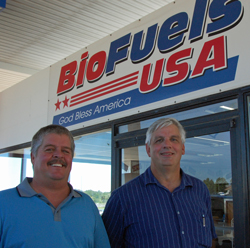 Imo is part of the Missouri-based family pizza chain Imo’s Pizza, which recycles most of its waste vegetable oil into biodiesel at the High Hill Biofuels, LLC plant in High Hill, Mo.

 “Abengoa has been developing this technology for 10 years, and the project itself has been in the development stages for over 5 years,” said Manuel Sánchez, CEO of Abengoa. “In preparation for construction of the Hugoton project, the company has developed and perfected its proprietary technologies and produced cellulosic ethanol for thousands of hours from laboratory scale, to a biomass pilot plant facility in York, Nebraska, and ultimately from a demonstration scale facility in Salamanca, Spain. As a result, we are very pleased to finally achieve this financing milestone, and we thank the Department of Energy’s Loan Programs Office for their offer of a conditional commitment, that if realized will allow us to construct one of the first commercial scale biomass conversion plants in the world.”
 As part of their ongoing ecological restoration work, The Earth Partners will work with farmers and conservation property landowners to grow and sustainably harvest biomass from land with invasive vegetation or land where restorative plant species are grown. POET will then evaluate the best use of the biomass to generate heat, power or for liquid fuel production.
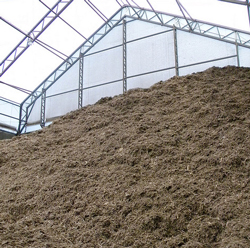 The initial project will deliver Conservation Biomass to POET Biorefining – Chancellor, a 100 million-gallon-per-year grain ethanol plant in Chancellor, S.D. that burns wood waste and landfill gas in a solid fuel boiler to generate all of its process steam. Burning biomass at the plant to generate power will allow the partnership to test the commercial viability of the Conservation Biomass business model at scale. POET and The Earth Partners will continue to research the potential for utilizing Conservation Biomass sources like prairie grasses for cellulosic ethanol production.