Several races have been taking place in Bonneville Salt Flats in Utah and last week Hajek Motorsports broke two land-speed records for biodiesel and diesel trucks. The team competed with a Ford F250 Super Duty truck and set the first record on August 16 using biodiesel made from soybeans. The team, owned by Brent Hajek, also broke the diesel speed record and both were achieved using the new 6.7 Power Stroke V8.
Using regular diesel, the team reached the top speed of 171.123 mph and 182 mph on a B20 biodiesel blend. The regular diesel record was achieved on athe first attempt and solidified in the second run. Then the team drained the diesel and switched to biodiesel. The biodiesel land speed record was broken at 130.64 mph.
 Hajek is a soybean farmer from Ames, Oklahoma and owns the Hajek Motorsports Museum in Ames where the record-breaking pickup will be on display.
“There are a lot of soybean farmers in this area trying to promote soy products and keep some of the diesel money in Oklahoma, where they are grown,” said Hajek in an interview with Enid News and Eagle.
Hajek is a biofuels enthusiast – two years ago he set a land speed record with Mustang using E85 and reaching 254 mph. His next goal is to reach speeds of more than 200 mph using biodiesel.


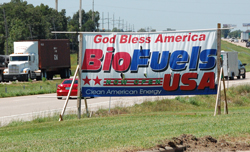 The red, white and blue God Bless America
 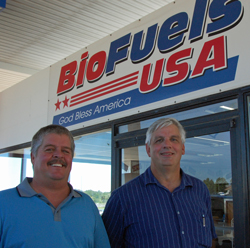 Imo is part of the Missouri-based family pizza chain Imo’s Pizza, which recycles most of its waste vegetable oil into biodiesel at the High Hill Biofuels, LLC plant in High Hill, Mo.

 “Abengoa has been developing this technology for 10 years, and the project itself has been in the development stages for over 5 years,” said Manuel Sánchez, CEO of Abengoa. “In preparation for construction of the Hugoton project, the company has developed and perfected its proprietary technologies and produced cellulosic ethanol for thousands of hours from laboratory scale, to a biomass pilot plant facility in York, Nebraska, and ultimately from a demonstration scale facility in Salamanca, Spain. As a result, we are very pleased to finally achieve this financing milestone, and we thank the Department of Energy’s Loan Programs Office for their offer of a conditional commitment, that if realized will allow us to construct one of the first commercial scale biomass conversion plants in the world.”
 As part of their ongoing ecological restoration work, The Earth Partners will work with farmers and conservation property landowners to grow and sustainably harvest biomass from land with invasive vegetation or land where restorative plant species are grown. POET will then evaluate the best use of the biomass to generate heat, power or for liquid fuel production.
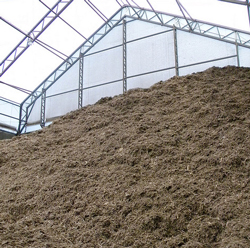 The initial project will deliver Conservation Biomass to POET Biorefining – Chancellor, a 100 million-gallon-per-year grain ethanol plant in Chancellor, S.D. that burns wood waste and landfill gas in a solid fuel boiler to generate all of its process steam. Burning biomass at the plant to generate power will allow the partnership to test the commercial viability of the Conservation Biomass business model at scale. POET and The Earth Partners will continue to research the potential for utilizing Conservation Biomass sources like prairie grasses for cellulosic ethanol production.