
 POET-DSM Advanced Biofuels has hired Michael Nealon as the new Corporate Controller. Nealon will be responsible for planning, organizing, directing, and controlling the consolidated accounting and financial reporting function for POET-DSM Advanced Biofuels, LLC.
- Omnitek Engineering Corporation has been selected by the Puget Sound Clean Air Agency for a pilot project to demonstrate its diesel-to-natural gas engine conversion technology for drayage trucks serving the Port of Seattle, Washington, in support of the Port’s Clean Truck Program.
- Principal Solar has acquired the 3 megwatt Powerhouse One solar power farm that consists of four 750 kW ground-mounted PV systems located in Fayetteville, TN. PH1 is one of the largest operating PV systems in Tennessee.
- IHI E&C International Corporation has been selected as the contractor for the Sundrop Fuels inaugural natural gas to gasoline plant project in Alexandria, Louisiana. The plant features Sundrop’s proprietary gasification technology for making renewable “green gasoline” from woody biomass.
- Soitec has completed construction of the 1.5 MW Newberry Solar 1 project in San Bernardino County, California. It is the largest concentrator photovoltaic (CPV) power plant in California, featuring Soitec’s technology with modules manufactured in San Diego.

Vivergo Fuels Opens Bioethanol Plant
 Vivergo Fuels Ltd has opened the United Kingdom’s (UK) largest bioethanol plant based on Praj technology and design. The greenfield biorefinery is operating on wheat produced in the UK and according to Praj, the feedstock is highly energy efficient due to the integration of the distillation, dehydration and evaporation processes that reduce energy consumption. The plant adheres to European Union (EU) sustainability criteria for greenhouse gas (GHG) reductions.
Vivergo Fuels is a joint venture between AB Sugar, BP, and DuPont. The plant is capable of producing around 1/3 of the UK’s current bioethanol demand for petrol and will be UK’s largest single source supplier of animal feed. Vivergo Fuels has already gained International Sustainability and Carbon Certification (ISCC), certifying that bioethanol plant and their business fully comply with the requirements of the EU Renewable Energy Directive.
Dave Richards, Managing Director of Vivergo Fuels, said, “We’re very pleased that our plant has officially opened and look forward to a successful future as one the Europe’s largest bioethanol businesses. We’d like to thank Praj for their support throughout the delivery of this project.”
Praj provided the license for the technology, basic engineering as well as certain equipment for the core process block which includes liquefaction, fermentation, distillation, multi effect evaporation and molecular sieve dehydration. The plant is designed to use 1.1 million tonnes of feed-grade wheat to produce 420 million litres of bioethanol and 500,000 tonnes of protein rich animal feed per year.
The CE marked ready-to-install equipment were designed, manufactured, assembled and tested at Praj’s manufacturing facility in SEZ, Kandla. This enabled quick and easy installation on-site. The large size equipment with diameter of 4.6 m and height of 37.75 m were shipped in one-piece.
“It’s been a great experience and a matter of pride for Praj to be associated with the ‘Largest Bioethanol Project’ in the UK for Vivergo Fuels,” said Pramod Chaudhari, executive chairman, Praj Industries Limited. “With Praj’s experience of nearly three decades, we have designed an energy efficient plant with minimum energy consumption leading to 30-40 percent saving in water and steam. This is the 2nd bioethanol plant in U.K. based on Praj technology.”
Abengoa Inaugurates First Waste-to-Biofuels Plant
Abengoa has inaugurated its demonstration plant that uses Waste-to-Biofuels (W2B) technology. The plant has a capacity to treat 25,000 tons of municipal solid waste (MSW) from which it will obtain up to 1.5 million liters of bioethanol for use as fuel.
The demonstration plant located in Babilafuente (Salamanca, Spain) and uses W2B technology developed by Abengoa to produce second-generation biofuels from MSW using a fermentation and enzymatic  hydrolysis treatment. During the transformation process, the organic matter is treated in various ways to produce organic fiber that is rich in cellulose and hemicellulose, which is subsequently converted into bioethanol.
Abengoa says the the production of bioethanol from municipal solid waste is a major technological breakthrough in the waste management model, since it increases the recovery rate, minimizes the carbon footprint and generates major benefits for society. The company says the fuel produced from its plant will reduce greenhouse gas emissions per kilometer travelled by 70 percent. In addition, Abengoa’s technology maximizes the recovery of the organic fraction of the MSW and prevents more than 80 percent of the waste ending up in landfill.
During the opening, Manuel Sánchez Ortega, CEO of Abengoa said, “This plant once again highlights Abengoa’s commitment to technological research and innovation, which has enabled it to maintain a competitive advantage in its sectors, leading projects with huge technological potential and programs that involve world-leading research centers and strategic partners.”
The bioethanol produced at the W2B plant has multiple uses such as an additive for gasoline, increasing its octane rating; as fuel for cars; for use in the chemicals and pharmaceutical industry (in solvents or cosmetics, for example), and even as an intermediate product in producing jet fuel.
Biobased Products Made in Europe
 The European Commission is having a busy week with much of it focused on efforts to mitigate climate change. One such move is the proposal of a €3.8 billion Public Private Partnership (PPP) on Biobased Industries, an initiative that would accelerate the commercialization of biobased products in Europe. The European Commission will invest €1 billion and industry €2.8 billion, from 2014 to 2020, to boost market uptake of new biobased products that are “made in Europe”.
The goal of the partnership is to promote the use of various sources of sustainable biomass and waste to produce everyday products such as food, feed, chemicals and fuels. The use of local biomass and waste will generate growth and jobs in rural areas across European regions, while reducing the European Union’s (EU) reliance on fossil fuels, thereby offering sustainable alternatives to oil-based products and enhancing energy and food security.
Novozymes is part of this initiative alongside 47 leading European companies in the  biotech, chemical, energy, agro-food and pulp and paper sectors.
“The Biobased Industries PPP is essential for Europe to remain competitive in the global race for the development of a biobased economy,” said Novozymes CEO Peder Holk Nielsen. “It is an opportunity for reindustrialization and for reversing the investment trend currently going to other regions of the world because of more attractive policy frameworks.”
The PPP will capitalize on Europe’s innovation and technological leadership to bring biobased solutions from research labs to the market. Various sectors will be brought together to optimize and create new value chains, such as connecting farmers and foresters directly to consumers.
Obama Launches Power for Africa Initiative
President Obama made his first official trip to Africa last week and while there announced his Power Africa initiative, an effort to bring reliable, safe and affordable energy to the country. One Sunrise, Florida-based company has already been working to provide Africans innovative energy solutions: SKYei – formerly SKY Energy International.
 The company has recently completely a U.S. $5 million solar panel manufacturing facility in Addis Ababa, Ethiopia. At full manufacturing capacity, the assembly plant, a collaboration with a local government-owned company, will ramp up to three shifts turning out panels capable of generating 20 megawatts annually. SKYei is also developing hydropower and is in the early stages of a U.S. $300 million project in Tanzania. The project is expected to provide a significant source of electricity for the region.
Doing business in Africa is challenging, but doable, according to SKYei CEO Roland “Mack” McLean, because all equipment, materials and supplies must also be shipped to the remote regions. “Simply put, Africa is a long way away and it’s just not easy to get there,” he said, noting it can take as long as 51 hours and up to five flights to reach the remote regions where SKYei is working. “That said, the payoff, in terms of ROI [return on investment] for investors, is great and the impact we can have on the lives of the communities where we’re working is even greater.”
 Aaron McLean, SKYei Director of Business Development, is currently on the ground in Tanzania. “Diligence and organization of human resources, both in-country and out, are essential,” he said. “The ability to provide power to regions in dire need far outweighs the challenges we face.”
In addition to a team of engineers and technicians, SKYei also employs a Director of Corporate Giving, Dr. Jerry Huson, to ensure that local residents benefit most from the development, a cornerstone of SKYei’s business philosophy. In addition, the company plans to develop potable water resources for locals living near the Tanzania project.
New Mexico Debates Biodiesel Mandate
 New Mexico officials are debating the fate of that state’s biodiesel mandate … a mandate that has never actually been enforced. Albuquerque Business First reports the state agriculture department is calling together to taskforce to consider the issue.
Joe Gomez, a division director at the New Mexico Department of Agriculture, said the taskforce will meet on Aug. 8 to discuss what to do with the mandate that expires in October but has not been enforced. The state said originally that it wanted all diesel fuels sold here to be a 5 percent blend of biodiesel.
But critics have charged that the state doesn’t have the infrastructure to support it, that it costs to much, and that it’s unavailable in much of the state.
The new task force, Gomez said, brings together suppliers, producers, a variety of players in the petroleum industry, government and even school bus drivers to discuss the mandate.
The taskforce will be looking at availability of the green fuel and pricing triggers.
New John Deere Mower Runs on E85
John Deere has introduced a brand new riding mower that can run on up to 85% percent ethanol blended fuel.
 The mower is a new Flex Fuel model of John Deere’s popular line of ZTrak mowers. The new, industry exclusive, Z925M Flex Fuel gives landscape contractors and customers with large acreage to mow a new alternative fuel option for their fleets.
“As we see E85 blends take off there is going to be a need in the market for this type of machine,” said Steve Wilhelmi, John Deere tactical marketing manager. “In addition, it just helps our alternative fuels platform” which includes electronic fuel-injected engines and biodiesel kits for diesel machines.
While the product is designed for commercial use, it can fit a variety of customer needs. “There are going to be some large property owners that are interested in this machine, and certainly some residential customers that could be interested,” says Wilhelmi.Interview with Steve Wilhelmi, John Deere
The new Flex Fuel model is part of the M Series of ZTrak commercial mowers, designed for customers seeking productivity and efficiency. With a 24.6 hp* electronic fuel injected engine, the Z925M Flex Fuel can run on any blend of ethanol-mixed fuel, up to E85, and it has a top speed of 10 mph. Offered in 54- and 60-inch widths, it comes equipped with a 7-Iron™ deck, for maximum durability.
Enhancing operator comfort, the new model offers the option of an isolation seat or a fully-adjustable, suspension seat. For easy cleanup on the jobsite, an optional, integrated material collection system provides a Dump-From-Seat option for enhanced ease of use. Finally, the Z925M Flex Fuel comes with a class-leading 3-year/1200 hour warranty.
REG Upgrades Biodiesel Plant to Take Fats, WVO
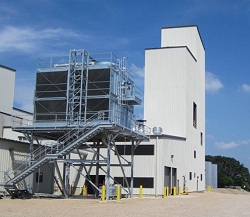 Biodiesel giant Renewable Energy Group (REG) recently finished a $21 million upgrade to one of its biodiesel plants in Minnesota that allows the refinery to also use locally-sourced agricultural byproducts, such as animal fats, used cooking oils, inedible corn oils and yellow grease as well as vegetable oils. This REG news release says the Albert Lea plant is already cranking out a high-quality fuel.
 Within days of start-up, all biodiesel produced met the company’s REG-9000® quality specifications, which exceed the industry’s ASTM B100 standard. The multiple feedstock product has been available since June 19, 2013 and enhances biodiesel product availability options as the State of Minnesota prepares to increase its diesel blending requirement from B5 to B10.
The company will hold a formal ribbon-cutting ceremony later this summer. REG has more than 225 million gallons per year of owned/operated production capacity at its network of refineries nationwide.
Hartzler Cites “Priority and Balance” in Energy Bill
 The U.S. House has passed a $30 billion energy and water bill that has some significant cuts to renewable energy programs. Led by Republicans, the measure passed mostly along party lines. Missouri GOP Rep. Vicky Hartzler, who sits on two key committees tied to the bill, Agriculture and Budget, acknowledged in an interview with Cindy that many of her rural constituents want to see green energy sources preserved, while at the same time, making needed cuts to the budget.
“It keeps a priority and balance in that we do have a focus on energy programs, but it does reduce some of the spending for some of the renewable green programs and some of the research. But they’re not eliminated,” Hartzler said.
She pointed to the electric vehicle loan program as one of the areas that needed to be eliminated. “That’s something that perhaps a private bank would like to do, but I don’t think it’s right to take your tax dollars to promote electric cars.”
Hartzler said the bill promotes an “all-of-the-above” energy approach, so there’s an overall effort to reduce reliance on foreign oil and cut gas prices. She also sees the energy side of the bill as being important to national security … another important issue for her as she sits on the House Armed Services Committee. She added this is part of an overall process that looks to balance the budget within 10 years without raising taxes.
“So you’re going to see all these appropriation bills … spending less overall than last year. That means we have to be smarter and wiser in how we spend our dollars, looking at every government program,” she said, calling it a good process that was long overdue.
The House’s version of the bill could face quite an uphill battle, lower than the Senate’s version by $4 billion and being threatened with a presidential veto.
Listen to Cindy’s interview with Rep. Hartzler here: Rep. Vicky Hartzler (R-MO)
House Passes Cuts to Renewable Energy Measures
 A marathon session in the U.S. House concluded after Congress wrangled over several renewable energy measures and passed a $30 billion energy and water programs bill. Environment & Energy News reports that House Republicans, already making substantial cuts to some clean energy programs in the bill, have blocked Democrats’ attempts to restore those cuts. Despite those efforts, the overall bill has passed mostly along party lines, 227-198, and will be sent to the Senate, where it faces an uphill battle due to the $4 billion gap between it and the Senate’s version, as well as President Obama’s threatened veto of the House numbers.
The bill would combine the Office of Energy Efficiency and Renewable Energy and the Office of Electricity Delivery and Energy Reliability, while cutting their combined budget by more than half. And the Advanced Research Projects Agency-Energy would lose more than 80 percent of its budget under the House bill.
Environment & Energy News
One example of the debate that went on included Rep. Marcy Kaptur, a Democrat from Ohio, rising to oppose an amendment that would have slashed federal money for wind energy projects.
“Overall, America’s wind energy capacity grew by 28 percent, but the recent success of wind energy in our country doesn’t mean we should stop investing in it. In fact, we need to do more,” Kaptur said. She also pointed out that we cannot afford to let China get ahead in clean wind energy, that is good for the environment and has supported 80,000 jobs last year in this nation. “At a time when the global clean energy market is getting more competitive the United States is starting to lag behind. In 2012, China’s level of clean energy financing surpassed our country’s for the first time.”
She went on to say Kentucky GOP Rep. Ed Whitfield’s amendment to eliminate all Department of Energy wind energy programs is the wrong approach and not consistent with an “all-of-the-above” energy approach. Kaptur also pointed out that the U.S. provides more subsidies to fossil fuels than any other country in the world to the tune of more than $500 BILLION.
The amendment was overwhelmingly defeated.
Listen to Kaptur’s opposition to the amendment here: Rep. Marcy Kaptur opposition to DOE wind energy funding cuts
President Obama has already to threaten the House bill, and there are $4 billion in difference with a similar bill in the Senate.
Earlier amendments of the energy bill that failed included:Read More