ACE Conference 2026

Investigation Underway in Kansas Biodiesel Plant Fire

John Davis

biodieselfire1Fire destroyed a Kansas biodiesel plant, but thanks to quick work by firefighters on the scene, no injuries were reported. The Wichita Eagle reports the fire at the Green Energy Products plant in Sedgwick was particularly dangerous as fire crews from five jurisdictions faced possible burning biodiesel, corn oil and methanol.

Some cylinders and other vessels exploded initially, Sedgwick County Fire Chief Gary Curmode said.

“The first hour and a half was pretty dangerous,” he said. There were no injuries.

The cause is unknown, but the state fire marshal is investigating.

Fire sent flames and black smoke high in to the air at one point and collapsed the metal building’s roof.

Bernie Hoffman, vice president of WB Services — the parent company of Green Energy — said, “It started very small and burned very fast. It looks like it’s going to be a complete loss.”

About a dozen people were in the refinery when the fire broke out, but all escaped injury. Green Energy officials say the building is designed to contain a fire such as this.

A link to video of the fire is below:
biodieselfire

Biodiesel

Biodiesel Maker REG Posts Strongest Quarter Ever

John Davis

reg-logoThings are looking up for biodiesel producer Renewable Energy Group. The Iowa-based company says it sold 69.2 million gallons of biodiesel during the second quarter this year, up 28 percent from the same time a year ago. Revenues also increased 42 percent from a year ago, hitting $387.1 million and an adjusted EBITDA of $41.6 million during the second quarter 2013.

“This was our strongest quarter ever for production and gallons sold,” said Daniel J. Oh, President and Chief Executive Officer. “Market demand for biodiesel remained strong due, in part, to demand for biomass-based diesel RINs. REG’s substantial revenue growth this quarter can also be attributed to manufacturing and operational improvement at our biorefineries and gallons produced via a tolling agreement.”

REG officials also announced that the company’s acquisition of a 30-million gallon per year nameplate capacity biodiesel plant from Soy Energy, LLC in Mason City, Iowa, was approved by Soy Energy unit holders, and they intend to repair the refinery and start cranking out soybean-based biodiesel soon.

REG also reported major multifeedstock upgrades at the Albert Lea, Minn., biorefinery and repairs, upgrades and start-up at the company’s New Boston, Texas, biorefinery in the second quarter. Finally, construction on an Illinois River barge load-out at REG’s Seneca, Ill., location is underway.

Biodiesel, REG

ACE Hails “ACE” Project

Joanna Schroeder

ACE hailed “ACE” yesterday in Galva, Iowa during an event where Quad County Corn Processors broke ground on its Adding Cellulosic Ethanol “ACE” project a bolt-on technology innovation that will specialize in converting corn fiber into cellulosic ethanol. On hand for the groundbreaking ceremony was American Coalition for Ethanol (ACE) Executive Vice quadcounty13-jennings-acePresident Brian Jennings who noted that the cellulosic ethanol project is a great example of American ingenuity that was intended when the Renewable Fuel Standard (RFS) was enacted.

Jennings explained that the Environmental Protection Agency (EPA) has proposed to allow corn kernel fiber to qualify as a cellulosic biofuel feedstock under the RFS. Quad County’s technology, called “Adding Cellulosic Ethanol,” will convert corn kernel fiber into two million gallons of cellulosic ethanol, in addition to the 35 million gallons of corn starch ethanol already produced at the plant. It will improve the facility’s yield by 6 percent, result in three times more corn oil, and produce a new high-protein low-fiber feed for livestock.

“Quad County Corn Processors is likely to be the first production facility on the planet to produce corn and cellulosic ethanol from the same feedstock at the same site,” remarked Jennings. “Some of the biggest and most profitable companies in the world have tried to perfect and commercialize the process of converting cellulose to biofuel. But it should come as no surprise that the 35 employees and 353 farmer shareholders of Quad County Corn Processors will be one of the first to do it, because some of the sharpest minds of this industry are the innovative and hard working people in rural America. This shows how the Renewable Fuel Standard (RFS) is a catalyst for innovation.”

Listen to Brian Jennings’s remarks here: ACE Hails ACE Project

Visit the Quad County Corn Processors “ACE” Groundbreaking photo album here.

ACE, advanced biofuels, Audio, Cellulosic, corn, Ethanol

Wind & Solar to Growth Significantly

Joanna Schroeder

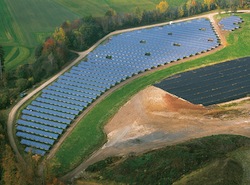
According to a recent report by Worldwatch Institute, global use of solar and wind energy continued to grow significantly in 2012. Solar power consumption increased by 58 percent, to 93 terrawatt-hours (TWh), and the use of wind power increased by 18 percent, Ringgenbach-Solar-Farm-Rigeenbach-Germanyto 521 TWh. Although hydropower remains the world’s leading renewable energy, solar and wind continue to dominate investment in new renewable capacity and are quickly becoming the highest-profile renewable energy sources.

The report found that global solar and wind energy capacities continued to grow even though new investments in these energy sources declined during 2012. Global investment in solar energy in 2012 was $140.4 billion, an 11 percent decline from 2011, and wind investment was down 10 percent, to $80.3 billion. But due to lower costs for both technologies, total installed capacities grew sharply.

Solar photovoltaic (PV) installed capacity grew by 41 percent in 2012, reaching 100 gigawatts (GW). Over the past five years alone, installed PV capacity grew by 900 percent from 10 GW in 2007. The countries with the most installed PV capacity today are Germany (32.4 GW), Italy (16.4 GW), the United States (7.2 GW), and China (7.0 GW).

Europe remains dominant in solar, accounting for 76 percent of global solar power use in 2012. Germany alone accounted for 30 percent of the world’s solar power consumption, and Italy added the third most capacity of any country in 2012 (3.4 GW). Spain added the most concentrating solar thermal power capacity (950 MW) in 2012 as well. However, Italy reached the subsidy cap for its feed-in tariff (FIT) program in June 2013 while Spain recently made a retroactive change in its FIT policies, meaning growth in solar energy will likely slow in these countries in the near future.Read More

Alternative energy, Electricity, Hydro, Solar, Wind

Quad County: The Ethanol Plant That Could

Joanna Schroeder

Remember the story about the little train that could? Well, Quad County Corn Processors should be known as the “smallest plant that did the greatest things“. Yesterday the ethanol plant broke ground on its bolt-on cellulosic ethanol technology coined Adding Cellulosic Ethanol “ACE” project. On hand for the event, along with a standing room only crowd, was Monte Shaw, executive Director of the Iowa Renewable Fuels Association (IRFA).

quadcounty13-shaw-iowarfa“It’s exciting to see one of the smaller ethanol plants in Iowa adding some forward-looking technology,” said Shaw during his remarks. “This new bolt-on process will greatly improve many efficiencies at this plant, ultimately reducing the amount of energy used to produce a gallon of ethanol. With other cellulosic projects underway in the state, Iowa is poised to lead the way in advanced ethanol production.”

The “ACE” project will allow more products to be produced from the same kernel of corn – starched-based ethanol, fiber-based ethanol, distillers grains and corn oil. It was this ability that the plant demonstrates that inspired Shaw to wear his “corn” shirt, complements of the Renewable Fuels Association (RFA) several years ago.

Listen to Monte Shaw’s remarks here: The Ethanol Plant That Could

Visit the Quad County Corn Processors “ACE” Groundbreaking photo album here.

advanced biofuels, Audio, corn, Ethanol, Iowa RFA

Pleasant Valley Biofuels Opens UT Biodiesel Refinery

John Davis

PVBLogo1The folks in Southern Utah enjoy some of the most stunning views I have ever seen. Now, thanks to a new biodiesel plant in the area, the air might just be a little cleaner and clearer to see those sights all the better. The St. George (UT) Spectrum reports Pleasant Valley Biofuels in Washington City, Utah, will be able possibly to crank out up to four million gallons a year of the green fuel from waste grease.

“We are glad to be here,” [co-owner Brandon Thurman] said.

Thurman said the process to convert resources like grease into biofuel includes having it brought in by the truckload, usually about 65,000 gallons at a time. The fuel produced at the plant has to undergo standard quality checks to ensure it is worthy to be sold.

“The process is pretty simple, which is why some people have been known to do it at their house in their garage,” Thurman said.

With its current equipment, the company can produce up to one million gallons per year, with the hope that it will eventually expand to its full capacity of producing about four million gallons per year, Thurman said.

Pleasant Valley Biofuels recently located to Southern Utah from Idaho. Company officials say they get their feedstock locally and sell the biodiesel mostly to trucking companies working in the area. They hope to get some local city fleets to convert to the green fuel.

Biodiesel

Mercer County Community College Goes Solar

Joanna Schroeder

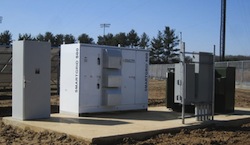
Mercer County Community College (MCCC) located in West Windsor, New Jersey is going solar. The project was developed by MasTec, who selected Solectria Renewables’ SGI 500 inverters for the 8MW solar system located on a 45 parcel of land. The project is estimated to save MCCC nearly $750,000 in energy costs per year.

Solectria SGI 500 invertors“We’ve worked with Solectria Renewables on other projects, including a 4.75MW solar system in Massachusetts, so we already have experience with the reliability and durability of their products as well as the responsiveness of their sales, operations and customer services teams,” said Aron Anderson, Director of Estimating of MasTec. “When this project arose, there was no doubt that we would engage Solectria again. We truly value their products and company as a whole.”

Patricia C. Donohue, MCCC President, said the solar farm moves MCCC forward on many fronts. “The solar farm will save Solectra Renewables Projectcritical dollars and enable us to restore to our budget many cuts in programs and services we have made over the past two years. It also helps us fulfill our sustainability goals. We have committed to the American College & University Presidents’ Climate Commitment (ACUPCC) with the goal of achieving carbon neutrality.”

The annual electricity produced from this project will provide 70 percent of the power needed to run the campus.

“Being chosen by MasTec is an honor and we value our partnership with them,” added Bob Montanaro, Southeast Regional Sales Manager of Solectria Renewables. “We know that our inverters are the best choice for this 8MW project – they have been deployed across all of North America because of their reliability, bankability and highest return on investment (ROI).”

Alternative Vehicles, Electricity, Energy, Renewable Energy, Solar

Sapphire Energy Pays Off USDA Loan

Joanna Schroeder

Sapphire Energy has paid off the entire loan guarantee from the U.S. Department of Agriculture (USDA). In December 2009, the company was awarded $54.5 million through the Biorefinery Assistance Program, administered by the USDA Rural Development-Cooperative Service (and one of the energy programs in jeopardy in the current House version of its farm bill). The funds were to be used to build a fully integrated, algae-to-crude oil commercial demonstration facility in Columbus, New Mexico In partnership with the USDA and the U.S. Department of Energy (DOE).

The result known as the Green Crude Farm is completed and was built on budget. Today, the Farm is operational and producing renewable crude oil on a continuous basis. As a result of the USDA’s loan guarantee and DOE’s support, Sapphire Energy is now producing renewable crude oil, and is in the process of scaling up the technology.

“The investments being made in low-carbon biofuel production are paying off and moving technologies forward, which will produce savings at the pump for consumers, and spur sustainable, new-wealth creation here in the United States, and make our land more productive,” said Doug O’Brien, Acting Under Secretary for Rural Development.

The operational crude oil farm has led to additional investment in the company and commercial partnerships. The company repaid the remaining loan balance in full after Sapphire Green Crude Photo Joanna Schroederreceiving additional equity from private investors, making the loan no longer necessary to complete the next, planned phase of development. According to Sapphire Energy, the early repayment of this loan and on-target development roadmap for Sapphire Energy’s algae crude oil technologies further solidifies the USDA’s role in catalyzing new energy technologies in rural communities, increasing domestic energy production, and creating new jobs. The USDA’s investment has advanced the use of algae as a feedstock to produce crude oil and as a viable new crop to produce homegrown energy while creating valuable rural economies.

“Sapphire Energy is very grateful to the USDA for supporting algae crude oil as an alternative source of energy as well as our vision to make this industry a reality,” said Cynthia ‘CJ’ Warner, CEO and chairman of Sapphire Energy. “With their backing, we did exactly what we set out to do. We grew our company, advanced our algae technologies, and built, on time and on budget, the first, fully operational, commercial demonstration, algae-to-energy facility that delivers a proven process for producing refinery-ready Green Crude oil.”

“We could not have built this first of a kind facility without the support of the USDA. Moving forward, our focus is on commercializing our technology and expanding operations to bring crude oil production to commercial demonstration scale as planned,” she added.


advanced biofuels, algae

RFA Congrats Quad County Corn Processors

Joanna Schroeder

There was great news for the biofuels industry yesterday afternoon as Quad County Corn Processors, a biorefinery based in Galva, Iowa, broke ground on its Adding Cellulosic Ethanol (ACE) project. There were dozens from the local community on hand for the celebration and joining them was Renewable Fuels Association (RFA) President and CEO, Bob Dinneen.

quadcounty13-Dinneen-rfaIn speaking to the crowd gathered Dinneen said, “I applaud Quad County for proving that the first and second generations of ethanol are literally ‘bolted’ together. The future is now and the present is future. Cellulosic production will soon begin side-by-side with conventional ethanol. Delayne Johnson and his team are to be congratulated for their vision, determination, and innovation.”

“The technology behind today’s announcement is a direct result of Quad County Corn Processors Cooperative receiving a $4.25 million investment from USDA and the Department of Energy as part of the Biomass Research and Development Initiative. The R&D process spanned four years,” he continued.

Dinneen added, “Milestones like the one we celebrate today demonstrate the U.S. ethanol industry’s barrier-breaking innovation and unparalleled ability to create jobs, particularly in small cities and rural communities all across the country. Today is also further proof of the success of the Renewable Fuel Standard to spark innovation and investment, to stimulate job creation and economic development, and most important to produce millions of gallons of domestic renewable fuel in the name of energy independence.”

Listen to Bob Dinneen’s remarks here: RFA Bob Dinneen Congrats Quad County Corn Processors

Visit the Quad County Corn Processors “ACE” Groundbreaking photo album here.

advanced biofuels, Audio, Cellulosic, corn, Ethanol, RFA, Video

Malaysia Starts Biodiesel Mandate, Looks for More

John Davis

malaysiaflag1Building on the success of a biodiesel mandate in the central part of the nation, Malaysia is starting a 5 percent biodiesel mandate in the southern part as well. And this article from Biodiesel Magazine says the Southeast Asian country could be looking to expand that requirement even more.

[Malaysian Ministry of Plantation Industries and Commodities] says implementation of the biodiesel program in the south will create an additional annual demand of 37,270 tons, displacing about 11 million more gallons of petroleum diesel per year. Since July 1, 415 fueling stations across south Malaysia have been selling biodiesel blends. Once the B5 program is implemented nationwide in July 2014, the total target palm biodiesel consumption will reach 500,000 tons (150 million gallons) per year.

MPIC said the biodiesel program has contributed to a 44 percent increase in palm biodiesel production, from 173,220 tons (52 million gallons) in 2011 to 249,213 tons (75 million gallons) in 2012, while helping stabilize the price of crude palm oil through increased biodiesel demand.

But the government of Malaysia has already decided to move beyond 5 percent blends, according to MPIC. “To achieve this, the Ministry of Plantation Industries and Commodities through [the] Malaysian Palm Oil Board is formulating action plans, which include undertaking studies on the suitability of B10 (or at a higher blending ratio) as required by the Original Equipment Manufacturers (OEM), especially on engine warranty,” MPIC stated.

The mandate in the central part of Malaysia is already helping drive usage of about 34 million gallons of palm biodiesel annually.

Biodiesel, International