Romney Energy Plan Includes Renewables

Cindy Zimmerman

Presidential candidate Mitt Romney is rolling out his energy plan with the goal to “achieve North American energy independence by 2020 and establish America as an energy superpower in the 21st century.”

With a strong emphasis on opening up and developing more domestic sources for petroleum, the Romney plan does include a small mention of renewable sources and one line that is very welcome to ethanol supporters: Support increased market penetration and competition among energy sources by maintaining the RFS and eliminating regulatory barriers to a diversification of the electrical grid, fuel system, or vehicle fleet.

“We applaud Governor Romney’s commitment to domestic renewable fuels and his recognition of the importance of the RFS,” said Renewable Fuels Association President and CEO Bob Dinneen. “By working to remove barriers to market access for renewable fuels, as Governor Romney suggests, America can help spur an economic recovery while securing our energy future. We look forward to hearing more details of Governor Romney’s energy ideas as the campaign continues.”

Romney’s plan also calls for ensuring “that policies for expanding energy development apply broadly to energy sources,from oil and gas exploration, to coal mining, to the siting of wind, solar, hydroelectric, and other renewable energy facilities.” The candidate will be making a speech about his energy policy in New Mexico today.

Ethanol, Ethanol News, Hydrogen, Oil, politics, RFA, Solar, Wind

Old Yellow House Gets Net Zero with Help of Solar

Joanna Schroeder

It may not be effective to be passive person but it is good to be a passive home. East Bay (California) general contractor Anthony Maramonte of Mara Construction has partnered with Jame P. Wright an architect with Net Zero Homes to restore the historic “The Old Yellow House” to be model of energy efficiency.

A passive home is an ultra efficient building standard that saves up to 85 percent on space heating and cooling. Although this is a concept dating back more than 20 years, it is now being adopted for all building types. Today, more than 20,000 projects have been completed using the “passive” style to achieve energy efficiency.

“We are very excited to be involved in a project with Net Zero Homes and this new avenue of energy efficient homes,” said Anthony Maramonte.

Does it take new expensive gadgets, lots of money and strange designs to make your building passive? No. The building is super insulated and gains heat by internal gains from people, electrical equipment and passive solar gains through windows and doors. It provides fresh air through an energy recovery system that recovers exiting conditioned air. In addition, by adding a properly sized solar array, any building can reach the level of net zero.

What do you gain? A cool, comfortable, energy bill free building.

Electricity, Energy, energy efficiency, Solar

NYSE Euronext Supports Wind Energy

Joanna Schroeder

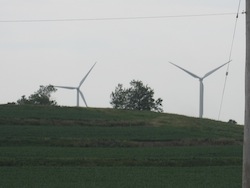
The NYSE Euronext is a supporter of wind energy. The exchange purchased renewable energy certificates (RECs) from Green Mountain Energy Company for its 2011 electricity use. The RECs purposed were generated from 100 percent wind energy sources.

“We are making commitments across the board to operate sustainably, and our decision to choose 100% wind renewable energy certificates for our electricity usage is one more proof point of those efforts” said NYSE Euronext Chief Executive Officer Duncan L. Niederauer. “By working with Green Mountain we were not only able to deliver on our commitment but also partner with a company that was built on a mission to provide what we were after – a cleaner source of power.”

Over the course of 2011, NYSE Euronext used nearly 80 million kilowatt hours (kWh) of wind energy and so it purchased a like amount to cover its energy usage. The exchange’s electricity needs are fueled by trading floor activities and operational needs and by purchasing wind energy credits, avoided over 82 million pounds of carbon dioxide from being emitted. This is equivalent to the CO2 generated in one year by people taking over 33 million taxi rides in New York city.

Scott Hart, president of Commercial Services for Green Mountain added, “Our partnership with NYSE Euronext to choose clean energy sources makes a great fit for the environmental practices in place at both our companies. NYSE Euronext may do a lot of trading, but doesn’t make trade-offs when it comes to bettering the environment.”

Carbon, Electricity, Energy, Wind

Survey Shows Drought Spurs Need for Alt Energy

Joanna Schroeder

According to a recent ORC International survey, 81 percent of Americans are concerned about “increased drought” and other extreme weather conditions. Conducted on behalf of the Civil Society Institute (CSI), the poll results showed that concerns about drought, of which the many states have been severely affected, go hand in hand with worries about water shortages.

Three out of four Americans think that, “with all the current concern about severe drought and the risk of water shortages, America needs to start focusing more on alternative energy sources, such as wind and solar, that require less water.”

Other key findings include worry over shortages of safe drinking water due to drought and “the diversion of water for energy production” is the No. 1 overall concern in 10 drought-stricken states including, Arizona, California, Colorado, Florida, Georgia, Missouri  Nevada, New Mexico, South Carolina, and Texas. Nationwide, 64 percent of respondents are “very concerned” about the prospect of  “possible shortages of safe drinking water” due to drought and diversion for energy production.

On average, 85 percent of Americans believe availability of ample clean water should be a top national priority for the country. In addition, 89 percent of respondents said that want an energy/water “road map” for the country. People believe that, “U.S. energy planning and decision making must be made with full knowledge and understanding about the availability of water regionally and locally, and the impact this water use from specific energy choices has on their economies, including agricultural production.”

“We now understand all too well the harsh realities of the current drought and its relationship to changes in the climate from global warming. America’s ‘all of the above’ non-solution for electricity generation is a dead-end path – one requiring vast amounts of water for coal-fired power plants, nuclear reactors and the fracking extraction of natural gas,” said Pam Solo, president, Civil Society Institute.Read More

Energy, Environment, global warming, Oil, Solar, water, Wind

Propel Fuels Jumps Onto Inc. 500 List

Joanna Schroeder

Propel Fuels has been named to Inc. Magazine’s annual “Inc. 500” list of American’s fastest growing private companies. During the past three years, the company has grown more than 1,000 percent making them the 17th fastest growing company in the energy sector and 352nd overall. Today Propel operates 28 fueling locations along the west coast with plans for at least another 200 more stations to be opened over the next two years.

“This recognition is a tribute to our thousands of loyal customers and fleet partners that choose to fill with clean, renewable, domestically-produced fuels,” said Matt Horton, CEO of Propel. “This honor is just a start for Propel. As we continue to build our network of stations, we’re making progress toward our nation’s energy goals and providing choice at the pump for consumers seeking cleaner mobility options.”

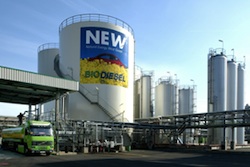
Today, Propel offers fuels such as ethanol, E85 and biodiesel. In the future, the company has positioned itself and its stations to grow as fuel flexibility grows. Looking forward, stations may offer fuels such as natural gas or the ability to charge electric vehicles.

Biodiesel, biofuels, Electric Vehicles, Ethanol, Natural Gas

What is the Impact of US Drought on Global Ethanol Supply?

Joanna Schroeder

With the ongoing drought in the United States, the ethanol industry is learning how to adjust in unforeseen conditions.  While the industry is facing much criticism for being a cause of rising food prices affecting livestock producers and food manufactures alike, the industry needs to be armed with the right information to fight back. One place to get this information is during the upcoming  F.O. Licht’s World Ethanol & Biofuels event that is taking place in Munich, Germany on November 5-8, 2012.

Topics that will be discussed include:

  • What impact will this have on your business?
  • How high are corn prices expected to rise to?
  • What is expected to happen with sugar, wheat and molasses prices?
  • Globally, what impact will the drought have on ethanol trade flows, production and policy?
  • How can the biofuels industry better protect itself from this renewed negative onslaught from the media and the food and feed lobby groups?
There will be more than 700 attendees and 70 speakers from around the world. Some key presentations will be given by:
  • Bob Dinneen , President and CEO, Renewable Fuels Association (RFA), USA
  • Simon Mitchell, Director Strategy and Business Development Sugar and Ethanol, Bunge, UK
  • Michael Schmidt, CEO, BP Europa SE & Head of Country, BP Deutschland
  • Hans van Steen Head of Unit, DG Energy EU Commission
  • Yue Guojun Assistant President COFCO, China
  • Mike Dwyer, Director, Global Policy Analysis Division, U.S. Department of Agriculture (USDA)
  • Claudiu Covrig, Analyst – Ethanol & Feedstock, Sucden Geneva S.A., Switzerland
  • Frank Seyfried, Head of Group Research, Battery and Fuels, Volkswagen AG, Germany
  • Siegfried Knecht, Chairman of the Board, aireg – Aviation Initiative for Renewable Energy in Germany e.V.

For more information about the conference click here.

advanced biofuels, conferences, Ethanol

Chemtex to Build US Advanced Biofuels Plant

Joanna Schroeder

Chemtex have received word from the USDA that they will receive $99 million to help build an advanced biofuels plant in the United States. The plant will be located in Sampson County, North Carolina and once operational, will produce 20 million gallons of biofuels a years from energy crops. Construction is slated to begin this year. Chemtex has selected Novozymes as its enzymes partner.

“Novozymes is excited to partner with Chemtex to convert energy crops into cellulosic ethanol in North Carolina. It is a great step forward for the U.S. biofuels industry and an endorsement of the technologies Chemtex and Novozymes have each developed. I am confident our collaboration will become a benchmark for the advanced biofuels industry in the U.S.,” said Peder Holk Nielsen, Executive Vice President, Novozymes.

The biorefinery is targeted to go online in 2014 and will employ around 65 employees. The feedstocks used will be grown locally on marginal land that is in part currently being used as “spray fields” for the hog farming industry.

Adam Monroe, President of Novozymes North America said, “Advanced biofuels are commercializing because the Renewable Fuel Standard is working. With public and private investment, we are adding to America’s mix of domestic energy, reducing prices for consumers and freeing us from our dependence on oil.”

Chemtex will use Beta Renewables’ PROESA technology to produce cost-competitive ethanol focusing on energy grasses and agricultural waste as the main source of feedstocks. Read More

advanced biofuels, Agribusiness, Cellulosic, feedstocks

Poll Reveals a Close Presidential Race

Melissa Sandfort

Our latest ZimmPoll asked the question, “Which team for President would be best for agriculture?”

Our poll results: Forty-two percent said Romney/Ryan; thirty-five percent said Obama/Biden and twenty-three percent said neither, we need a better choice.

Our new ZimmPoll is now live and asks the question, “Beyond commodity prices, what will this year’s drought have a greater impact on?” From crop insurance to feed and fuel costs, there are a lot of potential items the drought could impact. But what do you think is going to take the biggest hit?

ZimmPoll is sponsored by Rhea+Kaiser, a full-service advertising/public relations agency.

ZimmPoll

Smart Forvision Concept Vehicle Unveiled

Joanna Schroeder

Daimler, in conjunction with BASF and the American Chemistry Council (ACC), have unveiled a new smart forvision concept vehicle that was designed to save energy and enhance sustainability through vehicle efficiency. One of the energy-efficiency features is a light-transmitting roof with solar cells designed to generate energy and power the vehicle’s climate control system. In addition, the car features an infrared-reflective film developed by BASF, affixed in the windscreen and side windows. The technology protects the car interior from heating up in the summer.

“We are proud to have developed a holistic concept for sustainable urban mobility in cooperation with Daimler,” said Dr. Martin Jung, BASF’s automotive research spokesperson. “Together we are presenting a pioneering vehicle which is without parallel.”

Part of the goal of the project is to demonstrate “Chemistry to Energy”. Chemistry has the power to increase energy efficiency while also reducing the amount of energy consumed. According to an ACC study, chemistry in energy-saving products and technologies have the capability to save upwards of 10.9 quadrillion Btus of energy each year. This is staggering: this amount of energy can power up to 56 million average sized homes or enough to power 135 million cars each year. This level of energy savings could also save $85 billion in energy costs per year.

During the next several weeks, ACC is featuring a series that spotlights how chemistry is aiding in energy efficiency technologies. You can learn more at the “From Chemistry to Energy” website.

BASF, Electricity, Energy, energy efficiency, Solar

CGE Offers Wind Energy Grants

Joanna Schroeder

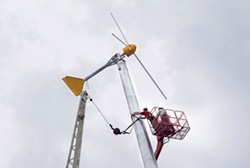
Schools, governments, public facilities and public school sectors have the opportunity to apply for a wind energy grant that will help institutions reduce their energy bills for five years. Sponsored by Clean Green Energy (CGE), the “Wind for a Better Community Grant” will be awarded to up to 25 institutions for five years. The grant recipients’ buildings will be powered by the new WIND e20 wind turbine.

Once the WIND e20 begins producing energy, the institution will begin to see lower utility bills. CGE will pay for the electricity created by the turbine with the hope that the grant winners will reinvest their savings back into their community.

Those representing a school, municipality or public facility can take advantage of this opportunity by submitting an online application.  Submissions are due no later than October 6, 2012.

Electricity, Energy, Wind