

Fuel, Food and the Future, the 19th annual national Ethanol Producers and Consumers (EPAC) sponsored Biofuel Conference was recently held at the Best Western Grantree Inn, in Bozeman, MT. This educational conference featured many educated speakers who addressed attendees on biofuels and feedstock.
 Lt. Governor John Bohlinger addressed the conference, and posed for pictures with three of the flexible fuel vehicles (shown left) that were on display. Pictured are from right, Shirley Ball, Bohlinger and Alex Conger, who drove the Hummer that has been converted to E85 fuel to the EPAC conference.
 “EPAC was formed to educate, and this was another great opportunity for learning and networking,” said Shirley Ball, President of EPAC. “I appreciated the audience remarks in the evaluations, as they scored the conference very high in regards to content and to how smooth the conference ran. I want to thank all the speakers and venders who helped make the EPAC conference a success.”
Ball continued, “We look forward to 2010, and invite everyone to make plans to join us in Missoula next year and help EPAC celebrate the 20th anniversary!”
 There has been speculation as to when some of the funds dedicated to developing renewable energy will come to fruition. It looks like this is finally happening. Farmers, ranchers and rural business owners have until July 31, 2009 to apply for the
  A power company that serves portions of Colorado, Nebraska, New Mexico and Wyoming has inked a 20-year deal to sell power from a 51-megawatt wind energy farm that will be built in East Central Colorado.
 The Kit Carson Windpower Project, named for the county in which it will be sited, will be comprised of 34 1.5-megawatt General Electric turbines to be erected on a 6,000-acre site northwest of Burlington, Colo. – within the service territory of Tri-State member co-op K.C. Electric Association. “We are glad that Tri-State has chosen this site for its new wind farm,” said John Huppert, general manager of K.C. Electric. “It calls attention to the fact that areas served by the region’s electric cooperatives are ideally suited for the development of renewable resource projects.”
 Those guys and gals in those brown delivery trucks seem pretty efficient (especially when they get your order to you on time!). But UPS is making its whole operation even more efficient and greener… and biodiesel is playing an important role.
 The fight between the Europeans and Americans over U.S. biodiesel continues as the European Commission now proposes to impose anti-dumping duties on the yankees’ green fuel.
 ‘Throughout this case, we have constantly put data on the record that clearly shows the European biodiesel industry was not being harmed by U.S. competition. In fact, some EU companies have fared quite well. For those that have not, it is factors unrelated to U.S. competition – bad business models; high feedstock costs; and detrimental EU member state policy- that are to blame. The decision to ignore these fundamental facts has yielded a protectionist result that is detrimental to all parties involved.
 An E85 promotion will lead off the Governor’s Ethanol Challenge event at Fiesta City Speedway in Montevideo, MN on July 10. According to the American Lung Association of Minnesota, the Cenex C-Store at 2402 E. Highway 7 in Montevideo will offer an 85 cent per gallon discount on E85 from 1-5 p.m. Biodiesel will also be discounted by 10 cents per gallon during the promotion.
  The event is supported by the Cenex C-Store, Chippewa County Corn Growers, Minnesota Corn Growers Association, Minnesota Soybean Growers Association, The Minnesota Clean Air Choice Team and the American Lung Association in Minnesota.
 Natural gas is not just for cars and buses. Today,
 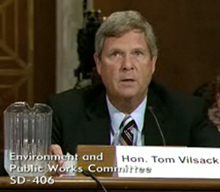 Secretary
  Oxfam International
 Don’t miss out on the 29th annual