 Many times when you think of wind turbines, you think of giant, white blades turning effortlessly in the breezes above a Midwestern farm field. But in order for wind energy to become better accepted, it’s got to be practical in the cities and suburban areas that don’t always have the winds you might see on the prairies and coastal areas.
This story from WKYC-TV in Cleveland says a 22-foot Wind Cube has made its debut in the Lake Erie Business Park in Port Clinton:
It was installed by Green Energy Technologies of Akron, which developed the device for urban areas and those in which traditional large wind turbines were not practical.
“We knew that if we were going inside the city limits or if we were going to be putting them in buildings we had to be able to amplify the wind,” Green Energy President Mark Cironi told WKYC before a ribbon-cutting at the Port Clinton plant on Monday.
“We just couldn’t take the straight ambient wind, convert it to energy, and call it a day,” he explained. Thus the concept off the Wind Cube, in which a shroud surrounding the turbine blades actually doubles the ambient wind speed.
“Doubling the wind speed with this tunnel effect actually increases energy generation by a factor of eight,” said John Fedor of MRD Solutions in Eastlake, which helped design the Wind Cube.
The device can operate at ambient wind speeds of as low as five miles per hour. Consultant David Spera, Ph.D., of DASCON Engineering says that can help keep a constant flow of power into the system.
Government officials at the ribbon-cutting ceremony say it’s because of local credits for this type of project that made it possible. One congressman even declared Northern Ohio to be the “Saudi Arabia of wind” energy.


 Enerkem, a leading waste-to-biofuels and green chemicals technology company, today announced that it will jointly form an advanced energy research center with the City of Edmonton and the Alberta Energy Research Institute (AERI).
 Billionaire oilman and energy activist T. Boone Pickens says propane is an important part of the
  “America has the opportunity today to reduce its dependence on foreign oil while protecting the environment by making the most of domestic energy sources,” said Pickens. “Propane is clean, it’s American-made, and it can be put to work right now.”
 Restaurant owners who want to get rid of their used cooking oil and biodiesel producers who want to turn that waste into the green fuel will get some help from a new Web-based tool.
 The Environmental Protection Agency (EPA) has extended its public comment period on its proposal to change the requirements to the Renewable Fuels Standard.
 Anne Steckel will be Director of Government Affairs for the ethanol organization and Ted Monoson has been named Director of Legislative Affairs. Steckel is a former aide to Senator Richard Durbin (D-IL) and most recently served as the Director of Congressional Relations for the American Farm Bureau Federation. Monoson is a former aide to House Republican Leader John Boehner (R-OH).
 According to Convenience Store News, Mansfield Oil, a downstream oil company that provides fuel services throughout the U.S. to convenience stores and other retailers, will be acquiring C&N Companies, a leading ethanol marketer based in Minneapolis.
 A recently exhausted rebate program in California is being credited with helping the state really increase its use of alternative fuels in vehicles.
 Some farmers might be eligible for federal grants to cover the cost of putting in a wind energy turbine.
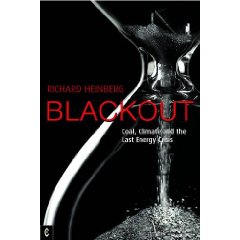 Coal. Under the surface we seem to have a lot of it. It’s fairly inexpensive but this is changing as demand rises to meet increased energy needs especially in countries like China. So we have a lot, its cheap, let’s use it, what’s the problem? Right? Wrong!