

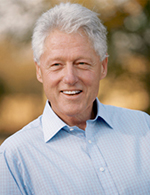
 President Clinton was the keynote speaker during the closing session at the 2009 National Association of Convenience Stores (NACS) conference. His focus during his speech was the American economy, with a few words on the state of health care, education and energy in the mix. But the big question was: is the recession over? His answer: “Yes. No. Maybe.”
If you are an economics professor, the answer is yes. Economists tend to determine the state of the economy using the textbook definition that says that two consecutive quarters of growth signal the end of a recession. If you are a business owner, the answer is no. People are still losing jobs and unemployment is still on the rise and home foreclosures are still increasing. The maybe comes into play, says Clinton, in that we can come out of a depression, but if people get spooked and stop spending, we’ll be right back into the recession. What could cause this? The price of oil going back to $100 per barrel. This may not be that far off as last week saw prices rise to $80 per barrel.
Clinton then went on to say, “We (America) has got to change how we create and exchange energy. Climate change is real.” He also expressed concern that if we lose the ability to feed the people when we need it most, we are going to have water wars and resource wars that make the middle east look tame. Clinton noted that the UK, Germany, Denmark and Sweden are the only four countries to exceed their climate goals. Why? These countries outperformed the U.S. because they created new jobs when they changed how they created and delivered energy.
Although this country has some very difficult challenges ahead of it, Clinton ended his speech with some words of encouragement, “On balance, I am widely optimistic about the future.”
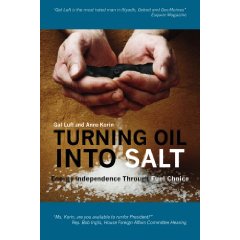 What do salt and oil have in common? In its time, the world was overdependent on the strategic commodity (oil today and salt more than 100 years ago). Our country (nor the world) is “salt dependent” but the world is oil dependent, but not in the way that most people define oil dependence. “That is what energy independence means: that it no longer matters who holds the reserves, that oil becomes much less relevant to global affairs, that it becomes just another commodity,” writes Gal Luft and Anne Korin, in “Turning Oil Into Salt Energy Independence Through Fuel Choice.”
 Representatives from the
  A Minnesota corn grower has been named to the board of directors for
  Pestorious also served three years on the Board of Directors of the American Coalition for Ethanol, representing the Minnesota Corn Growers Association, as well as on the board of the Ethanol Promotion and Information Council, until its merger with Growth Energy last year, and previously served as a member of the Renewable Fuels Association in his role for the last 10 years as Chair of POET-Glenville. He also serves on the boards of POET-Hanlontown (Iowa), a 50-million gallon-a-year plant, and POET-Lake Crystal (Minn.), a 55-million gallon-a-year plant, and serves as Chair of SoyMor, a 30-million gallon biodiesel plant.
  President Barack Obama was touting renewable energy during his visit this week to the Massachusetts Institute of Technology.
 The U.S. Navy has launched a new program to green its fleet… and biodiesel and ethanol are important elements of that campaign.
 The
The  The
The  Brian Jennings, Executive Vice President of the
  The largest gathering of retailers who sell fuel to the public has been going on this week in Las Vegas. The
  It was the first opportunity for the
  A new wind energy farm in Montana will more than double that state’s wind energy output.
 “This wind farm is one of the reasons Montana is on the map as a leader in wind energy development,” Schweitzer said.