

 The Midwest Legislative Conference of The Council of State Governments recently issued a series of policy resolutions supporting increased use of both ethanol and biodiesel, and specifically support ethanol blender pumps. The group also adopted resolutions calling for use of sound scientific methods when calculating carbon emissions.
The National Corn Growers Association (NCGA) is pleased with all the resolutions, particularly noting the call for “implementation of both federal and state legislation to provide incentives to encourage the implementation of ethanol blender pumps.” In a press release, NCGA Ethanol Committee Chairman Jon Holzfaster said, “As legislators actively push for this technology, we feel that we are on the verge of a movement toward the choice and independence that ethanol can provide.”
The conference is a bipartisan association of state legislators representing 11 Midwestern states – Illinois, Indiana, Iowa, Kansas, Michigan, Minnesota, Nebraska, North Dakota, Ohio, South Dakota and Wisconsin.
 California-based
  The Science magazine article that was published last week and co-authored by Tim Searchinger, a lawyer, has added another level of controversy to the indirect land use change (ILUC) debate. The article suggested the land use effects of fuel produced from various forms of biomass were miscalculated, in part, because they cause deforestation around the world as land is cleared to grow so called “energy crops”. EPA has yet to rule on RFS2 (
 The
The 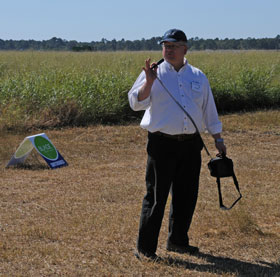 We’ve certainly heard a lot about switchgrass as a biomass option for the production of ethanol. How many of you have seen it growing?
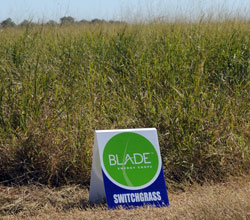 Switchgrass is native to the United States everywhere east of the Rockies. Ceres, has been working on varieties that will yield better in different growing environments though. Cory says that they don’t expect it to displace corn in Iowa but in the southeast with the difficulties in cotton and tobacco it becomes a viable alternative on open acres. He provides some estimates of what the crop can mean financially as the market for a fuel crop like switchgrass develops.
 “We’re excited about this initiative because it’s a win for consumers, farmers, retailers and ethanol producers,” said Gov. John Hoeven, during a Friday news conference announcing the state Department of Commerce Biofuels Blender Pump incentive program.
 Dallas-based Evolution Fuels, Inc. has announced a plan to put the biodiesel it produces in five of its own truck stops.
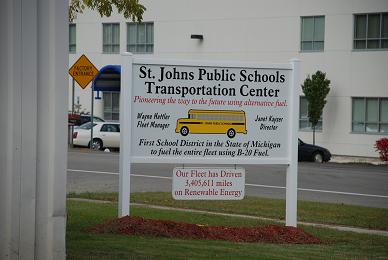 A school bus in Michigan has just hit 300,000 miles, and the bulk of those miles have come while running on biodiesel.
 Coming to Omaha, Nebraska on November 10-12, the Operators’ School is designed to educate ethanol producers on the ins and outs of alcohol production, the latest troubleshooting techniques and technology used in the industry. The three day conference will be held at Scott Conference Center at 6450 Pine Street.
  According to the
  The second award included the Clean Fuels Foundation and the