 Rising feed prices for catfish farms and the rising Chinese market are bad news for those in the South, as more than 320,000 catfish pond acres could be up for grabs. But where one door closes, another opens, as a possible glut of open-air ponds could provide a boon for those looking to raise algae for biodiesel.
To explore the possibilities, the National Algae Association Mid-South Chapter is presenting a workshop on November 18-19, 2009 in Memphis, Tennessee at the Holiday Inn Select Hotel, downtown. This association press release says the key speakers will include Barry Cohen, Director of the National Algae Association; Terri Chiang of Biomass Partners, LLC; and Ron Putt of Auburn University:
The workshop’s focus will be highlighted by a motor coach trip to Saul Fish Farm, a leading aquaculture facility in Des Arc, Arkansas where attendees will go on a walking tour to get a first-hand glimpse of the scope and potential for algal open pond production. Rodney Saul, owner of Saul Fish Farm will describe his procedures for growing algae for aquaculture applications. While at the farm, attendees will hear from additional speakers and interact in open forums on algal growing techniques, harvesting, and extraction methods.
Deadline submission for white papers for open pond algal growth systems, technologies, and support equipment is November 1st for review by the executive committee for potential inclusion in the workshop.
“This event is very timely in light of the strong interest in alternatives to expensive, closed-loop algae production systems, says Tamra Fakhoorian, president of the NAA Mid-South Chapter. She continues, “Given the current availability of hundreds of thousands of existing pond acres in the South and new applicable technologies coming on-line, aquaculture farmers and entrepreneurs alike are taking a good look at the economic feasibility of becoming open pond algae farmers. This workshop will address the opportunities, the challenges and late-breaking solutions for open pond production.”
You can get more information on registration here. Early registration goes on through November 4th.


 A pair of pioneers in biodiesel production in Canada have been recognized for their green efforts.
 “BIOX is globally recognized as a biodiesel pioneer, and today’s cleantech entrepreneur award for Tim and Kevin is an affirmation of their pioneering efforts,” said Gordon Quaiattini, president of the Canadian Renewable Fuels Association. “BIOX is proof of the promise of renewable fuels in Canada. They are reducing harmful greenhouse gas emissions, diversifying the fuel supply and creating new high value jobs.”
 It looks like soybean-based biodiesel is returning to profitability.
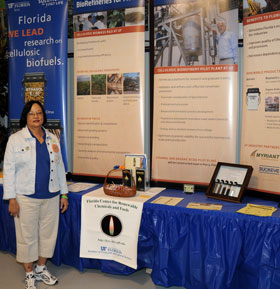 One of the nation’s largest farm shows is the
  Americans want green energy choices, with the largest motivating factor for those choices being saving some greenbacks. And the top choices for that green-saving energy are solar and wind.
 A Nevada company is looking to turn natural gas and biogas, such as methane from garbage dumps, into a clean form of diesel.
 The is agreement with Value Prior to Pulping (VPP), an organization created by the Agenda 2020 Technology Alliance, a special project of the American Forest and Paper Association, and CleanTech Partners, Inc. VPP is funded by the U.S. Department of Energy (DOE), the State of Wisconsin and several large forest products companies.
 A mix of electrically powered and biodiesel and E85 ethanol fueled vehicles lead the list for the Automotive X Prize.
 Disneyland has picked up California’s highest and most prestigious environmental honor… thanks in part to biodiesel.
 Ninety-five percent of those polled agreed that farmers are trusted messengers on issues such as agriculture, corn products and ethanol – and ethanol itself was supported or strongly supported as a good fuel alternative by 65 percent.