 The the U.S. Department of Transportation’s National Highway Traffic Safety Administration and the U.S. Environmental Protection Agency and unveiled new fuel economy rules today that will begin phasing in in 2012. According to EPA, the rules could potentially save the average buyer of a 2016 model year car $3,000 over the life of the vehicle and, nationally, will conserve about 1.8 billion barrels of oil and reduce nearly a billion tons of greenhouse gas emissions over the lives of the vehicles covered.
“This is a significant step towards cleaner air and energy efficiency, and an important example of how our economic and environmental priorities go hand-in-hand,” said EPA Administrator Lisa P. Jackson. “By working together with industry and capitalizing on our capacity for innovation, we’ve developed a clean cars program that is a win for automakers and drivers, a win for innovators and entrepreneurs, and a win for our planet.”
Automobile manufacturers are expected to meet these standards by more widespread adoption of conventional technologies that are already in commercial use, such as more efficient engines, transmissions, tires, aerodynamics, and materials, as well as improvements in air conditioning systems. EPA and NHTSA also expect that some manufacturers may choose to pursue more advanced fuel-saving technologies like hybrid vehicles, clean diesel engines, plug-in hybrid electric vehicles, and electric vehicles. The new regulation allows automakers to get credits for building flexiblie fuel vehicles until 2015, but after that, it must show the alternative fuel is being used to get credits.
“America needs a roadmap to reduced dependence on foreign oil and greenhouse gases, and only the federal government can play this role,” The Alliance of Automobile Manufacturers President and CEO Dave McCurdy said, “The national program announced today makes sense for consumers, for government policymakers and for automakers.”
NHTSA predicts that passenger cars will have to average 33.3 mpg in 2012, a figure that rises to 37.8 mpg in 2016, light trucks, including SUVS, pickups and vans, will be required to average 25.4 mpg in 2012 and 28.8 mpg by 2016.


 “Available evidence suggests that biofuels had a relatively small contribution to the 2008 spike in agricultural commodity prices,” the report noted. “Studies which have found a large biofuel impact across agricultural commodities have often considered too few variables, relied on statistical associations or made unrealistic or inconsistent assumptions.”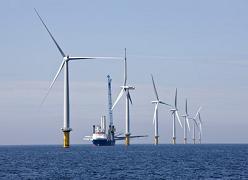




 According to the forecast, farmers intend to plant 88.8 million acres of corn in 2010, three percent more than both last year and 2008. Meanwhile, the
 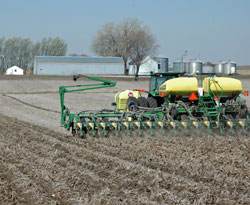 Early reaction to the prospective plantings report is that corn acreage will likely be higher than forecast. While the report estimates corn acreage will increase by 300,000 or more in Illinois, Kansas, Missouri and Ohio, a decrease of 200,000 acres is forecast for Iowa. However, corn growers in Iowa say they definitely expect to see their acres increase when it’s all said and done. Northeast Iowa farmer Tim Burrack, chairman of the