ACE Conference 2026

American Ethanol Car Driver Austin Dillon

Chuck Zimmerman

This morning at Chicagoland Speedway the driver of the American Ethanol car, Austin Dillon, paid a visit to the Family Farmers exhibit in Champions Park outside the track. He made some remarks to the people who had gathered around to see him before signing autographs.

I was able to get a moment with Austin. He says he’s always excited to come to the midwestern tracks in the heart of corn country where a majority of the feedstock that’s making the Sunoco Green E15 he’s racing on is grown. He’s glad that corn growers can come out to see him race and have a good time at the track.

Listen to my interview with Austin here: Interview with Austin Dillon

Listen to Austin’s remarks to the crowd here: Austin Dillon Remarks

I just updated my photos from here at the track and you can find them here: 2012 NASCAR Dollar General 300 Race Photos

American Ethanol, Audio, biofuels, Ethanol, NASCAR

AWEA Wants New 2030 Renewable Energy Target

Joanna Schroeder

Several Ministers met earlier this week at an informal Energy Council meeting in Nicosia. In response, the European Wind Energy Association (EWEA) warned that their credibility was at risk if they debated future renewable energy policy without considering a new 2030 European Union (EU) Renewable Energy target. The discussion was not on the group’s agenda.

“There is no point debating future renewable energy policy without discussing a 2030 target,” warned Stephane Bourgeois, Head of Regulatory Affairs at EWEA in Brussels. “It makes no sense to ignore the one policy that has worked most successfully up to now. Ministers should recognise the benefits of such a target.”

The European Commission has released information about its Renewable Energy Strategy. The accompanying impact assessment was believed to support a 2030 Renewable energy target. This, the strategy outlined, would create more economic activity, reduce fossil fuel dependence, and create more innovation and competition across the European technology sector.

Bourgeois added, “an EU renewables policy cannot be based only on emission reductions and decarbonisation, as some ministers might wish. Only by enabling investment in renewables can the EU cut the cost of fuel imports and be sure to create European jobs.”

Energy, International, Wind

NASCAR Race Weekend in Chicago

Chuck Zimmerman

At the NASCAR Fuel for Business Council® meeting in Chicago, New Holland became the Official Agricultural Equipment of NASCAR®. Here’s New Holland on display outside of Chicagoland Speedway for this weekend’s NASCAR races. I’ll be covering the Nationwide Series Dollar General 300. In fact, I’m out at the track working with Illinois Family Farmers and the Illinois Corn Growers. You know these cars will be racing on Sunoco Green E15, a 15-percent ethanol blend fuel made with corn grown in the United States!

New Holland, the latest NASCAR Official Partner, has served the needs of farmers and ranchers across North America for more than 110 years, and its equipment plays a critical role in the production of ethanol.

“We are proud of our newly expanded alliance with NASCAR and the role our equipment plays in helping power the sport,” said Abe Hughes, vice president of New Holland, North America. “We are the agricultural industry’s Clean Energy Leader, and are looking forward to further enhancing our 30-year relationship with a sport that is pushing the bar on clean and efficient fuel that is not only helping to restore America’s energy independence, but also serves to strengthen American farmers and the rural economy. New Holland stands 100% behind this impact.”

While I was out at the track yesterday I ran into Mark Schneidewind, farmer and manager of Will County Farm Bureau. He was helping set up the exhibit area for Illinois Family farmers. Listen to my interview with Mark to get a preview of the action for race fans when they come out to the track: Interview with Mark Schneidewind

I’ll be taking photos through tomorrow’s Dollar General 300 race and you can find them here: 2012 NASCAR Dollar General 300 Race Photos

Agribusiness, Audio, biofuels, NASCAR, New Holland

Biodiesel Requirement in RFS Increases

Joanna Schroeder

The Obama Administration has announced that there will be an increase in the biodiesel volume requirement for next year under the Renewable Fuel Standard (RFS). The Environmental Protection Agency (EPA) decision was released today in a draft proposal that would increase the requirement for biomass-based diesel to 1.28 billion gallons. This represents a modest increase from the industry’s record production last year of nearly 1.1 billion gallons and puts the industry on course for steady, sustainable growth in the coming years.

“This was an incredibly important decision, and the Obama Administration got it right,” said Joe Jobe, CEO of the National Biodiesel Board (NBB), the industry trade association. “It will allow biodiesel plants across the country to invest and expand, creating thousands of jobs. At the same time, it sends a strong signal that the U.S. is standing firm behind its commitment to producing clean, American-made energy to strengthen our energy security and break our dependence on petroleum.”

According to a recent economic study, the 2013 volume increase will support more than 10,000 new jobs. Already, the industry supports more than 39,000 jobs, with plants in nearly every U.S. state with Iowa leading the pack.

Biodiesel is the first and only EPA-designated Advanced Biofuel being produced on a commercial scale across the country. The “advanced biofuel” designation means that the fuel reduces greenhouse gas emissions by more than 50 percent as compared to traditional fuels. The EPA estimates that biodiesel reduces greenhouse gas emissions by 57 percent to 86 percent depending on the feedstock and production technology.

“We applaud President Obama and EPA Administrator Lisa Jackson for supporting an ‘all of the above’ energy approach. We also want to thank Agriculture Secretary Tom Vilsack for his strong advocacy,” added Jobe. “This decision will continue to diversify our fuel supplies so that we’re not so vulnerable to global petroleum markets and this endless cycle of price spikes. The Renewable Fuel Standard is clearly working to do that, and the benefits of doing so are clear: We’ll continue to create good jobs, expand our economy and reduce harmful emissions. It’s just smart energy policy.”

advanced biofuels, Biodiesel, NBB, RFS

Ag Energy Coalition Urges Passage of Farm Bill

Joanna Schroeder

The 2012 Farm Bill has been big news this week as the agricultural industry, along with dozens of other groups, call for Congress to pass the bill before it sunsets on September 30, 2012.  Earlier this week the Farm Bill Now coalition held a rally in Washington, D.C. that included participation of all Iowa legislators.  The Agriculture Energy Coalition (AgEC) participated in the rally calling on Congress to pass the five-year Farm Bill that includes mandatory funding for a strong Energy Title.

To date, the Senate has passed a version of the bill and the House Agriculture Committee has also passed its a version of the Bill. Yet Congress is not taking action. Senate Agriculture Committee Chairwoman Debbie Stabenow (D-Mich.) participated in the Farm Bill Now rally urging Congress to pass the 2012 Farm Bill.

Lloyd Ritter, co-director of the AgEC, said, “Both the House and Senate Agriculture Committees have worked hard this year to move forward with fiscally responsible Farm Bills, and final passage is within reach. Passage of a five-year Farm Bill will provide necessary economic stability and confidence to agricultural producers and rural communities across the country. Inclusion of a strong Energy Title with mandatory funding will increase the economic opportunities in those rural communities.”

Ritter continued, “Farm Bill energy programs have helped the renewable energy industry create thousands of jobs across the country in rural communities where they are very much needed. They have also helped farmers put more than 160,000 acres of underutilized farmland across 12 states back into production. And they have helped hundreds of new American businesses generate 100,000 jobs producing home-grown biobased products. These effective programs are a vital part of the overall Farm Bill.”

Agribusiness, biofuels, Energy, farm bill

Magellan Completes Biodiesel Distribution Facility

Joanna Schroeder

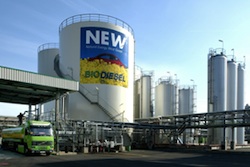
Magellan Pipeline Company has completed a new biodiesel distribution facility in Des Moines, Iowa. The new equipment will allow for unloading, storage and blending of biodiesel at the terminal. The infrastructure upgrade will enhance distribution of biodiesel by making it simple for petroleum distributors to access pre-blended fuel.

“Having biodiesel available at major distribution points is critical to maintaining the state’s leadership position in biodiesel,” said Randy Olson, executive director of the Iowa Biodiesel Board, where the announcement of completion was made during the association’s annual board meeting. “Improved distribution capabilities will enhance consumer access to biodiesel, and help the state’s biodiesel industry stand to capture a larger share of federal renewable fuel requirements nationwide.”

Magellan’s Director of Transportation & Marketing Shawn Barker said, “Magellan is pleased to offer biodiesel storage and blending services to our customers in Des Moines. This state-of-the-art system offers our customers accuracy, quality and a variety of biodiesel blend options.”

Magellan received partial funding for the project from the Iowa Renewable Fuel Infrastructure Board, the Iowa Soybean Association and soybean checkoff program, and the Iowa Economic Development Authority (funded by the U.S. Department of Energy).

advanced biofuels, Biodiesel

New Study on Water-wise Biofuel Crops

Joanna Schroeder

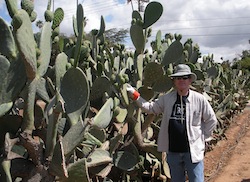
A new study has shown that putting the water-use-efficient and turbo-charged photosynthesis from plants such as agave into woody biomass plants can hedge against high temperatures and low moisture. It can also enable growers to plant dedicated energy crops on marginal land.

A team of researchers including John Cushman, a biochemistry professor at the University of Nevada, Reno; Xiaohan Yang at the Oak Ridge National Laboratory (ORNL); James Hartwell at the University of Liverpool, UK; and Anne Borland at Newcastle University, UK and ORNL are exploring the genetic mechanisms of crassulacean acid metabolism (CAM) and drought tolerance in desert-adapted plants as a way to improve drought resistance for biofuel crops.

The study is part of a five-year, multi-institutional $14.3 million U.D. Department of Energy (DOE) grant, “Engineering CAM Photosynthetic Machinery into Bioenergy Crops for Biofuels Production in Marginal Environments.” The funds are through the DOE’s Office of Biological and Environmental Research, Genomic Science: Biosystems Design to Enable Next-Generation Biofuels.

The team will develop novel technologies to redesign bioenergy crops to grow on economically marginal agricultural lands and produce yields of biomass that can readily be converted to biofuels. The development of water-use efficient, fast-growing trees such as poplar for such sites will also help reduce competition with food crops for usable farmland according to the research team.

“With climate change predictions for a 7 degree Fahrenheit (3.8 degree C) increase in temperature and a decrease in reliable precipitation patterns by 2080 for much of America’s breadbasket, and with a greater need for sources of biofuels for transportation, these biodesign approaches to enhancing biomass production become very important,” Cushman, director of the project, said.

The ultimate goal of the project is to significantly improve an energy crop’s drought resistance by enabling the crop to adapt to hotter, drier climates. Read More

advanced biofuels, biomass, global warming, Research, water

Blender Pump Opens in Cresco, Iowa

Joanna Schroeder

A new blender pump is opening today in Cresco, Iowa. Twenty-nine local investors applied and were approved for a Resource Enhancement and Protection grant (REAP). They group also received Iowa Infrastructure funding to aid with the costs of installation. The FAST STOP flex-fuel station is located at 22268 Highway 9 West, Cresco, Iowa.

During a grand opening event today from 10:00 am to 2:00 pm, the FAST STOP station offered discounts on all ethanol blends, E15, E30 and E85. To my knowledge, this is the first station in Iowa to sell E15 after it became a legal fuel last month.  In addition to ethanol, three blends of biodiesel, B2 and B10 and off road B5 are being sold. The biodiesel is GROWMARK’S Dieselex Gold premium fuel.

Several industry representatives were on hand during the event to help celebrate with FAST STOP. Groups included GROWMARK, AgVantage FS, Iowa Renewable Fuels Association and Iowa Corn Growers Association.

Biodiesel, blends, E85, Ethanol

Iowa Groups Call for Renewal of PTC

Joanna Schroeder

Nearly 65 entities in Iowa have come together from all walks including agriculture, education, labor, business, public health, and the environment, in a call to Iowa’s congressional delegation to extend the wind production tax credit (PTC) for wind. A letter was sent to the legislators highlighting the wide reach of the wind industry from manufacturing jobs to income for farmers to the generation of taxes for rural communities.

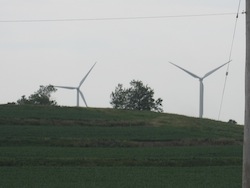
The letter states: “The wind industry in Iowa has diversified our rural economy. Since 1992, 2,978 wind turbines have been installed on 104 utility scale and community scale wind farms. Iowa now has 4,322 MW of electric generation capacity and 450 MW are under construction. This represents nearly $5 billion funneling through Iowa’s economy. Thousands of Iowans depend on the wind industry to support their families through construction, manufacturing, operations and maintenance jobs. In addition, land owner easement payments to farmers exceed $11 million annually and are extremely important in trying economic times.”
Signers of the letter included the Iowa Wind Energy Association, the Iowa Environmental Council and Environmental Law & Policy Center. Other signers included the Iowa Farm Bureau; Iowa State Building and Construction Trades Council and all three public universities and every community college in the state; and the Iowa chapter of Physicians for Social Responsibility.

“We often remind people that wind supports as many as 7,000 jobs in Iowa,” said Harold D. Prior, executive director of the Iowa Wind Energy Association. “This letter shows the breadth of the impact of wind, which ranges from our schools which are educating the renewable energy leaders of tomorrow, to the labor groups who are building wind in Iowa, to our farmers who benefit from the added income of land leases.”

Renewable energy, including wind, is a hot topic in the presidential campaign and in the state campaign ads are running about the importance of the industry in Iowa.

Steve Falck, senior policy analyst with the Environmental Law & Policy Center in Des Moines said, “Iowa was the first state to generate 20 percent of its electricity from wind and we could get so much further. But without renewal of the PTC we the breaks will slam on Iowa wind, all of this economic progress will be reversed, jobs will be lost, and income for farmers will dry up.”


Energy, Legislation, Wind

Indiana Tech Installs Wind Turbine on Campus

Joanna Schroeder

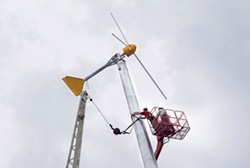
Universities across the country have been integrating renewable energy classes but Indiana Tech has gone one step further than most. They have installed a wind turbine on its Fort Wayne campus to help engineering students learn about alternative energy. The turbine is located next to the Zollner Engineering Center and a gift from the Steel Dynamics Foundation covered the cost of the equipment, installation and software.

The wind turbine tower is 120 feet tall and the blades have a diameter of 26.5 feet. The total height is 134 feet and is expected to generated between 700 and 1,000 kilowatt hours per month. This is approximately the amount of energy one average size household uses each month. The power produced by the wind turbine will flow back to the power grid and will be credited to Indiana Tech’s electric bill.

“This an excellent teaching tool for our students,” said Dr. John Renie, associate professor of mechanical engineering. “We’ll have real-time monitoring equipment so that students and others can see how much energy is being produced.”

Indiana Tech offers a bachelor’s degree in energy engineering, and the wind turbine on campus will allow firsthand study of wind power. The operation of the turbine also will have applications in the mechanical engineering and electrical engineering programs.

Education, Electricity, Energy, Wind