ACE Conference 2026

Could Biofuels Be Produced from A Tobacco Tree?

Joanna Schroeder

Could biofuels be produced from the tobacco tree? With a grant from the European Union, researchers at Royal Holloway, School of Biological Sciences, will test this theory based on initial findings that the Nicotiana Glauca produces compounds that could be used to produce biodiesel or cracked to produce petroleum products.

There are some advantages of the tobacco tree: it is known to grow well in warm and arid climates; it does not require fertile ground; and it can thrive in regions that only 200mm of rainfall a year, with temperatures exceeding 40 degrees Celsius.

“This is a crucial factor,” said Dr Paul Fraser from the School of Biological Sciences. “It means that growing this crop will not be in competition for land space with food crops. Indeed, many farmers have already raised concerns about giving their land over to biofuel crops. Our discovery could potentially solve this issue.”

Initial studies have shown that the plant is able to grow in desert climatic conditions, such as those found in the United Arab Emirates, North Africa and other arid tropical regions of the world.

The European Union has awarded funding to develop this work further through the MultiBioPro project. Together with partners in industry and academia Royal Holloway has received a research grant totalling 5,770,922 euros (approximately £4.4 million). The project will look to provide new insights into biological processes and improve the use of renewable energy resources.

advanced biofuels, Alternative energy, Biodiesel, feedstocks, Renewable Energy, Research

Transforming Marine Algae into a Biofuel Crop

Joanna Schroeder

Are marine algae just as good as fresh water algae in producing biofuels? Yes, according to biologists at University of California San Diego. In a research study published in Algal Research, scientists genetically engineered marine algae to produce five different kinds of industrially important enzymes. The same process, say the researchers, could be used to enhance the yield of petroleum-like compounds from salt water algae.

Researchers say this discovery is important because it expands the kinds of environments in which algae can be conceivably grown for biofuels. For example, algal biofuels could be produced in the ocean, in brackish water of tidelands, or on agricultural land where crops can no longer grow due to the high salt content of the soil.

“What our research shows is that we can achieve in marine species exactly what we’ve already done in fresh water species,” said Stephen Mayfield, a professor of biology at UC San Diego, who headed the research project. “There are about 10 million acres of land across the United States where crops can no longer be grown that could be used to produce algae for biofuels. Marine species of algae tend to tolerate a range of salt environments, but many fresh water species don’t do the reverse. They don’t tolerate any salt in the environment.”

“The algal community has worked on fresh water species of algae for 40 years,” added Mayfield, who also directs the San Diego Center for Algae Biotechnology. “We know how to grow them, manipulate them genetically, express recombinant proteins—all of the things required to make biofuels viable. It was always assumed that we could do the same thing in marine species, but there was always some debate in the community as to whether that could really be done.”

The timing of the research was fortuitous – in October, the National Academy of Sciences committee published a report concluding that the production of algal biofuels might be limited by fresh water. “But now we’ve done it,” said Mayfield. “What this means is that you can use ocean water to grow the algae that will be used to produce biofuels. And once you can use ocean water, you are no longer limited by the constraints associated with fresh water. Ocean water is simply not a limited resource on this planet.”

In addition to expanding this research, the scientists would like to determine whether whole algae, post-oil extraction, could be sued as a feed additive to improve animal feeds.

advanced biofuels, algae, Renewable Energy, Research

Teaching Biofuels in School

Joanna Schroeder

Shane Robinson, associate professor in the Oklahoma State University Department of Agricultural Education, Communications and Leadership wants to teach students math and science through green energy and biofuels. He is partnering with the OSU Biobased Products and Energy Center (BioPEC), who has an objective to provide education about biobased products and energy through secondary education.

“A focus of ours is to produce teachers who can teach science, math and technology in the context of agriculture,” Robinson said. “We really feel like our teachers have a unique opportunity to integrate STEM (Science, Technology, Engineering and Math) competencies at the secondary level through real-life application of their students’ agricultural projects.”

It has been nearly three years in the making and now the National Science Foundation Experimental Program to Stimulate Competitive Research (NSF EPSCoR) has joined the project. Currently students Marshall Baker and Joey Blackburn, are developing curricular materials for high school agriculture teachers focusing on biofuels and renewable energy. Environmental and energy education has become a primary initiative for teachers around the country, but many need help in developing curriculum and getting access to materials. This initiative is designed to meet this need.

“Everywhere you turn you read about green energy and the need for clean energy,” Robinson said. “We stress the importance of being a lifelong learner to our students. We stress to them the importance of being aware of the current issues of the world we live in and being able to talk about those issues in the classroom. Therefore, it’s important for our pre-service and in-service teachers to be knowledgeable about biofuels and other renewable energies.”Read More

Alternative energy, biofuels, Education, Environment, Renewable Energy, Wind

Harms Oil Heated Biodiesel Blending Facility Opens

Joanna Schroeder

One of the challenges with biodiesel are extremely cold temperatures – the fuel can gell up. But one element of this challenge has been overcome with the opening of the Harms Oil Biodiesel Blending Facility in Sioux Falls, South Dakota. This year-round facility, features two underground tanks – one heated and will hold biodiesel in the winter, while the second tank will also hold biodiesel during warmer months. This will enable southwestern Minnesota, southeast South Dakota and northeast Iowa motorists the ability to fill up with biodiesel all year long – even in the winter.

Trailers coming through the facility will already have diesel on board and be bottom loaded with biodiesel to achieve the desired blend level.

Among those who spoke at the opening were Jill Hamilton of the National Biodiesel Foundation, Bob Metz, a South Dakota soybean grower and a director of the state’s soybean research & promotion council, Jim Willers,  a Minnesota soybean grower and a director of the state’s soybean research & promotion council and Jason Harms, vice president of Harms Oil.  Jeremy Freking, executive director of South Dakota Soybean, emceed the event.

“The opening means that fuel retailers and consumers in southwestern Minnesota, northeastern Iowa and eastern South Dakota will have greater access to biodiesel blends year-round,” said Lisa Thurstin, coordinator of the Twin Cities Clean Cities Coalition. “This investment completes an important link in the alternative fuel infrastructure in the upper Midwest, and is another step toward cleaner and more renewable transportation fuels.”

advanced biofuels, Alternative energy, Biodiesel, Renewable Energy

Fulcrum BioEnergy Raises $175M

Joanna Schroeder

Fulcrum BioEnergy has raised $175 million to fund construction of the Sierra BioFuels Plant, its first municipal solid waste (MSW) to low-carbon fuels plant. The monies will also be used to fund the development of other projects. The company had been moving toward an initial public offering (IPO), but with the capital raised, has postponed its IPO plans.

“With our recent success in securing attractive sources of capital, we are proceeding with our planned development program. The current IPO market environment remains challenging, especially for development stage companies like Fulcrum,” said Fulcrum President and Chief Executive Officer E. James Macias. “Because of this we have secured commitments from alternative capital resources to advance our MSW to renewable fuel program and we have withdrawn our registration statement. We intend to pursue an initial public offering in the future when market conditions are more favorable.”

Fulcrum’s engineering and technology teams have made several enhancements to the design of Sierra and to its proprietary MSW to ethanol process. The company expects these improvements will dramatically reduce its cost to produce renewable fuel to less than $0.75 per gallon, down from approximately $1.25 per gallon as previously disclosed. The cost of production at future Fulcrum plants is now expected to be less than $0.50 per gallon, down from $0.70 per gallon as previously estimated.

“These enhancements underscore our confidence in the attractive economics of our business model while further advancing Fulcrum as the industry’s low-cost producer of low-carbon transportation fuels,” added Macias.

advanced biofuels, Renewable Energy, Waste-to-Energy

ICM Completes 1,000 Hour Run

Joanna Schroeder

ICM has completed a 1,000 hour run of its Generation 1.5 Integrated Fiber to Cellulosic Ethanol Technology at its pilot plant in St. Joseph, Missouri. The technology allows existing grain ethanol plants to produce cellulosic ethanol and the company says the successful test proves it can be done with substantial operating and capital expense cost savings over the traditional approach of cellulosic ethanol production.

The completion of the 1,000 hours of continuous production was achieved through the sequential completion of twenty-four 15,000 gallon pilot fermenters and five 585,000 gallon commercial scale reactors. The run also demonstrated that the dried distillers grains (DDGs) co-product of ICM’s integrated fiber cellulosic process have a significant concentration of protein-fat amounts.

The continuous run demonstrated several technological advantages: a 7-10 percent increase in ethanol yield per bushel with an approximate 3.1 gallons per bushel equivalent; greater than 90 percent conversion of C6 sugars and greater than 80 percent conversion of C5 sugars; fermentation yields of greater than 90 percent; co-product market diversification capabilities by delivering substantially higher oil recovery rates and protein concentration; reduced energy usage; ability to co-distill utilizing existing distillation capabilities; and the same quantity of ethanol can be produced with 10 percent less bushels.

“We are grateful for the tremendous efforts that our ICM employees performed to make the 1,000-hour run a remarkable success. We could not have achieved this major milestone without the collaboration of various personnel functions including outstanding efforts made by our research associates, scientists, pilot plant personnel, product development, construction management, engineering, automation, supply chain, accounting and many others,” said ICM Principal Scientist Jeremy Javers, Ph.D.

Corn fiber yields greater than 100 gallons per ton were performed up to the 585,000 gallon fermentation scale with all inputs – enzymes, chemicals, organisms – utilized at an economically-feasible range. Other feedstocks that have been tested include corn stover, corn fiber, wheat fiber, barley fiber, switchgrass, energy sorghum, and bagasse. The successful continuous run now enables ICM to qualify for federal loan guarantees.

advanced biofuels, Alternative energy, Cellulosic, Ethanol

Ethanol Industry: Update GHG Analysis

Joanna Schroeder

The Renewable Fuels Association (RFA) is calling for the Environmental Protection Agency (EPA) to update their lifecycle greenhouse gas (GHG) analyses of corn and sugarcane ethanol for the Renewable Fuel Standard (RFS). The association made the request in a letter sent to the EPA Administrator Lisa Jackson.

RFA President and CEO Bob Dinneen wrote, “There have been literally dozens of new studies and modeling improvements since EPA finalized the RFS2 almost three years ago. Overwhelmingly, these new reports and data show that the corn ethanol process is far less carbon intensive than assumed by EPA. Corn ethanol is offering real and significant GHG savings today. Meanwhile, the carbon intensity of crude oil production continues to worsen, as we drill farther and deeper than ever before and get more of our energy from marginal crude sources like tar sands.”

Also noted in the letter is that recent GHG research has shown than lifecycle GHG emissions associated with Brazilian sugarcane ethanol production are worse than originally estimated by EPA. The letter cites since 2006, harvested sugarcane in Brazil has expanded 55 percent with at least 70 percent of the land formerly pasture land. However, when the lifecycle analysis was originally conducted, little land use change emissions were factored in to the data.

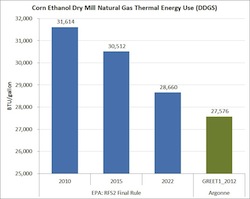
While RFA says the EPA underestimated land use change emissions for sugarcane, they also say the EPA overestimated ethanol plant energy use, corn farming energy use and land use change emissions for other forms of ethanol, primarily ethanol produced from corn.

Recent modeling and data improvements were presented in a peer-reviewed paper by researchers at Purdue University and the Department of Energy. According to the research, corn ethanol, on average, reduces GHG emissions today by at least 24 percent compared to gasoline even with speculative LUC emissions included. GHG reductions for ethanol from dry mill plants are even larger. Dinneen concluded that it is imperative that EPA recognizes this new science and data.

Click here to read the letter in full along with supporting charts and sources.

Alternative energy, biofuels, Ethanol, Indirect Land Use, RFA

Car Clinic Host Baffled by AAA Ethanol Attitude

Cindy Zimmerman

Automotive service expert Bobby Likis nearly blew a gasket when he saw today that the AAA is calling for the sale of 15% ethanol blended fuel (E15) to be suspended “to protect motorists” from damaging their engines.

“To state that ethanol damages engines is a disservice to consumers…specifically to AAA members,” said Likis, who is the host of the syndicated Car Clinic Network and has been in the automotive service industry for over 40 years as technician, rear-engine dragster builder, and owner of an award-winning service shop. “The fact is there’s no proof that ethanol damages engines.”

Likis is a long time AAA member who also provides both of his out-of-state daughters with annual AAA road service cards and he speculates on what members might take away from the organization’s statements about ethanol. “Can you imagine a car owner reaching out to AAA in need of gas with the stipulation they would not accept ethanol-based fuel?” he questioned.

Likis says he is amazed when he hears people claim that ethanol ruins engines. “Technicians know that people ruin engines – neglect of ownership, lack of service, lack of following normal maintenance procedures,” said Likis, noting that car engines are perfectly capable of running on at least 15% ethanol. “Have been since 2001 and even cars prior to that, if the truth be known,” he added.

Listen to an interview with Likis about AAA statements: Car Clinic Host Bobby Likis

Audio, automotive, Ethanol, Ethanol News

AAA Leaves E15 Facts Stranded on the Roadside

Joanna Schroeder

This morning, the AAA released a statement that the EPA should re-evaulate its approval of E15. The call to action was based on a recent survey conducted by AAA. The results found, “a strong likelihood of consumer confusion and the potential for voided warranties and vehicle damage.” The press release went on to state, “An overwhelming 95 percent of consumers surveyed have not heard of E15, a newly approved gasoline blend that contains up to 15 percent ethanol. With little consumer knowledge about E15 and less than five percent of cars on the road approved by automakers to use the fuel, AAA is urging regulators and the industry to stop the sale of E15 until motorists are better protected.”

The ethanol industry came out in response to the survey and subsequent press release and Tom Buis, CEO of Growth Energy said the survey lacked any substantive research or facts, has no scientific basis and is noting more than “hollow criticism lacking any facts to back up the irresponsible claims.”

E15 is the most tested fuel to date and the Department of Energy (DOE), a true expert on the matter has studied the fuel extensively, more than six million miles, coming to the conclusion that, “the resulting Energy Department data showed no statistically significant loss of vehicle performance (emissions, fuel economy, and maintenance issues) attributable to the use of E15 fuel compared to straight gasoline,’” added Buis.

The industry has expressed frustration with the associations attitudes toward ethanol. Prior to the sale of the fuel, a retailer must provide adequate warning information to consumers to ensure only vehicles and light duty trucks manufactured after 2001 use the ethanol blend. It is estimated that nearly 80 percent of the vehicles on the road could use E15.

“If AAA weren’t so deep in the Big Oil politics, they would stop manufacturing concern about the efficacy of ethanol blend use and report enthusiastically about ethanol’s consumer gasoline price savings,” said Bob Dinneen, CEO And President of the Renewable Fuels Association (RFA). “Their misplaced concern today, that E15 should be further tested before being offered for sale reflects a pathetic ignorance of EPA’s unprecedented test program before approving E15 for commercial use. The miles driven on E15 equate to 12 round trips to the moon and back without a single failure, unless you want to count the deer that was killed on the test track! E15 is a safe fuel, as evidenced by the fact auto manufacturers are now providing warranty coverage for it.”

Alternative energy, E15, Ethanol, Growth Energy, Renewable Energy, RFA

DuPont Breaks Ground On Cellulosic Biorefinery

Joanna Schroeder

DuPont has officially broken ground on its $200 million cellulosic biorefinery. When complete in mid-2014, it is expected to be one of the first and largest commercial-scale cellulosic biorefineries in the world. Once fully operational, the facility will produce 30 million gallons of cellulosic ethanol per year from corn stover residues. The company is also adapting its technology for use with other feedstocks such as switchgrass. Using data derived from its pilot facility in Tennessee has allowed DuPont to further minimize process and maximize technology. Once refined, its fully integrated end-to-end production system will be available to license globally.

The cellulosic biorefinery is situated adjacent to Lincolnway Energy in Nevada, Iowa. Joining James C. Collins, president of DuPont Industrial Biosciences, were representatives of the ethanol plant as well as Iowa Governor Terry Branstad.

“During my previous terms as governor, we were excited to bring ethanol production to the state. After many hard years of work by Iowa growers and technology companies like DuPont, Iowa now leads the country in renewable fuel production,” said Governor Branstad. This site in Nevada is the next critical step in our cellulosic ethanol journey. We look forward to bringing these advanced technologies online, creating local jobs and helping to deliver clean, sustainable energy.”

DuPont will contract with more than 500 local farmers to gather, store and deliver over 375,000 dry tons of stover per year into the Nevada facility. In addition to the estimated 60 full-time plant operations jobs, there will be over 150 individuals involved in the collection, stacking, transportation and storage of the stover feedstock seasonally during each harvest. The stover will be collected from an approximate 30 mile radius around the new facility and harvested off of 190,000 acres.Read More

advanced biofuels, Alternative energy, Cellulosic, Ethanol, Renewable Energy, Video