

NEC 2027

Sensenbrenner Introduces Bill to Cap Cellulosic Fuels

Joanna Schroeder

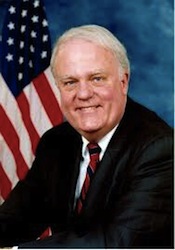
Congressman Jim SensenbrennerAs last week came to a close, U.S. Congressman Jim Sensenbrenner (R-WI) introduced a bill to place what the Renewable Fuels Association (RFA) calls artificial caps on the Environmental Protection Agency’s (EPA) annual cellulosic biofuel projected production numbers. The proposed limits for any given year would be no more than five percent or one million gallons, whichever is greater, of total volume of cellulosic biofuels commercially available for the most recent calendar year.

In response, Bob Dinneen, RFA President and CEO said this is worse than irony. “Now that truly meaningful investment is being made in cellulosic ethanol companies that can be witnessed by the steel in the ground and actual production and introduction of millions of gallons of advanced ethanol into the marketplace, the Congressman wants this nation to turn its back on progress — turn back the clock to days of petroleum domination,” said Dinneen.

“Americans want fuel choice, they want cost savings, and they want American energy independence.  America is noted worldwide for its ingenuity and creativity.  Ethanol, especially the next generation that is now coming to fruition before our eyes, is the epitome of the American spirit.

Rather than encouraging that uniquely American entrepreneurial spirit, Congressman Sensenbrenner would limit the growth in advanced biofuels to no more than five percent per year.  Clearly, far faster growth will occur if the RFS is left to work as designed.  But in any case, I wonder if Congressman Sensenbrenner would agree to a five percent cap on the growth of non-conventional petroleum from fracking in the same spirit he is trying to cap advances in biofuels to five percent.  Why limit the speed of progress toward energy independence from any domestic resource?” concluded Dinneen.


advanced biofuels, Cellulosic, Legislation, RFA

BioEnergy Bytes

Joanna Schroeder

  • BioEnergyBytesDFLouis E. Capuano, Jr. has been elected by his peers on the Geothermal Resources Council Board of Directors to be the next President. He replaces Richard Campbell, who remains on the Board of Directors as Past President.
  • Registration is now open for the Ethanol 2013: Emerging Issues Forum taking place in Omaha, Nebraska on April 18-19, 2013.
  • Don’t miss the European Biomass to Power conference in Krakow, Poland April 10-11, 2013. The final agenda has been released and registration is open.
  • Since you’ll already be in Europe, head over to the European Algae Biomass Conference in Vienna, Austria being held April 24-15, 2013. The final agenda has been released and registration is now open.
  • VIASPACE has harvested a large number of seedlings from its Giant King Grass nursery in California and shipped them to St. Croix, US Virgin Islands where they have been planted in a 25 acre propagation nursery operated by Tibbar Energy. Tibbar plans to propagate the Giant King Grass to create a 1000+ acre plantation to fuel the 7 MW anaerobic digestion power plant that Tibbar is building on St. Croix.
  • The Texas Renewable Energy Industries Association (TREIA) has declared March 4-8, 2013 Texas Energy Independence Week. As part of the week’s events, there will be forums and briefings at the Capitol.
Bioenergy Bytes

Register Now – 9th Ethanol Short Course

Joanna Schroeder

lallemand Biofuels logoYou can never have too much education even if you’ve been working in the ethanol industry for many years – especially since technologies and practices continue to improve. A great tool is the 9th Ethanol Short Course, an ongoing effort to develop, train educate both new and experienced biofuel professionals. The course is sponsored by Lallemand Biofuels & Distilled Spirits and provides participants with in-depth training, conducted by industry experts and incorporates the entire fuel ethanol process. This year’s Ethanol Short Course takes place March 19-21 in Omaha, Nebraska.

Anyone interested in pursuing a practical or more technical understanding of the fuel ethanol production process should attend. Attendees should include plant operators, plant managers, lab technicians, lab managers and maintenance staff.

Topics and discussions will include: grain handling and starch conversion; fermentation technology; water treatment; evaporation and drying; safety; yeasts, enzymes and antimicrobials; chlorine dioxide chemistry; cellulosic ethanol research; DDGs and centrifugation. Click here for the full agenda and click here to register.

Cellulosic, Education, Ethanol

Global Hydropower & Geothermal Growth Slow

Joanna Schroeder

According to a new report from the Worldwatch Institute, although the global consumption and installed capacity of hydropower and geothermal technologies have increased steadily since 2003, both types of energy saw slower growth in 2011. Global installed capacity of hydropower reached 970 gigwatts (GW) but there was only a 1.6 percent increase from the year before. Total geothermal capacity reached 11.2 GW, slowing to below 1 percent for the first time since 20o2, according to the report, authored by Evan Musolino.

“Despite the recent slowdown in growth, the overall market for hydropower and geothermal power is increasing in part because these two sources are not subject to the variability in generation that plagues other renewable energy sources such as wind and solar,” explained Musolino, a research associate with the Worldwatch’s Climate and Energy Program. Hydrogpower Photo Fast Company“The greater reliability of hydro and geothermal can thus be harnessed to provide reliable baseload power.”

Among members of the Organisation for Economic Co-operation and Development (OECD), hydroelectricity accounted for almost 6 percent of primary energy consumption. It played a more important role in other countries—-at a little over 7 percent of usage—-and these non-OECD nations accounted for 60 percent of worldwide hydroelectricity consumption. On a regional basis, South America and Central America are most dependent on hydroelectricity relative to total energy use.

Although some 150 countries produce hydropower, half of the global capacity was concentrated in just five nations at the end of 2011. China remains the leader, with 212 GW installed, followed by Brazil (82.2 GW), the United States (79 GW), Canada (76.4 GW), and Russia (46 GW).

Similar to  hydropower, the report finds geothermal resources are highly location-specific. Read More

conferences, Geothermal, Hydro, Renewable Energy

Innovative Research From Budding Biodiesel Scientists

Joanna Schroeder

During the National Biodiesel Board Conference & Expo, several Next Generation Scientists displayed their biodiesel research through “posters”. These budding scientists are Next Gen Scientists for Biodieselsmart, talented, creative and innovative. Did I mention they are innovative? These college students are conducting research that has never been done before and as it moves forward, should help improve biodiesel production. A bit of a plug- if you find the research interesting and of value to the industry, consider supporting the students’ continued work.

Here are several interviews with the Next Generation Scientists that discuss their research, why they became involved in the program, and advice for students who are still looking for their niche.

James Anderson, Southern Illinois University: James Anderson

Qingshi Tu, University of Cincinnati: Qingshi Tu

Nina De la Rosa, Florida International University: Nina De la Rosa

Namrata Dangol, University of Idaho: Namrata Dangol

Not sure you want to get involved in Next Generation Scientists? Then be sure to listen to Deval’s interview. Click here to learn more about becoming involved in Next Generation Scientists for Biodiesel.

Deval Pandya, University of Texas at Arlington: Deval Pandya

2013 National Biodiesel Conference Photo Album

advanced biofuels, Audio, Biodiesel, National Biodiesel Conference, Renewable Energy, Research

Advanced Biofuel Orgs Set Record Straight

Joanna Schroeder

The American Petroleum Institute (API) is currently engaging in an all-out attack on the Renewable Fuel Standard (RFS) and the advanced biofuel industry is continuing to fight back. Last month, the Court ordered the Environmental Protection Agency (EPA) to reconsider the cellulosic biofuels obligations. In response, API is pressuring the EPA to actually zero out the 2012 obligation, according to a letter sent to EPA Assistant Administrator Gina McCarthy.

feb 2013 gas prices copy Photo Greg BollThis is in odds with what API send in its brief to the Court, that the number should not be zero. “EPA’s projection should not be unrealistically low, but it also may not be unrealistically high.” API also claimed to the Court that its members paid $17 million in compliance costs for the RFS, when public records available at the time showed the true cost to be a fraction of that amount.

In response to the letter, Brooke Coleman, executive director of the Advanced Ethanol Council (AEC) said the cellulosic biofuel industry has facilities under construction or starting up in 20 states. “API’s strategy on the RFS is simple: create as much uncertainty and doubt around the program as possible to scare off investors from advanced biofuels. They have lost 10 percent of their market share to domestically produced renewable fuels to date, and they are not going to let the truth stand in the way of their efforts to short-circuit this incredibly successful program.”

According to a statement from the biofuels industry, API is decrying the new EPA proposal to blend 14 million gallons of cellulosic biofuels in 2013, saying the fuel does not exist. In reality, the industry says, EPA’s targets are based on production capacities of plants that are already built. The advanced biofuel industry is asking the EPA to follow the Court’s direction and remain consistent in its implementation of the program’s rules.

Brent Erickson, executive vice president of the Biotechnology Industry Organization’s Industrial & Environmental Section, added, “API is trying to re-litigate in the press the issues it lost in court. The Court recognized EPA’s authority to administer the rules for the RFS, and EPA should reject this attempt to spin that decision.”

“It is interesting that just as reputable companies such as DuPont, INEOS, POET-DSM, and Abengoa are actually getting steel in the ground and building commercial cellulosic biorefineries, API is turning on the crocodile tears and ramping up gross distortions in a desperate and foolish effort to derail American biotech innovation for new and cleaner transportation fuels. They want to strangle the infant cellulosic biofuel industry in the cradle in order to keep Americans captive consumers of high-priced foreign oil,” concluded Erickson.

advanced biofuels, AEC, BIO, RFS

DOE to HOST 2013 APRA-E Energy Innovation Summit

Joanna Schroeder

ARPA-E-logoThe Advanced Research Projects Agency – Energy (ARPA-E) will host its fourth annual Energy Innovation Summit from February 25 to 27, 2013 at the Gaylord Convention Center in National Harbor, Maryland. The goal of the Summit is to bring together thought leaders from academia, business, and government to discuss cutting-edge energy issues and facilitate relationships that help move technologies into the marketplace.

Confirmed speakers at this year’s Summit include New York City Mayor Michael Bloomberg, entrepreneur T. Boone Pickens, Tesla Motors CEO Elon Musk, and DARPA Director Arati Prabhakar. The Summit also features a Technology Showcase displaying over 250 breakthrough energy technologies from ARPA-E awardees and other innovative organizations.

Other speakers include:

  •  Nick Akins, CEO, American Electric Power President
  • Mitch Daniels, Purdue President and former Governor
  • David F. Gordon, Eurasia Group Head of Research and Director of Global Macro Analysis
  • Ellen Kullman, CEO, DuPont
  • Blythe Masters, Head of Global Commodities and Corporate & Investment Bank Regulatory Affairs, J.P. Morgan

Click here for additional information on the ARPA-E Energy Innovation Summit, including the full Summit agenda.

advanced biofuels, conferences

Industry Engagement Critical for Biodiesel

Joanna Schroeder

This past year was a roller coaster but with some big achievements, said Anne Steckel, vice president of federal affairs for the National Biodiesel Board during her presentation at the 10th Annual Conference in Las Vegas. One big achievement: the nbb-13-steckelincrease of volume of biodiesel gallons as part of the Renewable Fuel Standard (RFS). This, noted Steckel, reflects the ongoing growth of the biodiesel industry.

One of the biggest ongoing challenges is the efforts of the petroleum industry to end the RFS. Steckel said NBB is spending a lot of resources fighting these court cases, but she was proud to say they have been successful in winning the last three court cases. But the fight is not over.

She also addressed how devastating the RIN crisis has been for the industry and said NBB is working hard with the Environmental Protection Agency (EPA) and petroleum industry to find a constructive solution. The industry will be seeing new regulations on this soon and NBB will continue to work with its membership to make sure the industry gets the best regulation possible.

Steckle encouraged the attendees to continue to be engaged as 2013 will be another pivotal year for the industry.

Listen to Anne Steckel’s full remarks here: Industry Engagement Critical

2013 National Biodiesel Conference Photo Album

advanced biofuels, Audio, Biodiesel, National Biodiesel Conference, NBB

Clemson’s Biodiesel Guru’s

Joanna Schroeder

a href=”http://blog.biodieselconference.org/wp-content/uploads/2013/02/nbb-13-clemson1.jpg”>nbb-13-clemsonIf you have a passion for biosystems engineering and biodiesel then you should consider going to college at Clemson University (or transferring there for your advanced degree). Why? Because three of the coolest biodiesel researchers and innovators are currently working together to advance biodiesel. The biodiesel gurus are all members of Next Generation Scientists for Biodiesel (Seriously students, why haven’t you joined already?): Karthik Gopalakrish, David Thorton and Charles Griffin. These are three smart cookies.

In a nutshell, the team is researching carbon substrates and algae production to be used for biodiesel or other co-products such as animal feed, biochemicals, bioplastics, etc. In other words, they are looking at increasing lipids (more lipids mean more oil) using waste products from different biofuels industries. This poster looked at using ethanol waste, called xylol and biodiesel waste called glycerol. They have discovered some results that no other researchers have found and boy are they promising.

I was quite impressed with their research and offered to give them a funding plug: to support their research, visit their blog.

You’ll be impressed to when you listen to my interview with Karthik, Charles and Charles about their biodiesel research: Clemson's Biodiesel Guru's

2013 National Biodiesel Conference Photo Album

advanced biofuels, Audio, Biodiesel, biofuels, National Biodiesel Conference, Renewable Energy, Research

Industry Responds to Wicker-Vitter Anti-E15 Bill

Joanna Schroeder

The ethanol industry is responding to legislation proposed by U.S. Senators Roger Wicker (R-Miss) and David Vitter (R-La) to block the continued roll-out of E15. The Senators claim the Environmental Protection Agency (EPA) acted irresponsibly with its approval of the ethanol blend and claim that E15 will cause a negative impact on families and businesses should E15 be allowed in the marketplace.

E15The industry as a whole is saying that not allowing E15 in the marketplace would take choice out of consumer hands in order to protect the oil company interest over American pocketbooks. The Fuels America coalition says the bill ignores the millions of miles and years of testing the fuel and points to the fact that both Ford and GM have approved the use of E15 in their new vehicles.

“Instead of protecting oil companies, Congress should address what is actually hurting America families and businesses: high gas prices and dependence on oil. Using renewable fuel last year reduced the need for imported oil by more than 465 million barrels, and saving the U.S. $47.2 billion. Using E10 reduced the cost of gasoline by $1.09 per gallon in recent years, and opening up the market to more of this cleaner, low-cost fuel will only increase the potential for more savings,” according to a Fuels America statement.

Bob Dinneen, President and CEO of the Renewable Fuels Association (RFA), pointed out that now that ethanol represents 10 percent of the American fuel supply and growing, oil companies are panicking. “They are fighting to preserve their monopoly, their unfair and outrageously expensive tax credits, and most of all, their record breaking profits. Ethanol is no longer a gnat nipping at their precious ankles. It is a threat to the oil-centric status quo. The RFA and the ethanol producers we represent would welcome a chance to meet with Senators Wicker and Vitter to explain the benefits of E15 and dispel myths and any lingering doubts.”

Dinneen added that the facts are on “our side”.

“The Wicker-Vitter bill is a big, wet kiss for Big Oil on Valentine’s Day,” said Monte Shaw, executive director of the Iowa Renewable Fuels Association (IRFA). “Banning a legal product from competing with foreign oil is the ultimate in big government, nanny-state protectionism for the coddled petroleum industry. I guess we should no longer be surprised by the lengths Big Oil will go to protect its federal petroleum mandate. E15 is a legal fuel for American motorists to choose, but Big Oil doesn’t want consumers to have that choice.”

The industry also pointed out that Big Oil has enjoyed more than a century of subsidies at taxpayers’ expense and nearly 40 years of a “federal petroleum mandate”. “Why is Big Oil so afraid of a little competition from American farmers?,” added Shaw. “Is it because they know their foreign oil can’t compete with lower-cost, cleaner-burning, higher-performing ethanol?”

E15, Ethanol, Iowa RFA, RFA