NEC 2027

Stock Rising for Biodiesel Giant REG

John Davis

REG logoThings are looking up for Renewable Energy Group. According to this article on DailyPolitical.com, Piper Jaffray has increased the Iowa-based biodiesel maker’s stock price target from $9.00 to $13.00 in a research note released on Friday morning:

“We are lifting our estimates and raising our price target due to strengthening industry fundamentals where biodiesel RINs continue to improve and feedstock costs are declining. Biodiesel RINs are currently trading at ~$0.80 up from approximately $0.50 at the beginning of the quarter due to the unique ability for biodiesel RINs to qualify for both the advanced biofuel market and the ethanol market and REGI is well positioned to benefit from this opportunity. In addition to higher RINs values, feedstock costs, including soybean oil and low cost feedstocks, have been falling since February. We are adjusting our model where 1Q13 adjusted EBITDA is modestly above management’s previously guided range of $5-$15 mil and our 2Q13 adjusted EBITDA is at the high end of management’s $15-$25 mil range.,” Piper Jaffray’s analyst commented.

The article goes on to say that several other analysts have issued buy ratings for REG’s stock.

Biodiesel, REG

Building Energy & Optimum Renewables Ink Wind Deal

Joanna Schroeder

Building Energy, an Italian company involved in the production of renewable energy in Italy and numerous foreign markets, has signed a partnership agreement with Optimum Renewables for the development of a wind farm pipeline in Iowa. The agreement provides for the development of wind farms in Iowa with a total capacity of around 50 MW. Specifically, this will include the construction of a series of medium-size farms (4-5 MW each) dispersed throughout the state in a manner structured to reach the greatest possible number of local communities.

Optimum Renewables Wind FarmOptimum Renewables will identify and select opportunities for the development of the wind farms and Building Energy will act as an overall sponsor of the activities. This will involve managing the entire project cycle from the preliminary stages of negotiating with financial providers to the eventual construction and maintenance of the farms, which will be wholly owned by Building Energy.

Fabrizio Zago, CEO of Building Energy, said, “The partnership with Optimum Renewables builds on the agreements we signed with leading U.S. energy providers in 2012, and will enable Building Energy to strengthen its presence in the U.S. market, where the existing program of incentives for the development of renewable sources has just been reconfirmed. This project will be the first significant step towards diversification into wind energy taken by our company, which so far has mainly concentrated on photovoltaic technology both in Italy and abroad.”

In 2012, energy from wind farms exceeded a total capacity of 5,100 MW, or 24.5 percent of Iowa’s total energy production. The U.S. government approved the extension into 2013 of the wind power production tax credit, an incentive program which has fostered solid growth in the sector over the last few years making investing in and building wind farms attractive.

Electricity, International, Wind

Short-Term Energy & Summer Fuels Outlook Released

Joanna Schroeder

2013 Summer Gas PricesThe U.S. Energy Information Administration (EIA) has released its April Short-Term Energy and Summer Fuels Outlook. Some report highlights include the prediction that the price for West Texas Intermediate crude oil will average $94 a barrel this year, the same as last year. The international benchmark Brent crude oi is forecast to be $4 less than last year at $108 per barrel.  According to EIA Administration Administrator Adam Sieminski, there will be continued strong economic growth in the emerging economies, particularly China, could put upward pressure on oil prices, though this would be offset somewhat by Europe’s weak economy.

A colder than expected March led to increases in residential, commercial and industrial consumption for natural gas leading to a 260 million cubic feet per day increase in the 2013 estimate of total average U.S. gas consumption from last month’s forecast. “Unusually cold temperatures in March led to larger-than-expected withdrawals of natural gas from storage,” explained Sieminski. ” The 94 billion cubic feet of gas pulled out of storage for the week ending March 29 was the largest net withdrawal for this time of year since EIA began its weekly storage data collection in 2002.”

2013 Summer Diesel PricesAn expected increase in natural gas prices this year contributes to a drop in natural gas use for U.S. electric power generation, and an increase in output at coal-fired power plants according to the report. Coal’s share of U.S. electricity generation is forecast to rise to nearly 40 percent in 2013 from just over 37 percent last year, but still be less than coal’s 42 percent share in 2011. The report forecasts the rising cost of natural gas is expected to reduce its share of U.S. electricity generation to 28 percent this year from just over 30 percent last year, but this is higher than its nearly 25 percent share in 2011.

“U.S. drivers are expected to pay less for gasoline this summer, on average down 6 cents per gallon from last summer, due in large part to slightly lower crude oil prices that account for 65 percent of the pump price,” said Sieminski. With more fuel-efficient cars and trucks on the highways and expected gasoline prices below last year’s level, Americans will have lower motor fuel expenses this year.”

“For diesel fuel, the average pump price is expected to be down 1 penny this summer to $3.94 a gallon. Production of distillate fuel, which includes diesel, is forecast to be 70,000 barrels per day higher,”added Sieminski.

Electricity, Energy, Oil

Fresno, CA Gets Fuel Choice

Joanna Schroeder

Fresno, California is the home of the latest retail station offering E85 and biodiesel. Located at  4994 E. Ashlan Avenue, the Propel “Clean Mobility Station” will receive its biodiesel from Community Fuels in Stockton, CA and ethanol from Calgren Renewable Fuels in Pixley, CA.Fresno Clean Mobility Station Grand Opening

Community Fuels produces high quality biodiesel at the company’s 13 million gallons per year bio-refinery at the Port of Stockton which has been in continuous operation since 2008. Opened in 2009, Calgren’s 55 million gallon per year ethanol plant is one of the most efficient operations and lowest carbon footprint facilities in the country.

“Propel’s new station in Fresno makes it easier than ever for our fuels to reach local drivers,” said Lyle Schlyer, President of Calgren. “As Propel expands their network of stations in the area, we look forward to growing our partnership with Propel so more Central Valley drivers have convenient access to high quality, American made fuels like ours.”

According to Matt Horton, CEO or Propel, the new station model rethinks the traditional gas station, providing a highly visible platform to introduce the renewable fuels to a mainstream driver base alongside conventional fuel options.

Propel - Fresno Price Sign“Rapid swings in fuel prices are a constant reminder of our need to increase choice and competition in the fuel market,” said Horton. “And as more consumers embrace local, renewable fuels and seek cleaner means of transportation, Propel Clean Mobility Centers will help make progress toward our country’s most pressing economic and environmental issues.”

Clean Mobility Centers utilize green design and sustainability practices that promote cleaner transportation in the communities they serve. Each station has free air stations for tires to increase vehicle miles per gallon (MPG), education centers offering information on local public transit, innovative bicycle tuning centers, recycling stations at the pump, and in the future, emerging fueling types such as natural gas and electric vehicle charging.

“Until now, Fresno’s drivers have not had the option of filling up with renewable fuels like E85 and biodiesel,” added Ashley Swearengin, Mayor of Fresno. “Our community welcomes these new choices at the pump and our city is pleased to play a role in supporting local manufacturing.”

advanced biofuels, Biodiesel, Ethanol

Oversupply Could Provide US Sugar for Ethanol

Cindy Zimmerman

Ethanol producers could get a sweet deal on sugar for ethanol if the administration approves the sale of up to 400,000 tons of surplus sugar under the 2008 Farm Bill Farm Bill Feedstock Flexibility Program.

naaj-vilsackThe program allows USDA to buy the surplus sugar and then sell it to ethanol producers at a loss in order to keep prices from going below mandated levels, but it has never been used. With large crops in the United States and Mexico causing sugar futures prices to fall below 21 cents a pound, USDA last week a proposal to the White House budget office to implement the program. “We’re doing it because it’s the law,” said Agriculture Secretary Tom Vilsack on Monday during a meeting of agricultural journalists.

However, Vilsack said it is not yet decided how much, if any of it will be used. “We’ll make that decision following a review of all the circumstances,” he said. “This is an issue where we have a significant oversupply and we have some issues that need to be resolved fairly quickly.” Those issues include storage challenges and minimizing the cost to taxpayers.

Listen to Vilsack comments here: Secretary Vilsack on sugar-to-ethanol

Audio, USDA

INL Energy Systems Laboratory Dedicated

Joanna Schroeder

The Energy Systems Laboratory (ESL) on the Idaho Falls Research and Education Campus has been official dedicated by the Idaho National Laboratory (INL). John Grossenbacher, Battelle Energy Alliance president and INL laboratory director, hosted special guests including elected officials and U.S. Department of Energy 8596211992_a1835eb9b3representatives, U.S. Rep. Mike Simpson of Idaho and Jeff Sayer, chairman of Idaho’s Leadership in Nuclear Energy (LINE) Commission and Director of Idaho’s Department of Commerce.

The new facility has 54,000 square feet of reconfigurable laboratory research space, plus a large laboratory for biomass characterization and is LEED Gold certified.

“Our new Energy Systems Laboratory adds significant research capabilities that will contribute to the timely, material and efficient transformation of America’s energy systems and infrastructure,” said Steve Aumeier, Energy and Environment associate laboratory director, who is responsible for research in the new ESL. “The impact of research at ESL is to enhance the nation’s global competitiveness by advancing energy security through integration of clean energy systems, advancement of energy storage technologies, and biomass design and analysis,” he added.

ESL contributes significantly to efforts to integrate low-carbon energy onto America’s electrical grid, reducing the nation’s dependence on foreign-sourced fossil fuels by researching bioenergy and electrical vehicle performances, and increasing energy efficiency in manufacturing, critical materials supplies and used nuclear fuel systems engineering.

advanced biofuels, Alternative energy, bioenergy, biomass

IRFA Submits Comments on RIN White Paper

Joanna Schroeder

IowaRFAlogoThe Iowa Renewable Fuels Association (IRFA) has submitted a letter responding to the House Energy and Commerce Committee’s request for stakeholder comment on the Committee’s white paper regarding the so-called blend wall.

IRFA Policy Director Grant Menke stated, “Our stakeholder comments focused on three main points. First, there is no valid E10 blend wall. The blend wall vanished as soon as EPA approved E15—in the most extensive testing of any fuel in history—for 2001 and newer vehicles. 

Second, the oil industry has taken specific actions and inactions to attempt to build a bogus blend wall, brick by brick, to undercut the RFS and protect its virtual monopoly over the transportation fuel marketplace. We detail these deliberate Big Oil obstruction efforts in our comments and explain how these ‘bogus blend wall bricks’ could be removed immediately by the oil companies if they chose to do so. 

Third, the RFS is working and must be preserved. To gut the RFS would preserve the oil monopoly, reward the bad actors who have spent years undermining the RFS instead of preparing for it, and deprive consumers of more choices at the pump—choices that are cleaner, cheaper and homegrown. The fundamental intent of the RFS was to crack the petroleum monopoly, and it is on the verge of doing so if Congress allows it to keep working.”

Click here to read IRFA’s full comments.

biofuels, Ethanol, Iowa RFA, RFS

GE to Invest $40 Million Plus Turbines in KS Wind Farm

John Davis

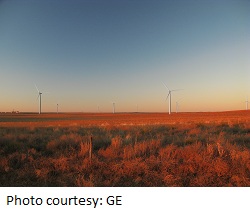
Buffalo_Dunes1GE is investing $40 million in a wind project in Kansas. GE announced the expansion of its portfolio with Italian power company Enel to include investment of common equity and supplying turbines for the 250-megawatt Buffalo Dunes Wind Project:

Last year, the companies invested in the 235-megawatt Chisholm View wind project in Oklahoma, and in the 200-megawatt Prairie Rose wind project in Minnesota. Both projects also feature GE wind turbines. The GE unit and Enel Green Power North America also invested in the 101-megawatt Smoky Hills wind farm in Kansas and the 63-megawatt Snyder wind farm in Texas.

The transaction gives GE Energy Financial Services a majority, 51 percent, share of the Buffalo Dunes project being built near Garden City, Kansas in Finney, Grant and Haskell counties. Enel Green Power North America, maintains the other 49 percent ownership in the venture. In addition to the money, GE will supply 135 wind turbines for the project and will provide operations and maintenance after completion. Most of the energy generated is slated to go to Alabama Power Company under a 20-year agreement.

Wind

Green Tea Could Lead to More Green Biodiesel

John Davis

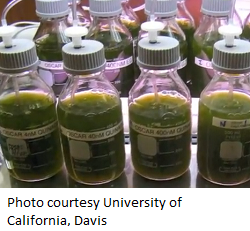
UCDavisalgaeResearchers have found that some of the compounds in green tea could lead to more biodiesel production. Scientists at the University of California, Davis found several compounds, including common antioxidants such as epigallocatechin gallate, found in green tea, and butylated hydroxyanisole (BHA), a food preservative, boosted the oil production by green microscopic algae:

“They can live in saltwater, they take sunlight and carbon dioxide as a building block, and make these long chains of oil that can be converted to biodiesel,” said Annaliese Franz, assistant professor of chemistry and an author of the paper.

Franz, graduate students Megan Danielewicz, Diana Wong and Lisa Anderson, and undergraduate student Jordan Boothe screened 83 compounds for their effects on growth and oil production in four strains of microalgae. They identified several that could boost oil production by up to 85 percent, without decreasing growth.

The researchers grew the cultures in culture volumes up to about a pint in size but figure that some of the compounds could be cost-effective when moved up to 12,000-gallon ponds. Plus, the leftover algae mass after the oil is removed still would make a good animal feed.

algae, Biodiesel, Research, University

Renewable Fuels Infrastructure Funds Available

Joanna Schroeder

Retail and wholesale distributors of fuels who are interested in installing new equipment to offer consumers more choice at the pump – higher blends of ethanol and biodiesel – can apply for financial assistance through the Iowa Renewable Fuels Infrastructure Program. Applications must be received by April 30, 2013 and will be considered at the May 14th meeting of the Iowa Renewable Fuels Infrastructure Board, who approves all applications.

E15 is Now Available“Iowa is the national leader in production of ethanol and biodiesel and this program is designed to help make sure customers have access to these clean, homegrown renewable energy choices,” said Iowa Secretary of Agriculture Bill Northey. “This program demonstrates the long-term commitment by Iowa to renewable fuels and I encourage both large and small fuel retailers to consider applying for assistance.”

The program has cost-share funds available to cover up to 70 percent of the cost of converting old equipment, such as underground tanks or retail pumps, to new equipment designed to handle higher blends of ethanol and biodiesel. Grants to retail distributors are limited to a maximum of $50,000 per project and retailers must commit to selling renewable fuels for at least five years. Smaller grants of $30,000 are available for those only making a three year commitment.

Wholesale fuel distributors are also eligible for grants to offset the cost of new bulk storage and distribution equipment that can be used with higher blends of renewable fuels. Up to $100,000 is available, but requires a 50 percent match by company and a five-year commitment to handling renewable fuels.

The Iowa Legislature provided $3 million to the program for fiscal 2013 and nearly $1 million remains for this final application period. Funds not awarded this year can be carried into the next fiscal year. More information about the program, including guidelines and applications form are available here. In addition, the Iowa Renewable Fuels Association is also able to assist those interested selling higher blends of ethanol and biodiesel.

advanced biofuels, Biodiesel, biofuels, Ethanol