Wind Energy to Create Boon for Carbon Fiber Industry

John Davis

Sancton Hill Wind Farm UK Photo Credit: Arnold UnderwoodBig gains in the wind energy industry will lead to gains in the carbon fiber industry. A new report from GBI Research shows that, globally, demand for carbon fiber, a technology making gains as a lighter, stronger alternative to current wind blade materials will nearly triple in the next few years:

[Global] carbon fiber demand will hit 153,700 tons in 2020, climbing from 52,500 tons in 2012 – a massive increase of 193% in just eight years.

Wind energy – a vital segment of the rapidly expanding renewable energy market – will be the key driver of the carbon fiber industry, says GBI Research. Currently, wind turbine blades constructed from Glass Fiber Reinforced Polymer (GFRP) dominate the industry landscape, but due to their greater rigidity, lower weight and reduced cost, producers are making the move to carbon fiber alternatives.

Considering this shift in manufacturing materials, combined with the increasing deployment of wind farms across the world, GBI Research forecasts carbon fiber demand for the wind energy industry to jump from 12,270 tons in 2011 to 67,400 tons in 2020, making it the single largest carbon fiber end user segment by some margin.

Aircraft manufacturers are also expected to help drive the uptick in carbon fiber demand, with the Airbus A380 and Boeing 787 Dreamliner a couple of the biggest users.

Read the report here.

Wind

Report: Iowa Biodiesel Sales Triple In 2 Years

Joanna Schroeder

Biodiesel Pump Photo Joanna SchroederAccording to a new report from the Iowa Department of Revenue (DOR), the total amount of biodiesel blended into diesel in Iowa has more than tripled from 7.4 million gallons in 2010 to 23.3 million gallons in 2012.

The report also shows that biodiesel’s market penetration has also made great strides, with biodiesel now blended in 42.6 percent of all Iowa diesel sales, an increase of more than 10 percent since 2010. Of those sales, the average biodiesel content has more than doubled since 2010 from 3.1 percent to an 8.1 percent blend of biodiesel.

“Based on the data, it’s obvious that both retailers and consumers are realizing the benefits of biodiesel, and that’s a win for Iowa,” said IRFA Communications Director T.J. Page. “Taking into account the switch in the state’s retailer tax credit from being applied to a 2 percent biodiesel blend to a 5 percent biodiesel blend and the continued support of the Renewable Fuel Standard (RFS), I expect biodiesel sales to continue on this upward trajectory and grow dramatically in the coming years.”

Randy Olson, executive director of the Iowa Biodiesel Board also noted that biodiesel has room for growth for on-farm usage. Just 30 percent of distributors, he says, reported carry biodiesel.

“We’re encouraging our state’s farmers to demand biodiesel as they head into spring planting, and we believe distributors will respond to their customers,” Olson said.  “Economic research shows soybean, corn, livestock and hog farmers all stand to gain from biodiesel production.  It is in their best interest to use their own product.”

To view the entire Iowa Department of Revenue report, please click here.

advanced biofuels, Biodiesel, Iowa RFA

Illinois Soybean Assn. Gets Pumped Up for Biodiesel

John Davis

Get+Pumped+Up+VideoThe Illinois Soybean Association’s checkoff-funded campaign touting the benefits of biodiesel is getting ready to make its next stop at a major petroleum tradeshow. Started in early February, ISA’s “Get Pumped Up!” On Biodiesel campaign goes to Indianapolis, Ind., for the Midwest Petroleum and Convenience Tradeshow (M-PACT), April 16-18th:

“A strong and growing biodiesel industry strengthens the Illinois soybean industry and the state’s economy,” says Lyle Wessel, soybean farmer from Waterloo, Ill., and ISA director. “Biodiesel’s environmental and cost benefits are central to ISA’s effort to get diesel drivers excited to fill up with this accessible, renewable fuel.”

ISA’s “Get Pumped Up!” On Biodiesel campaign debuted at the Mid-West Trucker and Trailer Show in Peoria, Ill., in early February. The campaign features a tradeshow display with an original animated video and an educational brochure customizable for the different segments of biodiesel customers. Visitors also receive a complimentary “Get Pumped Up!” hand gripper for completing a short survey about biodiesel use.

Aside from the economic value of production, the campaign touts biodiesel’s reliability, cost-efficiency and sustainability. Compared to petroleum diesel, biodiesel reduces greenhouse gases by more than 50 percent. Biodiesel blends are approved by most modern OEM automakers.

ISA points out that its state sells more biodiesel than any other state. Check out the YouTube video below.

Biodiesel, Soybeans, Video

Bioenergy Bytes

Joanna Schroeder

  • BioEnergyBytesDFKatirina Tracy is stepping down as Chief Operating Officer of Cima Green LLC and into a new role as Senior Director of Sales and Operations. While highly effective as Chief Operating Officer over the last three years, this change in roles drives the organization’s new strategy towards greater market focus
  • SolarCity has been added to the Russell 200 (R) Russell 3000(R), and Russell Global(R) Indexes. Russell indexes are widely used by investment managers and institutional investors for index funds and as benchmarks for both passive and active investment strategies.
  • Peder Holk Nielsen has officially taken over as President & CEO of Novozymes. Peder Holk Nielsen takes over as CEO from Steen Riisgaard, who steps down after 12 years in the company’s top post and 33 years in Novozymes and Novo Industri/Novo Nordisk.
  • SCS Global Services is expanding its biofuel certification services in Southeast Asia. The third-party environmental certification body will now conduct audits under the International Sustainability & Carbon Certification (ISCC) program, which will allow biofuel producers in Southeast Asia to meet the requirements for export into the European Union under the EU Renewable Energy Directive.
Bioenergy Bytes

Ethanol’s Enviro Benefits Keep on Growing

Joanna Schroeder

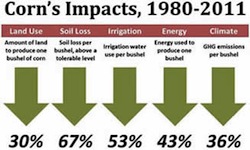
FossilThe National Corn Growers Association (NCGA) has developed a comparison of the environmental impacts of ethanol and petroleum as transportation fuels. Using scientific data, the side-by-side comparison examines a wide array of environmental factors. Most know today that petroleum, made from oil, is not “renewable”. Created over millions of years, it will takes thousands of years for more oil to be developed. However, ethanol made from corn is renewable, with each new crop, a new crop of ethanol can be produced.

Here are some other key highlights of NCGA’s comparison:

  • Ethanol is a tiny single substance that is non-toxic. Petroleum is a mixture of hundreds of different molecules and is toxic to biological organisms.
  • Corn used for ethanol in the United States is grown on approximately five percent of our nation’s cropland. For perspective, ethanol production uses less than three percent of all grain crops grown over the entire world. Petroleum is mined across the entire globe and must be extracted from deep underground. In order to collect petroleum, landscape fragmentation and the generation of toxic, hazardous and potentially radioactive waste streams often occurs.
  • Most corn-to-ethanol production facilities are located within 15 miles of the farms where the crop was produced. Since petroleum extraction happens across the globe wherever deposits can be found, it must be shipped to a facility where it can be refined.
  • Based on the results of scientific testing, the EPA considers corn starch ethanol as producing 23 percent less greenhouse gas emissions compared to making and burning gasoline from petroleum. Recent evidence shows multiple ways of producing ethanol with 50 percent or less GHG compared to gasoline production.
  • The U.S. oil and gas industry generates more solid and liquid waste than municipal, agricultural, mining and other sources combined.

NCGA says that looking at how the production of these fuels compares side-by-side, it becomes evident that ethanol is truly renewable and produced in a greener manner than its fossil fuel counterparts. Where petroleum creates reliance upon a fuel pulled from the ground and imported from abroad, ethanol improves our environment while increasing our national and energy security. Click here for the full comparison.

biofuels, corn, Environment, Ethanol, NCGA

BIOX, Shell Canada Ink Biodiesel Supply Agreement

John Davis

BIOXShellA biodiesel supply agreement between BIOX Corporation and Shell Canada is touted as being a big benefit for both Canadian companies. This BIOX news release says the company will pipe biodiesel from BIOX’s Hamilton refinery to the adjacent Shell distribution terminal and will provide a market for the refinery’s 67 million liters (approximately 17.6 million gallons) of biodiesel while helping Shell meet its Canadian requirement of renewable energy content.

“This agreement provides Shell Canada access to a secure, stable supply of renewable content for our diesel with the most efficient logistics possible,” said Esther Atere, Shell Canada Business Development Lead. “As well, it will assist Shell Canada in achieving the federal mandate of 2% renewable content in diesel fuel and heating distillate oil requirements.”

“This agreement is a great example of how the renewable fuels industry can work with the petroleum industry,” said Kevin Norton, Chief Executive Officer of BIOX. “Shell is investing in its distribution terminal to blend renewable content in diesel and we are investing alongside them to deliver biodiesel in the most efficient manner possible, through a pipe across the property line.”

The pipeline connecting the two facilities is expected to be completed late this year.

Biodiesel, International

Biodiesel Board’s Howell Picked as AOCS Fellow

John Davis

steve-howellIn an honor bestowed on just a few, the American Oil Chemists’ Society honors the National Biodiesel Board’s technical director Steve Howell with the prestigious AOCS Fellow Award. This NBB news release says Howell has been with the board for more than 20 years as it was just getting started, leading the biodiesel industry through completing Health Effects testing, establishing ASTM standards, and securing Original Equipment Manufacturer approval, to name just a few.

“Thanks to the many technical accomplishments of Steve Howell, the U.S. biodiesel industry is now a meaningful supplement to the nation’s diesel fuel supply,” said Joe Jobe, CEO of the National Biodiesel Board. The industry is on track for its vision of 10×22 – making up 10 percent of the overall U.S. diesel fuel supply by 2015 with a range of blends. “I can personally attest to his hard work, integrity, and very special talents. He deserves this recognition.”

Formal conferral will happen at the Society’s Annual Meeting in Montreal in May. To be named a Fellow is one of the highest forms of recognition conferred by AOCS, explained Mike Haas, a USDA researcher and Past President of AOCS.

“It’s also rare for a person who is not directly involved in research at a university or a national lab, where they would generate a trail of publications by which evaluators can assess impact, to be named an AOCS Fellow,” Haas said. “In its history AOCS has named only about 85 people as Fellows, and their names constitute some of the very best in the fats and oils professions from around the globe. Steve Howell deserves to be among them.”

Congratulations, Steve!

Biodiesel, NBB

Biodiesel RIN Defrauder Gets 15+ Year Sentence

John Davis

epa-logoThe Environmental Protection Agency is showing it’s serious about holding up the integrity of the Renewable Identification Number (RIN) system for renewable energy credits. The Lubbock (TX) Avalanche-Journal reports Jeffrey David Gunselman, the founder of Lubbock-based Absolute Fuels, got more than 15 years in prison and has to pay nearly $55 million in restitution and a $175,000 fine for his part in selling the RINs without the biodiesel to back it up.

Gunselman, 30, was sentenced to serve concurrent terms of 188 months on each of the 51 wire fraud counts, 120 months on each of 20 money laundering charges and 24 months each on four counts of making false statements under the federal Clean Air Act…

Gunselman has been held without bail, primarily in the Lubbock County Detention Center, since July. The federal charges arose from Gunselman entering nonexistent biodiesel quantities for sale on an Environmental Protection Agency database and selling the renewable identification numbers, also known as RINs…

The numbers, essentially a batch number that represented about two-thirds of a gallon of biodiesel, are used by oil refiners and shippers to show they are complying with EPA requirements for combining renewable fuels with gas and diesel refined from petroleum.

Ivan Vikin, the head of EPA’s criminal enforcement program in Texas, said: “Today’s judicial action demonstrates the consequences for exploiting the Renewable Fuels program in order to steal millions of dollars from customers and taxpayers.”

This follows February’s sentencing of a Maryland man who received 12 1/2 years prison and has been ordered to pay more than $42 million in restitution for selling fake credits to oil companies and commodities brokers.

Previously, the National Biodiesel Board formed a RIN Integrity Task Force that in the words of NBB Chairman Gary Haer, “…will not allow a few bad actors to risk the progress we have made for America’s Advanced Biofuel – biodiesel.”

Biodiesel, Government, RINS

Good Time to Invest in Biodiesel

John Davis

KotrbaIf you’re looking to put your money in renewable energy, this might be the time to look at investing in biodiesel. Ron Kotrba from Biodiesel Magazine outlines his 11 reasons, with good sources for each reason, why the green fuel might be paying back in greenbacks:

1. Jump in on a growing market: The U.S. biodiesel industry is poised for its most profitable, successful year yet in 2013 with expected record-breaking production volumes thanks in part to the increased federal biomass-based diesel requirement of 1.28 billion gallons (28 percent higher than 2012), the $1 per gallon tax credit and rebounding D4 RIN prices…

2. Sustainable 10-year growth plan: IHS Global Insight conducted a modeling report for the National Biodiesel Board to help guide EPA with its yearly biodiesel RVO under RFS2 and, in the modeling report, the group determined that there will be enough feedstock available to reach 3.3 billion gallons of U.S. biodiesel production by 2022.

3. The National Biodiesel Board unveiled a new industry target in February 2013, named 10×22, an aggressive but achievable goal that calls for biodiesel to make up 10 percent of the U.S. diesel fuel supply by 2022.

4. Engine makers support biodiesel, why not you? All major OEMs producing diesel vehicles for the U.S. market support at least B5 and lower blends and 79 percent of U.S. manufacturers now support B20 or higher biodiesel blends in at least some of their equipment.

5. No blend wall here: While the ethanol industry struggles with hitting its blend wall, biodiesel penetration in the 2012 U.S. diesel fuel supply was only 1.9 percent. Given that all major OEMs support B5, achieving a 5 percent biodiesel penetration rate would mean nearly 3 billion gallons of biodiesel production (almost three times greater than 2012 production volumes)…

He goes on to make other points about how the EPA sees biodiesel as reducing greenhouse gases from 50 to 80 percent, the quality of the green fuel just keeps getting better and how the biodiesel industry supports up to 83,000 jobs in this country, among the many other good reasons Ron finds to put your money on biodiesel this year.

Biodiesel, Opinion

Popke’s in Rock Rapids, IA Joins the E15 Club

Joanna Schroeder

Popke’s, Inc. in Rock Rapids, Iowa has joined the E15 “club” now joining four other stations in Iowa to sell the 15 percent ethanol, 85 percent gasoline fuel blend.

Greg Popke Photo- Sioux City Journal Dave Dreeszen“My business believes in supporting Iowa’s farmers and growing our local economy,” said Popke’s, Inc. owner Greg Popke. “American-made E15 is the next step in securing our independence from foreign oil. The citizens of Rock Rapids have been asking for E15 and are excited to have ready access to this cleaner, less-expensive fuel.”

Popke’s, Inc. is located in Northwest Iowa at the corner of Highway 9 and Highway 75 in Rock Rapids. E15 can be used by all 2001 and newer passenger vehicles and all flexible fuel vehicles (FFVs). Those vehicles account for 85 percent of fuel use in the United States. In order to offer E15 to the non-FFVs, a retailer must register with the EPA. The Iowa Renewable Fuels Association (IRFA) works with retailers to ensure they comply with all federal and state E15 regulations.

“We hope more retailers will continue to incorporate E15 into their business models,” added IRFA Managing Director Lucy Norton. “Offering E15 is a win-win as it provides economic value to both retailers and consumers.”

Retailers interested in installing a blender pump to offer E15, E85, and other ethanol blends can apply for a grant from the Iowa Department of Agriculture. The IRFA provides assistance in the application process. Click here for more information.

biofuels, E15, Ethanol, Iowa RFA