Intertek Biodiesel Lab Earns BQ-9000 Certification

John Davis

IntertekThe Intertek biofuels lab in Romeoville, Illinois has earned an important designation from the National Biodiesel Board (NBB). This company news release says the Intertek lab is now listed as a testing facility on the BQ-9000® website and is a preferred lab for BQ-9000® producers and marketers by the National Biodiesel Accreditation Commission (NBAC):

NBAC, a committee of the NBB, reviews and approves laboratories interested in becoming a BQ-9000® Certified Laboratory. The laboratory must have a quality management system that meets the requirements of the NBAC, and analyze biodiesel following the ASTM D6751 Standard Specification for Biodiesel Fuel Blend Stock (B100) for Middle Distillate Fuels, and follows various ASTM, UOP and EN test methods referenced within the specification.

Jeff Kaylor, Regional Vice President for Inland Waterways, stated, “The award of the BQ-9000® certification for biodiesel testing is an honor for our staff and the biodiesel laboratory. Intertek is committed to providing our clients with reliable, high quality, biofuel testing and inspection services, in the USA and on a global basis.”

Intertek has a network of biofuel laboratories that test a wide range of renewable fuel products and blends, including biodiesel, ethanol, and biomass fuels.

Biodiesel, NBB

Corn Growers Comment on RFS White Paper

Cindy Zimmerman

ncga-logo-newThe National Corn Growers Association recently submitted comments on the impact of the Renewable Fuel Standard to the House Committee on Energy and Commerce in response to their second white paper, “Agricultural Sector Impacts.” In these comments, NCGA addressed how the RFS affects commodity products including corn, agricultural output and economics, RFS flexibility, food prices, cellulosic feedstock and global impacts.

The comments began by noting that corn farmers have responded to the increased demand of ethanol from the Renewable Fuel Standard by producing more corn and doing so in a more environmentally friendly manner. “In the last 30 years, corn production has improved on all measures of resource efficiency, by decreasing per bushel: land use by 30 percent, soil erosion by 67 percent, irrigation by 53 percent, energy use by 43 percent and greenhouse gas emissions by 36 percent.”

Comments also noted the energy security and environmental benefits attributable to the RFS. “RFS has increased national energy security by creating a market for renewable fuel as a substitute for non-renewable petroleum-based fuel, thereby accelerating the nation’s progress toward a low greenhouse gas emissions economy. In addition, the RFS has contributed to the reduction of petroleum imports.”

The remainder of the comments directly addressed questions posed by the House Committee on Energy and Commerce about impacts of the RFS. Topics of particular interest included impacts attributable to the RFS on corn prices, food prices, job creation, economic growth and land use change. NCGA comments provided a detailed look at the myriad of factors involved in each area that are often overlooked in discussions about this standard including: the impact of export demand for soy from China; the direct impact of the drought on beef production; alternative models and theories concerning the idea of indirect land use change; the impact of rising global labor and diesel costs on food cost; and the inherent flexibility of the standard.

corn, Ethanol, Ethanol News, NCGA, RFS

Most Readers Not Far From the Farm

Talia Goes

Our latest ZimmPoll asked the question, “How many generations are you removed from the farm?”

Our poll results: Thirty percent say they are “One Generation, My Parents are Farmers,” 23% are Two, My Grandparents Were Farmers, 22% say None, I’m a Farmer, nine percent are not farmers but work in the ag industry, seven percent have No Direct Farm Connection, and three percent say Three, My Great-Grandparents Were Farmers, More Than Three, or Other. It is safe to say that most of our followers are not far removed from the farm, if at all!

chart

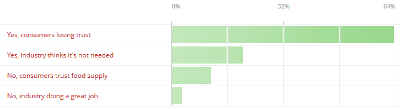
Our new ZimmPoll is now live and asks the question, “Are so-called “ag gag” bills fair?” In the wake of undercover videos at animal agriculture operations that have shown abuse, and especially those that were compiled over a period of time, edited and then released to the public without doing anything to stop the abuse or take it to the proper authorities, several states have passed legislation making that illegal. Most of the laws simply require mandatory reporting of animal cruelty when it happens but opponents have labeled them “ag gag” laws that would suppress efforts to document and publicize animal abuse. Those in favor prefer to call them “See Something, Say Something” bills. Do you feel that the so-called “ag gag” bills are prohibitive? Will these laws hamper efforts to stop animal cruelty? Does this impede our efforts for transparency in the food systems? Let us know.

ZimmPoll is sponsored by New Holland Agriculture.

Farming, ZimmPoll

Wilks’ Biodiesel Analyzer to Meet ASTM Standards

John Davis

Meeting ASTM methods D7371 and EN 14078 for biodiesel standards usually requires FTIR spectrometers, an expensive proposition considering the equipment would be placed on a loading dock. This article in Biodiesel Magazine says Wilks Enterprises has something that could help producers meet those ASTM standards with a fast, easy-to-use and inexpensive infrared method:

wilksanalyzerThe InfraCal Biodiesel Blend Analyzer is a rugged, compact, specific-analysis fixed-filter infrared analyzer that is easy for fleet managers, distributors or regulators to use. It reads out directly in percent biodiesel and provides the user with the capability to measure the blend ratio on-site in 30 seconds. Its measurement range is zero to 100 percent with an accuracy of plus or minus 0.20 percent and can be operated by personnel having little or no knowledge of infrared analytical techniques.

The InfraSpec VFA-IR Spectrometer is a spectral range analyzer that contains a linear variable filter and a detector array covering the wavelength range of 5.4-10.8 μm (1850-925 cm-1). This provides the capability to not only measure biodiesel in diesel, but also ethanol in gasoline or water in ethanol. It is a compact, portable instrument with a simplified PC interface that provides nontechnical personnel with the ability to make measurements on-site at the blending terminal, as well as the manufacturing facility or laboratory.

The company touts the InfraCal Biodiesel Blend Analyzer and InfraSpec VFA-IR Spectrometer as ideal workhorses, specifically designed for use in the field. This ASTM method now goes before the full committee for voting and should be approved and accepted before the end of this year.

Biodiesel

Webinars Focus on Legal Issues For Ethanol Producers

Joanna Schroeder

The American Coalition for Ethanol (ACE) along with Michael Best & Friedrich LLP (Michael Best) are hosting a webinar series focused on pressing legal issues facing ethanol producers. The first webinar focused on compliance issues with federal Health Care Reform in 2013. The 30 minute webinar, says ACE Executive Vice President Brian Jennings, will be a valuable resource for the ethanol industry.

ACE-Michael Best“With so many demands on our members’ time, we are pleased to team up with ACE member Michael Best to sponsor this series of webinars providing ethanol producers with useful and timely updates on important legal issues,” said Jennings.

Porter J. Martin, Michael Best partner, describes the webinar series as an approachable way to communicate information every ethanol producer needs in the most efficient way. “The webinars are based on our experience representing ethanol producers and other industry clients. The goal is to provide participants with a basic understanding of potential legal challenges they may face in their business and prepare them to make educated decisions in the future,” said Martin.

Future webinar topics include, long-term compliance with health care reform (2014 and beyond), intellectual property concerns, OSHA inspections, State and EPA enforcement activities, negotiating air permits, employee wage and hour matters, and others. You can access the first webinar here.

ACE, biofuels, Education, Ethanol

Kit Teaches Students Wonders of Soy Biodiesel

John Davis

BiodieselChemistryKit1Biodiesel made from soybeans is a clean fuel for many gas tanks, including the buses that haul kids to school. Now those same children hauled by the green fuel can also get a lesson in chemistry from it. The Indiana Soybean Alliance is offering a Soy Biodiesel Chemistry Kit, touted as a valuable educational science lab for high school students, free of charge to teachers in Indiana and just $225 to out-of-state teachers:

Developed by Purdue University researchers and public school teachers, the kit is an engaging way to apply the basic skills and principles of chemistry. It’s also useful for showing high schoolers real-world chemistry applications and the growing importance of the alternative fuel industry, which is primarily derived from renewable natural resources like soybean oil.

“The lessons offered in the kit are aligned with the National Science Education Standards, and we think that it is an important component to encourage teachers to incorporate these lessons into their classrooms,” said Don Wyss, chairman of ISA’s biofuels committee and a farmer from Ossian, Ind.

The kits have enough supplies for 20 students working in pairs to perform each of each of the six hands-on exercises and experiments. More information is available here.

Biodiesel, Soybeans

Wisconsin Opens 8 New E15 Pumps

Joanna Schroeder

Wisconsin is the home of eight new E15 pumps. The 15 percent ethanol 85 percent gasoline blend is now offered at SmartStation, 1290 Business Highway 151, Platteville, Wisconsin. The station is a wholly owned subsidiary of Badger State Ethanol.

smartStationLogo“We are honored to be Wisconsin’s first retailer to offer E15 to our customers who have been asking for it,” said Erik Hushitt of Badger State Ethanol. “We hope other retailers follow our lead so that consumers around the state have an opportunity to gain access to a cleaner burning fuel that contributes directly to the billion dollar ethanol industry in Wisconsin.”

E15 is approved for cars and light duty trucks model year 20o1 or newer. This represents a market of more than 75 percent of vehicles on the road today eligible to use E15. This market also represents 85 percent of the unleaded fuel sold across the country.

“We congratulate Badger State Ethanol and Wisconsin’s ethanol industry for working together to bring E15 to the Wisconsin market,” said Joshua Morby of the Wisconsin Ethanol Coalition, an organization that helps retailers interested in selling E85 navigate the process. “E15 offers retailers a chance to set themselves apart by offering a new, exciting fuel to their station that not only confirms their commitment to domestic renewable fuels but also offers them a competitive advantage.”

Morby added, “We expect retailers around the state to take notice of the demand by consumers for cheaper, cleaner, more homegrown E15.”

biofuels, E15, Ethanol

New Database Tracks Energy Legislation

Joanna Schroeder

Screen Shot 2013-05-07 at 8.02.27 PMColorado State University’s Center for the New Energy Economy (CNEE) has launched an Advanced Energy Legislation (AEL) Tracker, a database tracking energy-related state legislation pending in all 50 states. Types of energy include solar, wind, biofuels, natural gas and more. The AEL was created in partnership with Advanced Energy Economy (AEE) and the system will also enable CNEE to conduct analysis of trends in state energy legislation.

To date, there are more than 2,100 bills being considered in U.S. states and the energy tracker monitors the progress of each bill as they move forward. Of these bills, nearly 25 percent call for new financing tools, including tax incentives, for the installation of energy facilities. In addition, roughly 21 percent of the bills are promoting development of clean energy sources, and about 8 percent encourage the adoption of energy-efficient appliances, building codes and practices.

If we look at where the country is going on advanced energy policy, overwhelmingly that transition is being led by states,” said Bill Ritter, Jr., director of CNEE and former governor of Colorado.”To get the pulse of where the country is going we need to understand what the states are doing.”

Ritter continued, “AEL Tracker brings together information on energy-related legislation in all 50 states, in a form that is easily accessible not only to lawmakers at all levels of government, but to academics, analysts, environmentalists, funders, business leaders and the general public. It will allow our Center to conduct critical academic analysis of issues to energy legislation nationwide.”Read More

Alternative energy, energy efficiency, Legislation

New Natural Gas Partnership Announced

Joanna Schroeder

Clean Energy Fuels and Mansfield Energy have created a strategic partnership to offer customers a comprehensive solution in the compressed natural gas (CNG) fuel industry. The partners will offer Clean Energy’s natural gas fueling station construction and operational services. The services will be supported by Mansfield’s large-scale fuel supply capabilities and Gas-2-Gallons fuel management system.

Clean Energy logo“This agreement joins two leaders of fleet fueling into strategic partners that will provide the highest level of service and best value for customers in the rapidly-growing natural gas fuel market,” said Andrew J. Littlefair, president and CEO of Clean Energy. “No other company offers fuel customers the benefit of scale and expertise that Mansfield provides. Clean Energy has built and operated more CNG stations and fueled more natural gas vehicles than any company in the U.S. Together, we will be the best solution in the marketplace.”

Mansfield logoMansfield Gas Equipment Systems has ongoing CNG service and operations contracts with 43 locations as well as 20 new CNG sites currently under development in the waste, transit, and municipal fleet sectors. This portfolio will be combined with the 348 CNG and liquefied natural gas (LNG) fueling stations Clean Energy currently owns, operates or supplies. Clean Energy’s total strategic partnerships to-date represent over 11 billion gallons of gasoline and diesel delivered annually. The company also will become the Western distributor of Mansfield Gas Equipment Systems’ FuelMaker, a small scale business and home re-fueling system.

Michael Mansfield, CEO of Mansfield added, “We want our customers to have the best solution possible for fueling with natural gas. We bring scale in commodity supply, risk management, and transaction processing. Clean Energy has scale in design, engineering and operations. Bringing these strengths together for our customers provides the benefits of proven technology coupled with large scale operating efficiencies to provide the best value and simplest path to natural gas adoption in the market today.”

Compressed Natural Gas (CNG), Natural Gas

Ethanol Report on Current Events

Cindy Zimmerman

dinneen-capitolIn ethanol-related news over the past week or so we have seen senators request a probe into the European Union’s anti-dumping duties on ethanol, comments to the House energy committee on the RFS, and legislation introduced for an energy title in the next farm bill.

To find out more about all of those stories and more, we caught up with Renewable Fuels Association president and CEO Bob Dinneen to get his comments in this new edition of “The Ethanol Report.” We’ll be hearing more from him and others in the nation’s capitol next week when we attend the annual National Association of Farm Broadcasting Washington Watch.

Listen to or download the Ethanol Report here: Ethanol Report on Current Events

Subscribe to “The Ethanol Report” with this link.

Audio, Ethanol, Ethanol News, Ethanol Report, RFA