Ethanol Groups Talk to Farm Broadcasters

Cindy Zimmerman

Ethanol was well represented at the National Association of Farm Broadcasting annual meeting last week in Kansas City to talk with reporters about issues facing the industry.

narfb13-rfa-groupBob Dinneen, Robert White and Dawn Moore with the Renewable Fuels Association (RFA) did a number of interviews with farm broadcasters about important topics, like the growth in the number of stations offering 15 percent ethanol blended fuel (E15).

Robert said they have some good news to report.

“In the matter of just a couple of weeks we’ll have E15 in 11 states, roughly 50 stations, and lots in the hopper,” adding there’s high interest among gas station operators, especially the small businesses, in expanding the amount of E15 to be sold. “E15 is averaging over 20 percent [in volume at stations], and one station is averaging 38 percent in E15. And you couldn’t have convinced me of that two years ago that was going to happen that quickly.”

Robert also dismisses Big Oil’s arguments that E15 is causing massive amounts of misfueling, stranding cars by the side of the road.

“After 18 months of E15 being in the marketplace, we haven’t had one incident of misfueling, we haven’t had one check-engine light come on, [not one] issue with a vehicle, lawnmower, etc.” Interview with Robert White, RFA

nafb13-growth-buisOne of many interviews Growth Energy CEO Tom Buis did at NAFB was with Julie Harker of Brownfield Ag News.

Speaking before the EPA released its proposal to lower Renewable Volume Obligations (RVOs), Tom said that would be a huge mistake.

“It’s a mistake not just for rural America and the ethanol industry and America’s farmers, but for our Nation,” pointing out how beholden we have been to Middle East oil over the past 40 years, including lost fortunes guarding oil tankers and lost American lives in war. “Moving backwards would be for the wrong reasons at the wrong time.”

Tom said the oil companies’ attacks are understandable; ethanol is cutting into their monopoly, adding preserving that 10 percent blend wall is key to the Big Oil’s strategy.

“They’ve got 90 percent of the market. They don’t want any less. Well that’s not good for America, it’s not good for energy security or national security,” concluding that consumers are saving about $10 billion a year at the pump. “Let the consumer make the choice at the pump.” Brownfield Interview with Tom Buis, Growth Energy


Audio, E15, Ethanol, Ethanol News, Growth Energy, RFA

What’s Your Opinion of EPA Lowering Biofuels Obligations?

Talia Goes

zp-nhOur latest ZimmPoll asked the question, ”How do you show food thanks?”

Our poll results:
· Thank a farmer in person – 32%
· Via social media – 26%
· Donating to a local food bank – 16%
· Nothing – 16%
· Invite people out to your farm – 5%
· Other – 5%

As our hearts and stomachs are full, we are wishing all of you a wonderful Thanksgiving season. Our new ZimmPoll is now live and asks the question, “What is your opinion on the EPA lowering biofuels requirements?” The Environmental Protection Agency (EPA) last week released its proposed 2014 Renewable Volume Obligations (RVOs) as part of the Renewable Fuel Standard (RFS) for the amount of renewable fuels to be blended into gasoline and diesel. The release has prompted a deluge of commentary from both sides of the biofuels issue. But what do you think – is it good for refiners and bad for ag and the economy? Let us know!

ZimmPoll

BioEnergy Bytes

Joanna Schroeder

  • BioEnergyBytesDFBoulder Wind Power (BWP) announced completion of a third-party review of its wind power technologies and cost of energy (COE) model. The independent assessment analyzed the technological and commercial risks associated with BWP’s direct drive generator, and resulted in an estimated 12-22 percent cost of energy advantage relative to four of the industry’s most common drivetrains. In addition to providing guidance on the COE model, the review investigated BWP’s systems and sub-systems, focusing on considerations from broader BWP technology development processes to individual component reliability. The review addressed the risks inherent in bringing new technology to the wind power market while showing that BWP’s knowledge base and approach to magnetics, mechanical structures and printed circuit boards are sound and exemplary.
  • Jim Lamon has launched a new company, E3 International (E3I) with additional management from a team of solar power veterans. The company’s mission is to provide utilities, independent power producers and project development companies with compelling and bankable solutions for the utility scale solar photovoltaic (PV) market. The company provides three core offerings: (1) Project Development Support, (2) Engineering, Procurement & Construction (EPC), and (3) Operations and Maintenance (O&M). The company has drawn its name E3 International, from its three major focuses: economics, environment and energy.
  • Agrivida, Inc., a biotechnology company developing technologies for animal nutrition, cellulosic sugars from biomass, and regulated enzymes, has the appointment of Dan Meagher as Chief Executive Officer. Meagher joins Agrivida from Novus International, where he was President of Global Animal Nutrition Solutions and responsible for global sales, marketing, animal R&D, business development, customer service, logistics & distribution and local manufacturing blend facilities. Meagher takes over at Agrivida as Mark Wong is named to Chairman of Agrivida’s Board of Directors.
  • Access Energy has announced the product launch of its Thermapower™ Organic Rankine Cycle (ORC) 125XLT system, which can recover waste heat with temperatures as low as 80 Degrees C. The system produces 125 kW of clean power from low temperature heat generated by small scale commercial and industrial applications. Facilities utilizing the 125XLT can consume the power generated onsite or sell it back to their utility company, providing significant value to the businesses themselves and local residents, particularly those affected by power shortages.
Bioenergy Bytes

Google Invests $80 Million in Six Solar-Power Plants

Joanna Schroeder

Google has made a $80 million equity investment in six solar-power plants – five located in California and one in Arizona. All six of the solar projects are expected to begin operations in January 2014 and provide enough electricity to power 17,000 homes. Milbank, Tweed, Hadley & McCloy LLP represented Google who partnered with leading private equity investor KKR & Co. L.P. on the project.

The solar plants are being built by San Francisco-based Recurrent Energy, owned by Sharp Corporation of Japan, and have a total capacity of 106 megawatts.

The Milbank team was co-led by Los Angeles-based Project Finance partner Karen Wong and Mark Regante of the firm’s Tax group in New York, assisted by Of Counsel Michael Dayen and Leah KGoogle_california_solar_projectsarlov, and associates Hao Huang and Kristine Wang.

Ms. Wong said, “We’re very pleased to handle another major investment by Google demonstrating its commitment to green energy. The company has made more than a dozen investments in the renewable energy sector such as wind and solar.”

Google has been a leading pioneer among larger tech companies such as Facebook, Microsoft, and Apple, which are now buying or investing in green energy plants as a way to reduce their carbon footprints. “We are excited to partner again with KKR and Recurrent Energy in our investment in the portfolio of solar projects and successfully execute it with the assistance and coordination from the Milbank team,” said Yana Kravtsova, Legal Head of Renewables at Google.

Milbank has represented Google in a number of renewables investments within the past several years. “Google continues to lead the way for the technology industry and corporate America in advancing a sustainability model for its business, and we are thrilled to have advised on yet another substantial investment by the company in the renewable space,” said Milbank’s Mr. Regante.  “Added to its previous commitments to solar and wind power, the latest investments in California and Arizona enhance its reputation as a leader in green business.”

Electricity, Renewable Energy, Solar

ABFA Launches Stories of Clean Energy Companies Videos

Joanna Schroeder

The Advanced Biofuels Association (ABFA) is playing a key role in fighting for the sanctity of the Renewable Fuel Standard (RFS). According to Michael McAdams, president, despite misinformation being thrown about during the recent debate over the RFS, drop-in and cellulosic biofuel technology is moving from the laboratory to reality – and ABFA members are designing, purchasing and building the commercial plants needed to supply America with advanced fuels from renewable sources.

Already this year, several ABFA members are producing renewable gallons qualifying as advanced and/or cellulosic under the RFS. Meanwhile, many other companies are either breaking ground or plan to have commercial plants in operation by 2015.

ABFA has launched a series of videos to tell the stories of this clean energy transition from the perspectives of the companies producing renewable gallons and breaking ground on new facilities. Some of the featured companies include Sundrop Fuels, Sapphire Energy and Amyris.

advanced biofuels, RFS, Video

Pressure Cooking to Improve Electric Car Batteries

Joanna Schroeder

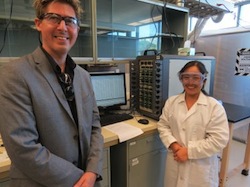
David Kisailus and Jianxin ZhuResearchers at the University of California, Riverside’s Bourns College of Engineering have redesigned the component materials of the battery found in electric vehicles in an environmentally friendly way. The goal was to solve several problems with the technology including they take a long time to charge; the charge doesn’t hold long enough to drive long distances; they don’t allow drivers to quickly accelerate; and they are big and bulky.

By creating nanoparticles with a controlled shape, the research team believes smaller, more powerful and energy efficient batteries can be built. By modifying the size and shape of battery components, they aim to reduce charge times as well.

“This is a critical, fundamental step in improving the efficiency of these batteries,” said David Kisailus, an associate professor of chemical and environmental engineering and lead researcher on the project. In addition to electric cars, the redesigned batteries could be used for municipal energy storage, including energy generated by the sun and wind.

The initial findings are outlined in a recently published paper called “Solvothermal Synthesis, Development and Performance of LiFePO4 Nanostructures” in the journal Crystal Growth & Design. Kisailus, who is also the Winston Chung Endowed Professor in Energy Innovation, and Jianxin Zhu, a Ph.D. student working with Kisailus, were the lead authors of the paper.

The researchers in Kisailus’ Biomimetics and Nanostructured Materials Lab set out to improve the efficiency of Lithium-ion batteries by targeting one of the material components of the battery, the cathode. Lithium iron phosphate (LiFePO4), one type of cathode, has been used in electric vehicles because of its low cost, low toxicity and thermal and chemical stability. However, its commercial potential is limited because it has poor electronic conductivity and lithium ions are not very mobile within it.Read More

Alternative Vehicles, Electric Vehicles, Research

Cadillac ELR Leaves Detroit Smart Grid Ready

Joanna Schroeder

PrintThe LA Auto Show is taking place this week and the new Cadillac ELR will have some unique new features. The vehicle will leave Detroit, Michigan smart grid ready by using the extended range electric vehicle (EV) technology. Combined with OnStar’s could-based connection, the ELR will be able to communicate with the electric grid and potentially save energy.

ELR owners will have access to the OnStar RemoteLink Mobile App, which in addition to allowing drivers to check their vehicle’s operating systems and send remote commands, gives them access to EV specific functions. The EV-tailored app shows owners their vehicle’s current state of charge, electric range, electric miles driven and eMPG, or equivalency of electric miles per gallon.

The RemoteLink Mobile App also will allow ELR owners to control and schedule vehicle charging, including an option to charge during off-peak hours when electricity rates are lowest. In addition to the RemoteLink app available today, OnStar is an enabler for solutions that may benefit drivers in the future.

“While RemoteLink is really our first Smart Grid service to be available for consumers, the same connection we use to enable the app’s EV functions can be used to open the door for more energy cost and load control benefits,” said Russ Eling, manager, Smart Grid and EV Services, General Motors.

OnStar has four unique Smart Grid APIs, or Application Programming Interfaces, that utilities and third-party companies can work with to develop real-world solutions for the 2014-Cadillac-ELR-018-mediumELR including demand response, time-of-Use rates, charging data, and aggregated services.

An example of an aggregated service solution would be charging with renewable energy. A regional transmission organization would send OnStar a signal letting it know that renewable energy is available on the electric grid. OnStar then uses this signal to manage the charging of one or multiple EVs in order to utilize the available renewable energy.

OnStar recently partnered with TimberRock Energy Solutions, Inc. using Demand Response to aid with TimberRock’s ability to store and charge with solar energy.

Alternative Vehicles, Electric Vehicles, Smart Grid

Tri-State, LARD Buy, Upgrading Bridgeport Biodiesel

John Davis

tsb-logo1Tri-State Biodiesel and Lard-NABF LLC (LARD), both based in the New York-New Jersey area have purchased and are upgrading Connecticut-based Bridgeport Biodiesel. Biodiesel Magazine reports the venture brings together a major cooking oil-to-biodiesel recyclers with one of few biodiesel production facilities in the area.

Through this deal, Bridgeport Biodiesel also leverages [parent company The Sustainable Biodiesel Company (TSBC)’s] extensive biodiesel fuel distribution network, supplying both wholesale and retail products to gas stations, trucking fleets and heating oil consumers throughout the region.

Bridgeport Biodiesel is a fully permitted and operational 1-3 MMgy biodiesel facility constructed in Bridgeport, Connecticut’s visionary Eco-Industrial Park. Fully operational in 2012, the plant is engineered and permitted to produce biodiesel from a variety of feedstocks, including yellow and brown grease. Ownership of the plant is transferred to the TSBC/LARD partnership with Tri-State Biodiesel’s CEO, Brent Baker, as the new operations director of the facility.

The partnership also pledges additional capital to upgrade the plant with robust new third-generation technology, which dramatically increases the efficiency and throughput capability at the site. Completion of the expansion is expected by 3Q of 2014, bringing the total biodiesel production capacity on site to 8-10 MMgy.

TSBC is also looking for more space to make room in the same area for its algae oil partnership with The BEAR Group.

Biodiesel

Biodiesel Backers Make Case on RFS to Congress

John Davis

nbb19nov2Biodiesel backers are not quite ready to throw in the towel when it comes to the Renewable Fuel Standard (RFS). Backed by the National Biodiesel Board, they took to Washington, D.C. to voice their disappointment with the Obama Administration’s recent proposal for next year’s renewable fuels volumes.

“If the EPA freezes the biomass-based diesel target, it would put our company out of business,” said [Ben] Wootton, president and CEO of Keystone BioFuels of Camp Hill, Pa. [which faces closure because of the EPA’s proposed numbers]. “Keystone is just starting to come out of a reorganization plan. The EPA proposed freeze on biomass-based diesel would essentially cut our current market in half and force us to shut our doors. It would be a major step back for the environment and the economy in our state.”

Anne Steckel, vice president of federal affairs at the National Biodiesel Board, said more than 100 biodiesel supporters, representing more than two dozen states from California to Iowa to North Carolina, will be making sure their members of Congress understand that this proposal will eliminate jobs and threaten production in their states.

“Our producers are frustrated and disappointed that the Administration, with no explanation, is essentially freezing a growing Advanced Biofuel industry for the next two years at production levels far below where they are today,” Steckel said. “Biodiesel is an RFS success story, and this proposal turns its back on that success and on the producers who have made it happen.”

NBB points out the biodiesel industry is on track to produce a record of about 1.7 billion gallons this year, which makes the EPA’s target for the next two years of only 1.28 billion gallons of biomass-based diesel even more puzzling. NBB has already projected the proposal could cost 8,000 jobs or more.

Biodiesel, Government, Legislation, NBB, RFS

World Energy Scenarios Report: More Must Be Done

Joanna Schroeder

WEI2013-1-216x291COP-19 is taking place in Warsaw, Poland and today the World Energy Council (WEC) released a new report, “World Energy Scenarios: Composing energy futures in 2050.” The world is set to face several significant challenges in balancing global energy needs in addressing the triple challenge of the energy trilemma. The WEC study assesses two policy scenarios: the more consumer-driven Jazz scenario, and the more voter-driven Symphony scenario, which places greater focus on climate change mitigation and adaption. The report highlights that energy demand is set to double by 2050, driven by non-OECD growth (OECD is the Organisation for Economic Co-operation and Development). To meet this growing demand, total primary energy supply is set to increase by between 61 percent and 27 percent.

WEC analysis in the World Energy Scenarios shows that despite significant growth in the relative contribution of renewables from 15 percent today to between 20 percent and 30 percent in 2050, in absolute terms the volume of fossil fuels used to meet global energy demand will be 16,000 MTOE (million tons of oil equivalent( in the Jazz (the more consumer-driven scenario) and 10,000 MTOE in Symphony (the more voter-driven scenario), compared to 10,400 MTOE in 2010. This represents a 55 percent increase in Jazz but only a 5 percent decrease in the absolute amount of fossil fuels used in Symphony by 2050.

“The inconvenient truth is: we are looking in the wrong place to address the issues facing the energy sector,” said Christoph Frei, Secretary of the World Energy Council. The focus of current thinking about the energy system is biased and inadequate. If we are to deliver sustainable energy systems, the focus must shift from the supply mix to demand efficiency. We need more demand-side investments, innovation, incentives, and stronger technical standards to reduce energy intensity.”

The report finds that some renewables will experience exponential growth, to reach 20 percent in Jazz and 30 percent in Symphony by 2050. In particular, the use of solar for electricity generation is set to increase by up to a staggering 225 times over 2010 levels. Currently solar power only accounts for just over 34 TWh/y in the electricity generation World Energy Council logomix, but it could provide somewhere between 2,980 TWh and 7,740 TWh in 2050. This equates to between US $2,950 billion and US $9,660 billion of investment in solar, representing the largest potential investment area of any renewable energy resource. However, fossil fuels will ultimately remain the dominant energy source supplying between 77% and 59% of the global primary energy mix.

“While there will be opportunities in the future for a range of technology solutions, the ultimate issue is that demand continues to grow at an unsustainable rate,” said Karl Rose, Senior Director, Policies and Scenarios at the World Energy Council. “One of the most significant findings in the report is the strong regional variation of priorities and solutions in the energy system. Too often we look at the world as one entity and seek global solutions but the reality is very different and this needs to be recognised.”

Frei added, “The financing challenge is vast but the current lack of climate framework clarity is leading to short-term investment decisions to satisfy current demand trends. We need drastic action from policymakers and industry to make concerted efforts to align and reduce the policy risk of energy investments.”

Electricity, International, Renewable Energy, Research, Solar