ACE Conference 2026

Biodiesel Industry Spotlights Waiver Pain

Cindy Zimmerman

The biodiesel industry wants the administration to understand that they are hurting as much or more than ethanol producers as a result of EPA’s small refinery exemptions (SRE).

National Biodiesel Board (NBB) CEO Donnell Rehagen and Vice President of Federal Affairs Kurt Kovarik hosted a conference call with reporters Thursday to discuss the impact of small refinery exemptions on biodiesel and renewable diesel producers. The group estimates the small refinery exemptions have destroyed hundreds of millions of gallons of demand for biodiesel, which is forcing domestic producers to stop production and furlough employees, and NBB recently joined with other groups to request a meeting with President Trump to address a resolution to the demand destruction.

The NBB officials say biodiesel is getting forgotten in the media coverage about the waivers focusing on ethanol only, but the exemptions are actually causing disproportionate harm to biodiesel and renewable diesel, and “biodiesel must be addressed in any package the addresses lost gallons from the RFS.”

Kovarik said they just want to make it clear that the refinery exemptions are not “ethanol wa

Listen to NBB press conference here:
NBB press call on refinery waivers

Audio, Biodiesel, NBB

Governors Suggest Waiver Mitigation Actions

Cindy Zimmerman

The Governors’ Biofuels Coalition is offering some advice to President Donald Trump on how to mitigate the effects of the small refinery waivers on ethanol and biodiesel producers.

Coalition chair and vice chair, Minnesota Governor Tim Walz and South Dakota Governor Kristi Noem, sent a letter recommending actions the President might include in his promised “giant package” of initiatives for the biofuels industry, including:

– Request that EPA add the lost gallons to the pending 2020 Renewable Volume Obligations proposed rule
– Initiate another Biofuels Infrastructure Partnership (BIP) program through USDA
– Increase the minimum octane standard in gasoline to create an immediate market for more ethanol
– Direct EPA to enforce the Clean Air Act requirement to replace the aromatic toxics in gasoline with ethanol as a less expensive source of octane.

“Farmers, environmentalists, and consumers would all benefit from these actions,” the governors wrote. Governor Walz and Governor Noem also offered to work with the Administration to find solutions to address the impact the waivers have had on the nation’s agriculture community and ethanol producers.

Biodiesel, biofuels, EPA, Ethanol, Ethanol News

Nebraska Retailers Event Shows E15 Interest

Cindy Zimmerman

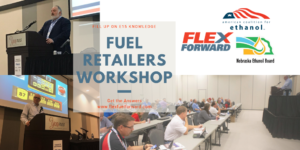
As the first summer of nation-wide approved E15 use winds to an end, a fuel retailer workshop hosted last week by the Nebraska Ethanol Board (NEB) and American Coalition for Ethanol (ACE) showed a lot of interest in learning more about offering the fuel.

ACE Senior Vice President Ron Lamberty, a former fuel retailer, keynoted the workshop which included testimonies and a question and answer session with fuel retailers Randy Gard, COO of Bosselman Enterprises, owner of the Pump & Pantry convenience store chain, and Phil Smith with Aurora Coop.

The event agenda also included the Nebraska State Fire Marshal for the Fuels Safety Division walking through the steps to take before adding blends E15 and higher, as well as information on proper labeling of fuel dispensers, state policies supporting ethanol sales, and financial resources for expanding infrastructure.

ACE, Ethanol, Ethanol News, Retailers

Ethanol Exports Drop 6% in July

Cindy Zimmerman

U.S. ethanol exports were down six percent in July, but the bulk of a 44% drop in shipments to Brazil was almost made up by in gains in other markets, according to data issued by the government and analyzed by the Renewable Fuels Association (RFA).

Canada was the top destination for U.S. ethanol for the third consecutive month. Shipments increased 18% to a 12-month high of 34.8 mg. Exports to Brazil lowered to 15.8 mg, a 12 mg drop, as the country’s sugarcane harvest accelerated. Oman nearly doubled its offtake in July at 12.4 mg, and the Netherlands re-entered the market to buy 11.4 mg. Other top importers of U.S. ethanol included South Korea (9.8 mg, up 44%), Colombia (9.3 mg, up 38%), and the Philippines (9.1 mg, up 112%). Notably, India essentially withdrew from our export market for the first time in three years after taking 21.9 mg of American-made ethanol in June. Total year-to-date exports of U.S. ethanol stand at 880.1 mg. This implies an annualized export volume of 1.51 billion gallons which, if realized, would be the second-largest volume on record.

Imports of ethanol to the United States from Brazil were recorded in July for the fourth time this year. In fact, imports from Brazil were larger than exports to the country in July. Total year-to-date imports stand at 70.5 mg, which implies an annualized import volume of 120.9 mg. If realized, the U.S. would import the largest volume of foreign ethanol in six years.

Ethanol, Ethanol News, Exports, RFA

New Next Gen Biodiesel Scientist Leaders

Cindy Zimmerman

The Next Generation Scientists for Biodiesel (NGSB) program has selected students from Iowa State and National University as new co-chairs.

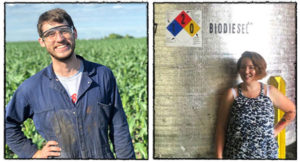
Sam Kramer is a chemical engineering and economics undergraduate at ISU, who helped get the school’s unique “BioBus” program going again after a long hiatus. “The world needs more capable and caring engineers,” Kramer said. “Programs like NGSB and our ISU BioBus Club spark interest in renewable energy and give young engineering students hands-on experience.”

Kayla Tilton is pursuing a Master of Public Health degree through National University in San Diego and also working as a student as an outreach coordinator for Maine Standard Biofuels. “I love watching people make the decision to switch to heating their homes with a 20 percent blend of biodiesel [Bioheat®], and helping local fleet managers take their Corporate Social Responsibility plan in a whole new direction,” Tilton said.

NGSB, a program of the National Biodiesel Board for college-level science students, fosters professional relationships between budding and established scientists, shares accurate information and increases collaboration with academia and the biodiesel industry.

Biodiesel, NBB, Science

Biodiesel Board Revamps Website

Carrie Muehling

The National Biodiesel Board has updated three websites to make biodiesel content more accessible, especially from phones and tablets.

The three websites, www.biodiesel.org, www.nbb.org, and www.mybioheat.com, offer abundant information in a clean, modern style. They have also been enhanced with mobile optimization, allowing quick and easy website access from phones or tablets while on the go.

“We are excited to launch our new-look websites after more than a year of work streamlining, customizing, and simplifying our digital presence,” said NBB Communications Director Kaleb Little. “NBB’s websites are often the introduction to biodiesel for fleet managers, government officials, reporters, key influencers, the general public, and so many others. Keeping this platform clean, up-to date, and user friendly is critical to NBB’s mission of continuously moving the industry forward.”

NBB’s family of websites continues to be the premier destination for finding biodiesel material on the internet. While the flagship websites, biodiesel.org and nbb.org, generate over 1.2 million page views annually, NBB manages an additional dozen websites that form the NBB Family of Websites. NBB is dedicated to ensuring content and delivery mechanisms are top of the line in order to continue delivering helpful information to millions more in the future.

Each of the sites is designed around their specific topic, with links available to all of the NBB family sites.

www.biodiesel.org is the go-to source for all content concerning America’s Advanced Biofuel. Biodiesel 101, frequently asked questions, finding biodiesel, policy priorities, sustainability, success stories, and so much more – this site is a one stop shop for all things biodiesel.

www.nbb.org is designed for those interested in the trade association – the National Biodiesel Board. The organization’s history, governing board and staff information, membership applications and recruitment material, member facilities maps, policy priorities, and other association business are all housed here.

www.mybioheat.com is the centerpiece of the heating oil industry’s transition to renewable liquid heating fuels. The site makes the case for Bioheat® fuel as a safer, cleaner, more affordable residential heat source as well as mapping the industry’s road to B50 Bioheat® by 2030.

The trio of redesigned websites offer a fresh new face to deliver the same great biodiesel content NBB has maintained for years. Get online and check them out today.


Biodiesel, NBB

Clariant Tests Miscanthus for Cellulosic Ethanol

Cindy Zimmerman

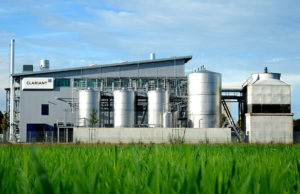
Clariant announced it has successfully concluded tests on miscanthus provided by INA, Croatia’s leading oil and gas company, that was shipped for processing to Clariant’s pre-commercial sunliquid plant in Germany for conversion into lignocellulosic sugars and ethanol.

Final results prove that the sunliquid technology can successfully convert miscanthus biomass into lignocellulosic sugars and ethanol, confirming the benefits of the sugar process platform. Thanks to the flexible sunliquid process design, lignocellulosic sugars can be generated as an intermediate product that have the potential to serve as a building block for future production of bio-based chemicals.

INA is a consortium member of the publicly funded project “GRowing Advanced industrial Crops on marginal lands for biorEfineries” or GRACE. Clariant was asked by the GRACE consortium to run tests of miscanthus as a feedstock for the production of lignocellulosic sugars and ethanol.

Over the past seven years Clariant’s pre-commercial plant has also demonstrated cellulosic ethanol production on agricultural residues such as corn stover, sugarcane bagasse and straw as well as wheat, barley and rice straw. In the fall of last year, Clariant broke ground on its greenfield first-of-its-kind full-scale commercial cellulosic ethanol plant in Podari, the southwestern region of Romania.

Read more from Clariant.

biofuels, Cellulosic, Ethanol, Ethanol News

LCFS Regulators Get Midwest Corn and Ethanol Tour

Cindy Zimmerman

The National Corn Growers Association and Renewable Fuels Association hosted Low Carbon Fuel Standard (LCFS) regulators from the California Air Resources Board and the Oregon Department of Environmental Quality last week in Nebraska and Iowa to highlight corn and ethanol production advancements in decarbonization. Also taking part in the tour were representatives of leading environmental non-profit organizations.

The group heard a presentation by South Dakota farmer and ethanol investor Ron Alverson of South Dakota about how farm production practices already help reduce the carbon intensity of ethanol and how corn production can provide additional decarbonization benefits, including sequestering carbon in the soil.

There were also visits to Siouxland Ethanol in Jackson, Neb., and Elite Octane in Atlantic, Iowa, as well as farms participating in the Soil Health Partnership, like NCGA First Vice President Kevin Ross in Minden, Iowa.

corn, Ethanol, Ethanol News, Low Carbon Fuel Standard, NCGA, RFA

U.S. Ethanol Groups Unimpressed by Brazil’s Action

Cindy Zimmerman

Brazil will allow another 150 million liters of U.S. ethanol imports into the country each year before charging a 20% import tariff, increasing the tariff rate quota (TRQ) to 750 million from 600 million liters per year, but U.S. trade and ethanol organizations are unimpressed.

Renewable Fuels Association President and CEO Geoff Cooper says maintaining any protectionist trade barrier represents a major setback in our relationship with the Brazilian sugar and ethanol industry. “The token increase in the quota does nothing to provide relief to Brazilian consumers who face higher fuel prices because of Brazil’s discriminatory policy. Not only is the U.S. market wide open to ethanol imports from Brazil, but our Renewable Fuel Standard actually incentivizes imports by characterizing sugarcane ethanol as an advanced biofuel.”

“We are very disappointed Brazil did not fully consider the vast information we and the U.S. government provided them showing the detrimental and negative impact this TRQ has on Brazilian consumers by raising prices at the pump,” said U.S. Grains Council President and CEO Ryan LeGrand. “We will actively encourage review of this policy, which inhibits trade between our countries and hinders the development of a robust global ethanol marketplace. Free and reciprocal fair trade between the world’s two largest ethanol producers should be a model for other countries to follow.”

The TRQ increase is reportedly part of negotiations between the U.S. and Brazil for a bigger trade deal. President Trump tweeted about the action Tuesday morning. “Brazil will allow more American Ethanol to enter the country without Tariffs, a decision that Brazilian mills are celebrating. The seemingly counter-intuitive reaction stems from the tone of ongoing negotiations between the South American nation and the U.S. for a Trade Agreement.”

Officials with UNICA, the Brazilian sugarcane industry association, said they agreed to the increase because it was “important for Brazil to make a gesture in favor of trade openness with the U.S., with whom we’re seeking a broad free trade agreement.”

Brazil, Ethanol, Ethanol News, Exports, RFA, UNICA, USGC

Biodiesel Industry Hits Keep Coming

Cindy Zimmerman

At the same time the National Biodiesel Board (NBB) submitted comments on the Environmental Protection Agency’s annual proposed Renewable Fuel Standard rule on Friday, the industry was hit with a court ruling that upholds the agency’s method for setting biomass-based diesel volumes in the 2017 RFS rules.

In comments on the RFS rule, NBB urged EPA to increase advanced biofuel volumes for 2020 and biomass-based diesel volumes for 2021 “to accommodate domestic biodiesel and renewable diesel producers’ proven ability to increase output” and said the agency must properly account for small refinery exemptions and the 500 million gallons of biofuel unlawfully waived in 2016.

In the court decision, the U.S. Court of Appeals for the DC Circuit also rejected refiners’ arguments that they are burdened by RIN prices and that EPA should change the point of obligation, as well as that the 2017 RFS volumes were set too high and that EPA should have used additional waiver authority.

The impact of small refinery exemptions (SREs) on the biodiesel industry was a topic of discussion at the Farm Progress Show last week. Illinois farmer Rob Shaffer, American Soybean Association (ASA) director and chair of the organization’s Biodiesel and Infrastructure Committee, brought up the issue during a listening session with USDA Secretary Sonny Perdue. He also asked about the biodiesel tax credit, which is now lapsed 20 months ago, and got an answer from Rep. Darin LaHood (R-IL-18).
Illinois farmer Rob Shaffer at FPS19 Ag Forum

Leaders of both NBB and ASA have requested a meeting with President Donald Trump to discuss small refinery exemptions and the RFS but Shaffer said as of last week they had not heard back on that.

In this interview, Shaffer talks about how biodiesel producers have suffered the greatest impact from the administration’s small refinery exemptions and plants from Pennsylvania to Iowa to Georgia and Texas are closing as a result of demand destruction.
Interview with ASA director Rob Shaffer, Illinois

2019 Farm Progress Show photo album

ASA, Audio, Biodiesel, biofuels, Farm Progress Show, NBB, RFS