

When it comes to approval of biodiesel in farm machinery, New Holland is outstanding in the field.
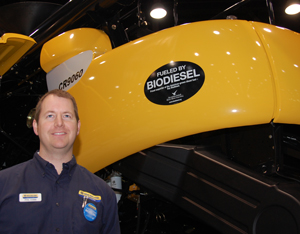 In both North America and Europe, New Holland has been a leader in recognizing the importance of biodiesel as a fuel source for agricultural equipment. The company was first to approve the use of biodiesel blends back in 2006 and has since moved to allow biodiesel in all equipment with New Holland manufactured diesel engines, including electronic injection engines with common rail technology.
At the recent National Farm Machinery Show in Louisville, most of the New Holland equipment on display proudly displayed soybean biodiesel signage, and company representatives wore buttons proclaiming their support for the domestically-produced fuel. “New Holland has a strong commitment to not only be a part of biodiesel, but also to be a leader in the industry as far as future fuel usage is concerned,” New Holland regional service manager Phil Cobb said at the farm show. He says it was natural for their company to take the lead. “Mainly because our customers are in the soybean areas and grow soybeans,” said Cobb. “Not only does it support farming, we also use the fuel. It’s important for the ag industry to be on the leading edge.”
Cobb says all New Holland equipment is approved for a minimum of five percent biodiesel, with the large combines approved for 100 percent and many of the tractors approved for up to 20 percent.
Listen to my interview with Phil Cobb from the National Farm Machinery Show here:


 At least one ethanol industry representative has been appointed to an expert work group attempting to assess the true carbon footprint of all fuel sources under the California’s proposed Low Carbon Fuel Standard.
 “The Low Carbon Fuel Standard is an important piece of energy policy, too important to rely on theories or unproven models,” Stowers said. “As the lone representative for ethanol producers in the workgroup, I want to make sure than all carbon accounting is based on the wealth of facts and accumulated data regarding agriculture, energy and deforestation. I also want to ensure that all fuels, including oil and electricity, are held to the same accounting standards as biofuels so that the rule truly can lower carbon emissions.”
 American Forests


