3TIER REmaps the World

Joanna Schroeder

The REmapping World Initiative that was launched in March of 2008 is finially complete, this according to 3TIER. The goal of the program was to address the biggest barrier to global renewable energy adoption, which is the lack of reliable information regarding resource potential. Today, the company released the global solar map and dataset and has already released a 5 km resolution global wind map and dataset, based upon proven techniques and the application of advanced numerical weather prediction models, which accurately and consistently diagram wind spatial and temporal variability.

“3TIER’s aim in developing these maps is to help accelerate the adoption of renewable energy around the world by providing a blueprint for development,” said Kenneth Westrick, founder and CEO of 3TIER, the global leader in renewable energy information services. “The creation of these maps is part of a larger effort to build a renewable energy information services platform which will provide customers with on-demand access to 3TIER’s massive datasets for wind and solar resources. Access to this critical data will enable global decision-makers and organizations to look at wind and solar potential on a regional scale and help maximize the value of renewable resources while mitigating the risks of their inherent variability.”

According the the company, the global solar map and dataset is based on 10 to 13 years of half-hourly, high-resolution visible satellite imagery collected from nine different satellites, dispersed across the globe and covering the entire surface of the earth. Satellite imagery was processed using a uniform methodology based upon a combination of in-house and peer-reviewed research documents supported by the global atmospheric science community.

Westrick concluded, “This dataset provides the in-depth solar irradiance information essential to developers, financiers, and governments for targeting the best regions in the world for development. Our solar resource technology provides the critical data to make renewable power a viable alternative and will be increasingly important in areas where solar data only exists at coarse resolution and inferior quality or is simply unavailable.”

Company Announcement, Energy, Solar, Wind

New Holland Commitment to Biodiesel

Cindy Zimmerman

When it comes to approval of biodiesel in farm machinery, New Holland is outstanding in the field.

In both North America and Europe, New Holland has been a leader in recognizing the importance of biodiesel as a fuel source for agricultural equipment. The company was first to approve the use of biodiesel blends back in 2006 and has since moved to allow biodiesel in all equipment with New Holland manufactured diesel engines, including electronic injection engines with common rail technology.

At the recent National Farm Machinery Show in Louisville, most of the New Holland equipment on display proudly displayed soybean biodiesel signage, and company representatives wore buttons proclaiming their support for the domestically-produced fuel. “New Holland has a strong commitment to not only be a part of biodiesel, but also to be a leader in the industry as far as future fuel usage is concerned,” New Holland regional service manager Phil Cobb said at the farm show. He says it was natural for their company to take the lead. “Mainly because our customers are in the soybean areas and grow soybeans,” said Cobb. “Not only does it support farming, we also use the fuel. It’s important for the ag industry to be on the leading edge.”

Cobb says all New Holland equipment is approved for a minimum of five percent biodiesel, with the large combines approved for 100 percent and many of the tractors approved for up to 20 percent.

Listen to my interview with Phil Cobb from the National Farm Machinery Show here:

Audio, Biodiesel, Farming, New Holland, Soybeans

CleanFUEL & Ferrellgas Partner on Propane Stations

Joanna Schroeder

CleanFUEL USA announced today during a propane education and ride and drive event its partnership with Ferrellgas Partners L.P. to install propane fueling stations across the U.S. Part of the Clean Start initiative, the Department of Energy (DOE) awarded CleanFUEL USA $12.9 million to construct the nation’s first and largest propane refueling network. Ferrellgas will support the station rollouts in 11 cities as the designated fuel partner.

The first station will be located in Dallas/Ft. Worth (DFW) and construction is expected to begin in the 3rd quarter of 2010. Following the first station in DFW, the companies have plans to build propane refueling stations in Austin, Baton Rouge, Chicago, Indianapolis, Lake Charles, New Orleans, Orlando, Phoenix, San Antonio and St. Louis. Ferrellgas will take the lead in identifying locations, securing permits, training employees, providing fuel and ongoing maintenance.

“DFW is the fourth largest metro area in the country, and includes many school districts, municipal entities and private businesses operating fleet vehicles with propane,” said Tony Dale, Ferrellgas National Director of Engine Fuels and Autogas.  “Propane is the most widely used fuel after gasoline and diesel.  Now CleanFUEL USA and Ferrellgas are making propane even more accessible to fleets and private users. This national fueling infrastructure project greatly enhances propane’s reputation as the ‘right now’ cleaner-burning and more economical alternative fuel.”

Today, propane is most commonly used for home heating but has become the third largest fuel used worldwide with its gaining marketshare for fleets. According to CleanFUEL USA, propane yields 87 percent less hydrocarbons and 50 percent fewer toxins than gasoline, and costs approximately 40-50 percent less per gallon than gasoline and diesel.

Pamela Burns, Dallas-Fort Worth Clean Cities Co-Coordinator said of the partnership, “As a Clean Start project partner, we’re excited to work with CleanFUEL USA and Ferrellgas in their efforts in reaching this goal by expanding the use of propane engine fuel.”

Company Announcement, News, Propane

170 MPG Concept Car Revealed

Joanna Schroeder

Wisconsin-based Valentin Technologies has revealed its 170 miles per gallon (mpg) concept car called the IngoCar. Currently under development, initial sketches indicate the car will be a mid-sized four door sportswagen passenger car. Styling for the car was provided by Davide Tonizzo, of designD.

Company founder, Ingo Valentin, said in a press release, “Finally outstanding performance and extremely high mileage are combined in a mid-size passenger car. We are proud to unveil our vision of an automobile that has the style, interior space, comfort and cost of a BMW 5 Series or Mercedes E-Class combined with unprecedented range and fuel economy.”

Based on a mix of city and rural driving, the car’s estimated mileage is 170 mpg but this feat is not achieved with a battery. Rather, the car uses a revolutionary hydraulic-fluid drive making the car a hybrid gasoline/hydraulic drive system. According to the company, here is how it works. Using a small engine, fluid is pumped into an accumulator. The fluid then drives hydraulic wheel motors for shiftless acceleration. During braking, motors are reversed and pump the entire recuperated braking energy back into the accumulator. This innovative technology and the car’s light weight give an estimated range of 1,000 miles for a full 6 gallon tank of fuel.

IngoCar has some speed too. It can go from 0-60 in 4 seconds. The company has not indicated when the IngoCar will be available and the price.  Click here to see images of the car and to learn more.

Car Makers, Miscellaneous, News

US Wind Energy Potential 3Xs Higher Than Thought

John Davis

The potential amount of wind energy in this country is actually more than three times what is was previously thought to be.

This post from the Energy Collective blog
says a new analysis from the National Renewable Energy Laboratory (NREL) credits the increase to improvements in wind turbines over the last decade and a half:

The assessment of onshore wind energy potential found that the U.S. could produce almost 37 million gigawatt-hours yearly. According to the American Wind Energy Association, that’s nine times our current annual electricity consumption.

Expressed as gigawatts rather than gigawatt hours, the new estimate for the U.S. wind resource is 10,000 gigawatts, an amount that dwarfs currently installed wind power which totals about 35 gigawatts – enough to power 9.7 million homes. Obviously there’s plenty more where that comes from, even more if offshore wind is included.

NREL’s last analysis in 1993, when wind turbine heights were more limited, estimated U.S. onshore wind potential at less than 10.8 million gigawatt hours.

As noted by Denise Bode, CEO of the American Wind Energy Association, the new assessment is more than a number, it’s another compelling argument for passage of comprehensive clean energy and climate legislation by Congress:

This new analysis confirms that America is blessed with vast wind resources that can energize our economy, create jobs, and avoid carbon for years to come—if we give ourselves the policy tools to do so, including a strong national Renewable Electricity Standard with aggressive, binding near- and long-term targets.

In addition, AWEA points out that if we took advantage of the wind energy potential, we would also create thousands of American jobs building the components and turbines to tap that potential.

Wind

Algae Association to Hold Workshop on Wastewater Use

John Davis

The National Algae Association’s Mid-South Chapter will be holding a workshop on how to best use wastewater to grow algae, especially algae for use in biodiesel.

The workshop, entitled “Algae: Mining Wastewater for Nutrients, Fuel, and Fertilizer,” will be held in Huntsville, Alabama on Friday, March 26, 2010:

With US fresh water supplies slowly dwindling and algae culture quickly becoming the centerpiece of bioenergy/bioremediation research , we must carefully examine our water and nutrient sources for an efficient, sustainable algal industry. This workshop explores how to minimize algae’s fresh water and nutrient footprints by recycling anthropogenic wastewater streams including agricultural, municipal, and industrial, while at the same time producing a host of valuable algal end products. In addition, we will learn of algae’s tremendous potential as a cost-effective bioremediation tool for wastewater streams, effecting a more stable and healthy ecosystem.

The group is also calling for white papers to include in the workshop looking at wastewater applications for both open pond and closed loop algae systems, technologies and support equipment. But you’ll need to hurry, because papers must be submitted by March 1st.

For more information on the workshop and white paper submission, contact Tamra Fakhoorian at TamraF.NAA@wk.net.

algae, Biodiesel

Propel Offers E85 for 85 Cents in Sacramento

On February 24th, E85 will sell for 85 cents per gallon at Propel Sacramento fueling locations within the state of California. This promotion will be in partnership with CALSTART to announce and celebrate expansion of the clean burning fuel throughout the state. The promotion is also an effort to bring awareness of E85 to the over 400,000 flexible fuel vehicles in California.

Propel’s E85 stations were partially funded through a US Department of Energy grant administered from CALSTART. According to a CALSTART press release, as a result of this grant, 14 new stations have been opened throughout California in the past 18 months.

“This growing network of E85 stations from our partner, Propel, offers California consumers more choice, while cleaning the air and boosting our efforts to cut petroleum use in the state,” said John Boesel, President and CEO of CALSTART.

A press event will kick off the promotion at 10:00 a.m. at 7741 Auburn Blvd. in Citrus Heights, CA. Propel currently has 11 E85 stations throughout the states of California and Washington. To see a listing of E85 stations that will offer the 85 cent promotion, click here.

E85, Ethanol, Ethanol News, News

Ethanol Industry Rep Appointed to California Panel

Cindy Zimmerman

CA ARBAt least one ethanol industry representative has been appointed to an expert work group attempting to assess the true carbon footprint of all fuel sources under the California’s proposed Low Carbon Fuel Standard.

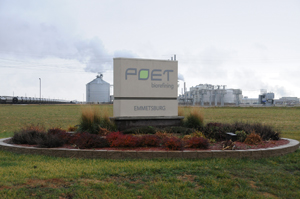
POET Senior Vice President of Science and Technology Mark Stowers has been appointed to the California Air Resources Board (CARB) is one of 30 experts from around the world appointed to the group. The group has been charged with assisting the Board in “refining and improving the land use and indirect effect analysis of transportation fuels,” according to a CARB resolution. The group will come up with recommendations to present to CARB by Jan. 1, 2011. The group’s first meeting will be Feb. 26 in Sacramento.

“The Low Carbon Fuel Standard is an important piece of energy policy, too important to rely on theories or unproven models,” Stowers said. “As the lone representative for ethanol producers in the workgroup, I want to make sure than all carbon accounting is based on the wealth of facts and accumulated data regarding agriculture, energy and deforestation. I also want to ensure that all fuels, including oil and electricity, are held to the same accounting standards as biofuels so that the rule truly can lower carbon emissions.”

The group also includes Jesper Hedal Kløverpris of Novozymes, which produces enzymes to further the development of advanced biofuels, as well as a number of university and energy researchers – but Stowers is the only ethanol industry representative on the panel. Stowers has led efforts at POET to create new, efficient processes for producing grain-based ethanol that save energy, limit water use and improve ethanol yields. He also leads POET’s cellulosic ethanol effort, known as Project LIBERTY, which produces ethanol from corn cobs.

Cellulosic, Energy, Environment, Ethanol, POET

GreenShift Applies for Patent, Sues 3 Ethanol Plants

Joanna Schroeder

GreenShift Corporation has simultaneously announced that it has filed for its third patent on its corn-oil extraction technologies while at the same time, commencing legal action against Big River Resources Galva, Big River Resources West Burlington and Cardinal Ethanol for infringing on GreenShift’s U.S. patent covering its corn oil extraction technology.

GreenShift's Corn Oil Extraction Technology

The complaint against Big River alleges that they infringed upon GreenShift’s U.S. Patent No. 7,601,858, titled “Method of Processing Ethanol Byproducts and Related Subsystems” (the “858 Patent”). The patent covers processes for recovering corn oil by evaporating and mechanically processing thin stillage, a precursor to the distillers grain co-product of corn ethanol production (“DGS”). Greenshift is claiming that Big River has caused a loss of income and irreparable harm.

Kevin Kreisler, chairman and CEO of GreenShift said in a company statement regarding the lawsuits, “There was no market for corn oil extraction from dry mill ethanol plants before we invented our now-patented technology in 2004. We estimate that more than about 20 percent of the ethanol industry has begun to use our technology without a license. While we are eager to earn the business of each last producer, we expect to have the opportunity to do so by helping each to realize additional value.”

Kreisler continued, “We innovated corn oil extraction technology, created the corn oil extraction market, and subsidized disruptive value creation for the U.S. corn ethanol industry; we have earned our patents and we deserve the full measure of the first mover competitive advantage. This, and any other, continued infringement is causing GreenShift irreparable and immediate harm and it must stop.”

However, ICM has come to the defense of Cardinal Ethanol, as the suit is against ICM equipment. ICM built the ethanol plant that went online in November of 2008.

“ICM will defend its customers as a companion matter to ICM’s own litigation against GS CleanTech and its affiliate, GreenShift Corporation, which we filed in Kansas in October 2009,” said Chris Mitchell, ICM’s vice president of marketing. “ICM believes that GS CleanTech’s alleged patent claims will be proved to be invalid. In the Kansas litigation, we have asserted that GS CleanTech/GreenShift misrepresented the liability of ICM’s customers for operating the ICM system, and that various actions of GS CleanTech/GreenShift constitute unfair competition and wrongful interference with ICM’s existing and prospective business and contractual relationships. Our customers continue to operate their oil recovery systems acquired from ICM, and we continue to see strong interest from prospective customers for further orders for ICM’s equipment.”

And patents they seek. Read More

Company Announcement, corn, Distillers Grains, Ethanol, Ethanol News

ALMS Partners with American Forests

Joanna Schroeder

American Le Mans Series (ALMS) is known globally for its environmental initiatives, and today is taking another green step with its partnership with American Forests to support its “dollar-a-tree” Global ReLeaf program. Nonprofit American Forests, has a goal of planting 100 million trees by 2020. ALMS has pledged to plant at least 5,000 trees during the 2010 race season with the focus on areas that have been damaged by natural disasters such as fires and floods and areas that have been overdeveloped.

“Since its inception, the ALMS has been at the forefront of developing green initiatives and solutions in motorsports,” said American Le Man Series President and CEO Scott Atherton.”We are very proud of our efforts with the Environmental Protection Agency and Department of Energy as they relate to our on-track efforts. Our involvement with American Forests enables us to contribute to similar solutions away from the race track and is another way the American Le Mans Series can advocate for a greener tomorrow.”

With the implementation of the Green ReLeaf campaign, the Series will begin every race weekend by displaying a Survivor tree in the paddock. The Survivor Elm – donated by the Series and its teams through American Forests’ Historic Tree program – will encourage fans to do their part for the planet. For every three trees planted, roughly one ton of carbon will be sequestered, allowing for over 1,666 tons of CO2 to be taken out of the atmosphere overall, and every acre of trees planted (approx. 340-490 trees) by the Series will offset about the amount of CO2 produced by driving a car 26,000 miles, or about twice the amount the average driver drives per year.

This initiative is part of the Series’ Michelin Green X Challenge, a season-long green competition.

American LeMans, Education, Environment