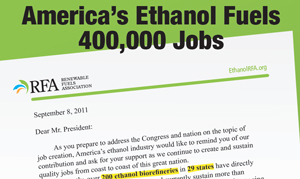
RFA E-15 Ad

POET Forms Biomass Alliance with Earth Partners

Cindy Zimmerman

POET announced a new alliance this week with The Earth Partners to develop “a sustainable supply of biomass that helps restore degraded land.” The project, called Conservation Biomass, will initially be used for heat and power generation and eventually liquid fuel production.

As part of their ongoing ecological restoration work, The Earth Partners will work with farmers and conservation property landowners to grow and sustainably harvest biomass from land with invasive vegetation or land where restorative plant species are grown. POET will then evaluate the best use of the biomass to generate heat, power or for liquid fuel production.

The initial project will deliver Conservation Biomass to POET Biorefining – Chancellor, a 100 million-gallon-per-year grain ethanol plant in Chancellor, S.D. that burns wood waste and landfill gas in a solid fuel boiler to generate all of its process steam. Burning biomass at the plant to generate power will allow the partnership to test the commercial viability of the Conservation Biomass business model at scale. POET and The Earth Partners will continue to research the potential for utilizing Conservation Biomass sources like prairie grasses for cellulosic ethanol production.

Read the story from POET here.

bioenergy, biomass, POET

Sobering Cost of Oil Addiction

Cindy Zimmerman

A CNN Money report this week offered some sobering statistics on the true cost of our addiction to oil.

According to the report, about 3,000 of the Army casualties reported in Iraq between 2003 and 2007 were protecting fuel convoys. That is one out of eight killed or wounded during that time period. The report notes, “Among the many incentives pushing the military to use less oil, reducing the number of casualties it takes to protect vulnerable fuel convoys is one of the most important.” The military used 5.5 billion gallons of fuel in 2010, or 3,555 for each active military member. That compares to less than 1,000 gallons for U.S. civilians. The military uses a full 80% of the energy consumed by the federal government.

That’s why initiatives like the one announced this week by the U.S. Departments of the Navy, Energy and Agriculture to develop more aviation and marine biofuels are so important. Thanks to Stephanie Dreyer of Growth Energy for the tip on the CNN Money report. Check out her blog post on “Measuring our oil addiction by more than just Dollars and Cents”, about our nation’s risky dependence on Middle East oil and the dangerous impact it has on the lives of our military.

biofuels, Government, Growth Energy, Oil

Electric Cadillac

Cindy Zimmerman

General Motors has brought luxury and electricity together in an electric Cadillac ELR.

According to GM, the “Cadillac Converj Concept, a dramatic luxury coupe with extended-range electric vehicle technology, is moving forward as a production car that will be called the Cadillac ELR.”

Development of the ELR is just underway, so details on performance, price and timing will be announced later.

The Cadillac ELR will feature an electric propulsion system made up of a T-shaped lithium ion battery, an electric drive unit, and a four-cylinder engine-generator. It uses electricity as its primary source to drive the car without using gasoline or producing tailpipe emissions. When the battery’s energy is low, the ELR seamlessly switches to extended-range mode to enable driving for hundreds of additional miles.

Read more here from GM.

Car Makers, Electric Vehicles

USDA Guarantees Loan for Florida Biofuels Plant

Cindy Zimmerman

The U.S. Secretary of Agriculture Tom Vilsack today announced a $75 million loan guarantee for a Florida bioprocessing facility to create fuel from citrus and yard waste.

The guarantee will support construction of the INEOS New Planet BioEnergy facility in Vero Beach, Florida that will produce up to 8 million gallons per year of cellulosic ethanol from citrus fruit, vegetable and yard wastes, and create an estimated 380 new jobs. Vilsack toured the facility last week, meeting construction workers and company and community officials to highlight the importance of helping our nation develop the next generation of biofuels.

“This cutting-edge facility in Florida, and others like it across America, represents the kind of innovation we need to continue to build a competitively-priced, American-made, homegrown biofuels industry that helps to break our dependence on foreign oil and moves our nation toward a clean energy economy,” said Vilsack.

The facility, estimated to be completed by the summer of 2012, will consume an estimated 300 dry tons per day of organic material and, in addition to ethanol, produce enough electricity to run the plant and provide for the power needs of 1,400 homes.

advanced biofuels, Cellulosic, Ethanol, Ethanol News, Government, USDA

President Talks Ethanol in Illinois

Cindy Zimmerman

The 11-year-old grandson of a corn farmer and ethanol plant investor got to ask President Obama a question during a town hall meeting at the Wyffels Hybrids corn seed production plant in Atkinson, Illinois on Wednesday.

“My grandpa is a farmer, and he owns part of the local ethanol plant,” young Alex McAvoy said to the POTUS. “I was wondering, what are you going to do to keep the ethanol plant running?”

The president stressed his strong support for biofuels and told Alex that he is interested in diversification. “I will say that the more we see the science, the more we want to find ways to diversify our biofuels so that we’re not just reliant on corn-based ethanol,” said Obama. “Now, we can do more to make corn-based ethanol more efficient than it is, and that’s where the research comes in. And there are some wonderful research facilities in our own University of Illinois system that have done a lot to advance the science on this.”

Obama continued:

But the key going forward is going to be, can we create biofuels out of switchgrass and wood chips and other materials that right now are considered waste materials? And part of the reason that’s important is because, as I think most farmers here know, particularly if you’re in livestock farming, right now the costs of feed keep on going up and the costs of food as a consequence are also going up. Only about 4 percent of that is accounted for by corn being diverted into ethanol, but as you see more and more demand placed on our food supplies around the world — as folks in China and folks in India start wanting to eat more meat and commodity prices start going up, it’s going to be important for us to figure out how can we make biofuels out of things that don’t involve our food chain.

And so hopefully your grandfather, with his ethanol plant, is starting to work with our Department of Agriculture to find new approaches to the biofuel industry. But this is a huge area of support. This is another example of where we’ve got to make sure that our budget continues to invest in basic research, and that costs money. And if all we’re doing is cutting and we’re not thinking about investments, then over time we’re going to fall behind to countries like Brazil, where they’ve already got a third, I think, of their auto fleet operates on biofuels. Well, that’s — there’s no reason why we should fall behind a country like Brazil when it comes to developing alternative energy. I want to be number one in alternative energy, and that’s good for the farm economy.

Alex’s grandfather, by the way, is a farmer investor in Patriot Renewable Fuels, a 100 million gallon ethanol facility in Annawan, IL.

advanced biofuels, biofuels, Ethanol, Ethanol News

Ethanol and Motorcycles Mix it Up

Cindy Zimmerman

Ethanol Report PodcastThe Renewable Fuels Association (RFA) proved once again this year that ethanol and motorcycles do mix well together.

This edition of “The Ethanol Report” features the 71st Annual Sturgis Motorcycle Rally held August 8-14 in Sturgis, SD.

RFA at SturgisRFA Director of Market Development Robert White and his father Jere White, Executive Director of the Kansas Corn Growers, talk about the importance of reaching motorcycle lovers with information about ethanol. You’ll also hear comments about ethanol from Buffalo Chip Campground owner Rod “Woody” Woodruff, Mrs. South Dakota Lori Visker, Survivor star Rupert and a biker from Australia.

Pictured here giving away ethanol “Fueled with Pride” tee shirts at Sturgis are – from right to left – are Robert White, his fiancee Denita Elliss, and Doug Brandmahl, a biker from Virginia. Lots more photos from Sturgis can be viewed in the 2011 Sturgis Motorcycle Rally Photo Album.

Listen to or download the Ethanol Report here: Ethanol Report on 2011 Sturgis Motorcycle Rally

Audio, Ethanol, Ethanol News, Ethanol Report, Sturgis

Gator Fat Could Make Biodiesel

Cindy Zimmerman

Once upon a time, an oil company used the slogan “Put a Tiger in Your Tank.” Someday, it could be “Put a Gator in Your Tank.”

Scientists have identified a new and unlikely raw material for biodiesel in alligator fat, according to a research published in the American Chemical Society’s Journal Industrial & Engineering Chemistry Research.

Researchers at the University of Louisiana showed in laboratory experiments that oil extracted from alligator fat can easily be converted into biodiesel. They say the oil is actually more suitable for biodiesel production than oil produced from some other animal fats. The gator biodiesel is similar in composition to biodiesel from soybeans, and meets nearly all of the official standards for high quality biodiesel.

Alligator fat is a byproduct from the alligator meat processing industry, which each year disposes of about 15 million pounds of alligator fat in landfills. The alligators are harvested from the wild and from alligator farms for their skin and meat. Louisiana and Florida account for the highest populations of alligators in the United States.

Read more about the research here.

advanced biofuels, Biodiesel, feedstocks

Farm Broadcast Content Favorites

Chuck Zimmerman

Our latest ZimmPoll asked the question, “What do you like best about farm radio?” You know that biofuels are certainly part of farm broadcast programming! You see farm broadcasters at many biofuel industry events.

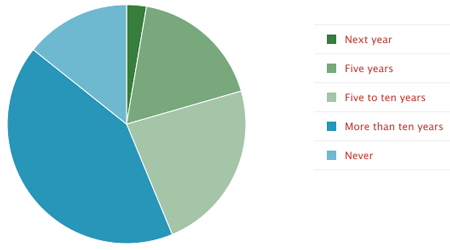
So here’s what the results are in order of most responses. 39% said All of the Above, 18% said Markets, 16% said None of the Above, 11% said Policy News, 7% said Crop News and same for Interviews and only 2% said Weather. We also had a comment posted on AgWired that said, “The localization and attachment to the farm broadcaster who is most familiar with the area ag news beat.” So what do you think about these results?

Our new ZimmPoll is now live. We’re asking the question, “Which of these Fall Farm Shows Will You Attend?” I’m sure we’ll be seeing more new technology related to biofuels feedstock production at these shows. Thanks.

ZimmPoll is sponsored by Rhea+Kaiser, a full-service advertising/public relations agency.

ZimmPoll

Navy, Energy and USDA Partner for Advanced Biofuels

Cindy Zimmerman

The Obama Administration today announced a partnership between the private sector and the U.S. Departments of Agriculture, Energy and Navy to produce advanced drop-in aviation and marine biofuels to power military and commercial transportation.

President Obama made the announcement during a stop in Iowa, at the same time the three department secretaries held a telephone conference call with the press. Secretary of Agriculture Tom Vilsack, Secretary of Energy Steven Chu, and Secretary of the Navy Ray Mabus announced that they have developed a plan to jointly construct or retrofit several drop-in biofuel plants and refineries.

“America’s long-term national security depends upon a commercially viable domestic biofuels market that will benefit taxpayers while simultaneously giving Sailors and Marines tactical and strategic advantages,” said Navy Secretary Ray Mabus. “Today’s announcement not only leverages our home grown fuel sources to support our national security, but it also helps advance the biofuels market, which ultimately brings down the cost of biofuels for everyone.”

“By building a national biofuels industry, we are creating construction jobs, refinery jobs and economic opportunity in rural communities throughout the country,” said Agriculture Secretary Vilsack. “As importantly, every gallon of biofuel consumed near where it is produced cuts transportation costs and, for the military, improves energy security.”

“These pioneer plants will demonstrate advanced technologies to produce infrastructure-compatible, drop-in renewable fuels from America’s abundant biomass resources,” said Energy Secretary Chu. “It will support development of a new, rural-focused industry that will replace imported crude oil with secure, renewable fuels made here in the U.S.”

The joint plan calls for the three Departments to invest a total of up to $510 million with at least a one to one match from private industry in an effort to reduce U.S. reliance on foreign oil and create jobs while positioning American companies and farmers to be global leaders in advanced biofuels production.

Listen to the entire press conference here: Navy, DOE, USDA Press Conference

advanced biofuels, Audio, biofuels, biojet fuel, Ethanol, Ethanol News, Government

President Visiting Three of Top Four Ethanol States

Cindy Zimmerman

During his Midwest bus tour this week, President Barack Obama is visiting three of the nation’s top four ethanol producing states, accounting for more than 42 percent of the country’s ethanol production.

The president’s first audience question today in Minnesota, the number four ethanol state, was “How are you going to use renewable energy to create jobs in the future?”

“One, obviously, is biofuels,” Obama responded. “And a lot of folks here are familiar with corn-based ethanol, but the fact of the matter is the technology is moving where we need to start taking advantage of a whole range of biofuels, using refuse, using stuff that we don’t use for food to create energy. And we are seeing incredible progress on that front, but it’s key to make sure that we continue to make the research and that we also use the incredible purchasing power of the federal government to encourage it.”

The president also noted progress in alternative fuels for aviation, as well as wind, solar and the next generation of electric vehicles. Read the entire transcript of his remarks and audience questions here on the White House website.

Renewable Fuels Association
(RFA) president and CEO Bob Dinneen posted an open letter to President Obama on the E-xchange Blog, encouraging him to embrace his “record of support for ethanol and other domestic renewable fuels” as he travels through the ethanol producing countryside. “Ethanol production is offering jobs that provide a good wage, good benefits, and the opportunity for rural Americans to stay in rural America or move back home,” wrote Dinneen. “Ethanol and the policies that have helped support it are providing benefits to Americans all across the country. American ethanol production is the most successful, efficient, and cost-effective renewable fuel source the world has ever known.”

After his stop in Minnesota Monday morning, Obama visited a farm in the number one ethanol producing state, Iowa. On Tuesday, the president is scheduled to visit Peosta, Iowa and he will travel to number three state Illinois for two stops in the northwest corner of the state on Wednesday.

By the way – the number two ethanol producing state is Nebraska. No stops are scheduled there.

Ethanol, Ethanol News, Government, RFA