

RFA E-15 Ad

Genera Awarded for Sustainable Feedstock Innovations

Joanna Schroeder

Genera Energy Inc. (Genera) was awarded the 2013 Sustainable Biofuels Award in the Sustainable Feedstock Innovation category at the World Biofuels Markets 2013 Congress and Exhibition, held in Rotterdam, Netherlands. The award recognizes outstanding achievement for a project that displays “innovation to enhance sustainability in feedstock supply.” According to Genera, it’s integrated solution covers the full biomass system from the farm to the biorefinery including: energy crop selection, land acquisition, production, harvest, collection and logistics.

“Taking the time to celebrate the innovation and invention in this industry is really the heart of these Awards,” said Nadim Chaudhry, Chief Executive Officer of Green Genera World Biofuels Photo- Green Power ConfPower Conferences, organizer of both the awards and the conference. “Our industry has such outstanding leaders, innovative technology and groundbreaking partnerships happening all the time, every year the nominations increase and the judges find it more difficult to choose a winner.”

Over the last six years, Genera, has worked with the University of Tennessee, to establish a comprehensive program for purpose‐grown energy crops, contracting with more than 60 farmers to produce more than 2,000 hectares (5,100 acres) of switchgrass. According to the company, with a focus on sustainability, farms were carefully selected to represent a wide cross section of what a full‐scale commercial energy crop supply region, or bioshed, would look like.

Throughout the development of its integrated system, Genera has tested more than 30 separate energy crop and logistic system alternative and has identified the optimum energy crop supply chain—a system that is cost efficient and meets robust sustainability performance criteria. Genera’s says it’s solution focuses on managing an integrated commercial supply chain to reliably supply a biorefinery with cost competitive, uniform, industrial biomass feedstock.

“It is an honor to receive the 2013 Sustainable Biofuels Award,” said Kelly Tiller, CEO of Genera. “Building a bulletproof biomass supply chain system requires unique skills and experience. We were lucky to have forward‐looking partners at the University of Tennessee and in the State capital. They all contributed to our success here today and we are very grateful to them.”

advanced biofuels, Ethanol, feedstocks, Renewable Energy

KiOR Delivers Cellulosic Diesel

Joanna Schroeder

KiOR, Inc. has announced the initial shipments of cellulosic diesel from its commercial scale facility in Columbus, Mississippi. The biorefinery uses pine wood chips and produces gasoline and diesel, the first renewable hydrocarbon fuels in the U.S. manufactured at commercial scale with no compatibility issues. KiOR’s renewable gasoline is also the first renewable cellulosic gasoline ever registered by the Environmental Protection Agency for sale in the U.S.

kior_logo_CMYK“This is a major step forward for KiOR, the biofuels industry and the entire renewable fuels sector,” said Fred Cannon, KiOR’s President and Chief Executive Officer. “With first production at Columbus, KiOR has technology with the potential to resurrect each and every shut down paper mill in the country and to replace imported oil on a cost effective basis while creating American jobs.”

Cannon continued, “This facility demonstrates the efficacy of KiOR’s proprietary catalytic biomass-to-fuel process with the potential to deliver cellulosic gasoline and diesel to the U.S. We are proud to be making history in Mississippi. The technology is simply scalable and we believe sufficient excess feedstock exists in the Southeast alone to build almost fifty KiOR commercial scale facilities.”

Haley Barbour, former Governor of Mississippi, was instrumental in attracting KiOR to Mississippi. He said of the event, “The shipment of this first fuel from KiOR’s Columbus, Mississippi, facility is the culmination of a vision to establish Mississippi as the birthplace of the wood-to-fuels production technology. This progress highlights our highly skilled labor force, abundant natural resources and supportive government climate for innovative companies like KiOR seeking a home to expand their businesses.”

advanced biofuels, Cellulosic

It’s National Biodiesel Day!

Joanna Schroeder

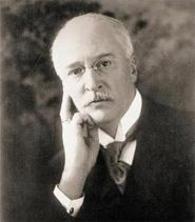
Today is National Biodiesel Day! The Iowa Biodiesel Board is asking Iowans to reflect on the contribution the biodiesel industry is making to Iowa and to the nation. March rudolf-diesel_394645698109109557518 is National Biodiesel Day because it is Rudolf Diesel’s birthday, the man who invented the engine that bears his name. He ran early models on peanut oil, and was a visionary for the renewable fuel that would one day be called biodiesel.

In a 1912 speech, Diesel said: “The use of vegetable oils for engine fuels may seem insignificant today, but such oils may become, in the course of time, as important as petroleum and the coal tar products of the present time.”

Iowa has been leading the way with 12 biodiesel plants that produced 184 million gallons of biodiesel in 2012.  This accounts for about 17 percent of all U.S. biodiesel.

“With biodiesel, Iowans are leading an agricultural revolution that is making a meaningful difference in our nation’s energy security and helping our economy rebound,” said Randy Olson, executive director of the Iowa Biodiesel Board. “We truly are at the forefront of innovative American agriculture driving American energy independence.”

Recent economic studies show in 2012, Iowa biodiesel:

  • Supported nearly 5,000 jobs in the state
  • Contributed nearly $400 million to the state’s GDP
  • Generated $236.8 million of household income

Biodiesel also benefits consumers in other ways.  According to a study measuring the impact of the Iowa biodiesel industry on the Iowa agricultural economy, corn, soybean, and livestock  producers all benefit from biodiesel production. Demand for vegetable oils reduces soybean meal prices, to the benefit of Iowa’s livestock producers – and that ultimately benefits the consumer at the grocery store.

Want to show your support for biodiesel today or any day?  Join the Biodiesel Backers!

advanced biofuels, Biodiesel

Alltech Gears Up for Algae Symposium

John Davis

alltechalgae1Animal health company Alltech will hold a symposium on algae with hopes of expanding the pond scum’s potential beyond biofuels and into sustainable food production. The 29th Annual Alltech International Symposium is to be held in Lexington, Ky., May 19th-22nd:

“We will focus on algae as part of the foundation of the food chain by identifying the importance of DHA and how it can balance the omega-6:omega-3 ratio in today’s Western diets,” said Becky Timmons, chairperson of the algae-related track at Symposium. “As we look toward the future of nutrition, there is an increasing need to find high-quality, alternative raw materials to feed the growing population. There is a big challenge in front of us – we need to provide consumers the right nutrition, a balanced diet of fatty acids, vitamins and amino acids. We must be forward thinking and identify various opportunities to use value-added solutions in order to provide nutritious food to the world.”

This year the symposium will offer breakout sessions focused on algae, including:

Simplify Your Food Chain: Algae as the Foundation of Nutrition in the Future
You Are What You Eat: Better Health Through Better Nutrition and the Role of DHA
Anything You Can Do, I Can Do Better: Identifying the Opportunities for Value-Added Products

Organizers hope this will offer attendees a more holistic experience, with discussions ranging from algae and agriculture’s carbon footprint to nutrition and marketing.

Registration and more information is available here.

algae, biofuels

Topsun Launches First 420W Solar Panel

Joanna Schroeder

topsun-logoTopsun Co., based in South Korea, has launched their new 420W solar panel. According to the company, this 420W solar panel is recognized as a world first and has the highest power output in the solar industry. Its 96-cell outfit and 4mm glass added heavy duty features and galvanized aluminum materials guarantees an over 30-year lifespan.

According to Chang Joe, marketing director of Topsun, “This 420W solar panel is designed with MW utility developers in mind. Until now, utility-scale developers had to use small 250W solar panels for the MW solar projects. For this reason, the developers could not lower the installation cost to less than $2/watt because of the fixed amount and quantity of electric wires, structure cost, and extra labor cost.”

“With this 420W solar panel, the developers and installers can lower the number of solar panels for their installations by up to 40%, resulting in a reduction of approximately 10% in the amount of wires, structures, and labor times for solar projects,” continued Joe. “In the last two years, the PV module price/watt has decreased by about 130%. Otherwise, the balance of systems cost has been sustained. If the developers and installers simulate the cost with 420W PVs, they will see that the 420W solar panel has a better ROI and IRR. In commercial buildings and residential homes, this equation applies with the same effect.”

Electricity, Energy, Solar

ACE, IRFA Celebrate A Century of Subisides

Joanna Schroeder

Century of Subsidies Birthday CakeThe Iowa Renewable Fuels Association (IRFA) and the American Coalition for Ethanol (ACE) along with a full house, celebrated a “Century of Subsidies” for Big Oil today with a miniature version of the Capitol cake and ice cream. The cake was created by Charm City Cakes especially for the event that highlighted the fact that oil industry has received certain subsidies since 1913 – 100 years.

“Today’s ‘Century of Subsidies’ birthday party was not about saying every tax subsidy the oil companies get is bad,” said Rick Schwarck, President of the IRFA and CEO of Absolute Energy, an ethanol plant near St. Ansgar, Iowa. “Today’s ‘Century of Subsidies’ birthday party was a reminder to policy makers that Big Oil has benefited from taxpayer support for 100 years – and not just with tax subsidies, but mandates and loan guarantees and other policies.”

“So when the debate heats up over the Renewable Fuel Standard (RFS) and other renewable fuels policy, the debate should be a full, fair and factual discussion that takes an honest, hard look at how federal policy has been tilted in favor of Big Oil for a century,” continued Schwarck. American consumers deserve a level playing field that does not hold back homegrown, low-cost renewable fuels options.”

U.S. Senator Chuck Grassley (R-Iowa), who was voting on budget issues during the event submitted a statement in response to one hundred continuous years of oil subsidies. “America needs ‘all of the above’ for its energy policy, including domestic oil and gas, renewable energy, conservation, and emission-free nuclear. Oil, gas and nuclear all receive longstanding federal support. Any changes to support for renewables should be made within a broad-based energy policy discussion. Targeting renewables outside of a comprehensive debate doesn’t make any sense when it comes to good policy, and it’s intellectually dishonest if the effort is driven by competition that receives federal support.”

U.S. Senator Tom Harkin (D-Iowa) added, “This issue comes down to one thing: supporting renewable energy and our country’s energy security, all while creating good, middle class jobs that sustain a green economy in states like Iowa. That is why keeping the Renewable Fuel Standard in place is so critical. I salute ACE and the Iowa Renewable Fuels Association for recognizing these contributions and continuing their Century of Subsidies Press Confsupport at a time when it is needed the most.”

On Tuesday and Wednesday, nearly 70 ethanol advocates from around the country met with Congress to discuss the Renewable Fuel Standard (RFS), E15 and other ethanol related topics as part of ACE’s Biofuels Beltway March. The point of the press event was to show the need to counterbalance the “Century of Subsidies” and other policies that favor petroleum, in part by protecting the federal RFS. The RFS cracks open the petroleum monopoly to give consumers non-petroleum choices at the pump. Consumers benefit from market access to lower cost renewable fuels like E15 and E85.

Listen to the Century of Subsidies press event here: Celebration of a Century of Subsidies

View the ACE Biofuels Beltway March 2013 Photo Album.

ACE, Audio, biofuels, Biofuels Beltway, E15, Iowa RFA, Oil, RFA

California Solar Projects Get Feds’ Go Ahead

John Davis

Earlier, I told you how a Nevada wind energy project got the green light to proceed from the U.S. Department of the Interior. Add two more renewable energy projects in California, this time solar and both in the state’s Riverside East Solar Energy Zone, also to be put on Bureau of Land Management property:

mccoysolar1The McCoy Solar Energy Project, located about 13 miles northwest of Blythe, CA, was proposed by McCoy Solar, LLC (a subsidiary of NextEra Energy Resources, LLC). The 750-megawatt photovoltaic solar facility would be one of the largest solar projects in the world, and encompass about 7,700 acres of BLM-managed lands and 477 acres of private land… When operational, the facility would generate enough clean power for an estimated 225,000 homes in southern California. A 12.5-mile generation transmission line would connect the project to Southern California Edison’s Colorado River Substation.

The Desert Harvest Solar Farm, proposed by EDF Renewable Energy (formerly enXco) on a sitedesertharvestmap1 six miles north of Desert Center, CA, would encompass about 1,208 acres of BLM-managed lands for the 150-megawatt photovoltaic
facility… When operational, the facility would generate enough electricity to power an estimated 45,000 homes in southern California. The project also includes an on-site substation and 230-kilovolt line to the Red Bluff Substation, which will connect the project to the Southern California Edison regional transmission grid.

BLM officials say both were developed with sensitive native species in mind.

Government, Solar

Feds Give Nevada Wind Project the Green Light

John Davis

searchlightwind1A project to build wind turbines to be built on federal lands got the government’s approval to move ahead. KLAS-TV in Las Vegas reports Sen. Harry Reid’s (D-NV) office announced the Department of the Interior has a approved the 200-Megawatt wind project in Searchlight, Nevada, just the second utility-scale wind energy project to be allowed in the state:

The permanent wind farm will be located on 163 acres and the wind turbines are designed to stand 415-feet tall, according to the Bureau of Land Management.

“Nevada is fortunate that its sunny skies, strong winds, and geothermal resources provides us an opportunity to brighten our economic future and transform the Silver State into the vibrant core of a Western and national clean energy market,” Reid said in the statement.

The project is expected to provide enough power for about 70,000 homes. It is still awaiting a right-of-way grant, according to the Interior Department.

Government, Wind

Agenda Announced for Int’l Fuel Ethanol Workshop

John Davis

FEWMore than 140 speakers will be talking during four track session at the upcoming 2013 International Fuel Ethanol Workshop & Expo, the ethanol industry’s largest and longest-running conference. Officials released the agenda for the June 10-13, 2013 event in St. Louis, Mo.

“Attendees of the 29th annual FEW will gain extremely important information about the ethanol industry,” said Tim Portz, Vice President of Content & Executive Editor at BBI International. “This year we had an overwhelming number of speaker abstracts. The large number of submissions, coupled with the feedback from last year’s attendees, that included producers representing 87 percent of all U.S. installed capacity, is helping to shape this conference’s agenda into the most current and relevant FEW we’ve ever produced.”

The 2013 FEW is expected to draw more than 2,000 attendees and will include national and international ethanol producers, investors, industry suppliers and policymakers. During the course of the event, they’ll discuss issues categorized into four tracks:

Track 1: Production
Track 2: Leadership & Financial Management
Track 3: Coproducts
Track 4: Cellulosic & Advanced Ethanol

Check out the entire agenda, and find more information at www.FuelEthanolWorkshop.com.

conferences, Ethanol, FEW, News

Sweetwater World Biofuels Award

Cindy Zimmerman

A New York-based cellulosic sugar producer has received the 2013 Sustainable Biofuels Feedstock Process Award.

Sweetwater Energy LogoSweetwater Energy received the award at this year’s World Biofuels Markets and Bio-based Chemicals Conference currently being held in Rotterdam, The Netherlands. The award recognizes the most exciting new feedstock innovation in the development of truly sustainable and renewable fuel and chemical solutions in the global biofuels market.

“We’re very pleased to receive this recognition, especially on the global stage,” says Arunas Chesonis, Chairman and CEO of Sweetwater. “Sweetwater’s sugar platform technology is a way to help our customers take a step away from the difficulties of managing various types of feedstocks, and to have at their disposal a simple, clean source of carbon from which to produce fuels, plastics, and other useful chemicals. It’s gratifying to know we’re processing carbon captured from the atmosphere by crops and trees over the past few years, as opposed to carbon from 100 million years ago in the case of fossil fuel.”

The award is in recognition of Sweetwater’s patented cellulosic sugar technology, as well as for the patented decentralized business model that allows refineries to transition to cellulosic feedstocks gradually and without large capital outlays usually associated with cutting-edge cellulosic technologies. Sweetwater uses a unique technology to produce low-cost sugars from non-food plant materials, including waste materials such as crop residues, wood thinning, or non-food, purpose-grown crops such as energy sorghum. This highly fermentable sugar solution is sold to refineries, which use it to produce biofuels, biochemicals, and bioplastics.

advanced biofuels, biofuels, Cellulosic, International