
 Broadwind Energy, Inc. has announced new tower orders from Siemens. Broadwind will produce these towers in its Manitowoc, Wisc. and Abilene, Tex. facilities. Since the start of 2013, Broadwind has recorded $389 million in new tower orders.
- POET has reached its first milestone under the company-wide “Ingreenuity” sustainability program. Since 2009, POET biorefineries have produced more than 700 million pounds of bio-based products, surpassing the target set in 2010. POET’s increase in production of bio-based products has been led by Voilá™ Corn Oil, which is now installed in all of POET’s 27 plants and is responsible for over 700 million pounds of product since 2009. In addition to POET’s Ingreenuity goals, POET produces approximately 9 billion pounds of high-protein animal feed annually and has sold more than 1.2 million tons of liquefied CO2 into U.S. markets since 2009.
- Natural Power has been appointed by Vattenfall as Ecological Clerk of Works at Clashindarroch Wind Farm in Aberdeenshire, Scotland. The 18-turbine development will have an installed capacity of 36.9 MW, generating enough electricity to power over 20,000 homes.
- Admirals Bank, a provider of residential renewable energy financing, will participate in an effort alongside EmPower Solar to offer Breezy Point, New York residents financing options to purchase solar systems for their homes. The Breezy Point Green Committee developed this initiative to foster the sustainable rebuilding of homes and community buildings affected by Hurricane Sandy.

ACCIONA Turbines Selected for Wind Farm
ACCIONA has signed a contract to supply 34 turbines for a 102 MW wind farm in the Canadian province of Nova Scotia. The company will carry out the construction, internal electrical infrastructures and assembly, and will also undertake the operation and maintenance of the facility.
The South Canoe wind farm, which will be the largest in Nova Scotia, has been developed by three local companies: Oxford Frozen Foods, Minas Basin Pulp and Power and the utility company Nova Scotia Power, to which the power generated will be sold. It will use ACCIONA Windpower AW3000/116 wind turbines, each with a capacity of 3 MW, hub height of 92m, and a rotor diameter of 116 metres.
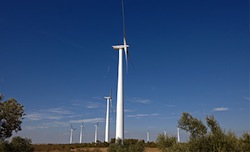 The facility will supply electricity equivalent to the consumption of 32,000 homes and will help the province of Nova Scotia reach its renewable energy targets.
“ACCIONA was able to deliver what the South Canoe Project team asked for: a complete solution including highly-reliable and high-capacity turbines, construction services and operations and maintenance,” said Ilya Hartmann, CEO of ACCIONA Energy North America. “We’re pleased to apply our full range of wind energy services to provide the best value for this project.”
ACCIONA Windpower North America CEO Enrique Teruel says the company “is proud to be part of the South Canoe Wind Project and to continue expanding the track record of our AW3000 turbine in North America.”
To date, orders for the AW3000 turbines amount to 1,491 MW and the wind turbines are destined for wind farms in nine different countries. Nearly half this figure corresponds to wind farms in North America, and 78 percent of the total capacity will be supplied to customers outside the ACCIONA Group.
UL Approves Biobutanol Use for Storage & Dispensing
Butamax Advanced Biofuels, LLC, has announced that a joint research program with UL (Underwriters Laboratories) has determined that gasoline fuel storage and dispensing equipment meeting latest UL standards can safely and successfully use blends of up to 16 percent biobuta nol. This is the first time that UL has made such a determination.
Butamax’s Fuel Product Manager, James Baustian, said, “UL represents the gold standard for product safety, testing, and certification. This guidance clears the way for State Agencies to consider and approve dispensing of isobutanol gasoline fuel blends. This is a major milestone for the commercial distribution of biobutanol. Butamax will immediately begin to work with State and Federal authorities to complete final approvals for dispensing of gasoline containing isobutanol.”
State regulations require fuel dispensing equipment to be listed by independent product safety testing laboratories such as UL. Butamax says at the time current UL dispensing equipment test standards were finalized, biobutanol was not commercially available and was not tested. This announcement by UL means that if butanol had been available as a fuel, says Butamax, it would have been included for service use in equipment meeting latest UL standards.
Butamax CEO Paul Beckwith added, “UL has conducted a comprehensive assessment of isobutanol compatibility jointly with Butamax and we have found them to be an excellent technology partner. This milestone is a reflection of UL’s commitment to promotion of new product safety, together with Butamax’s fuel market expertise.”
OriginOil Launches Aquaculture Showcase
OriginOil has launched its Permanent Technology Showcase with a demonstration of its EWS Aqua Q60 and EWS Algae A60 models at Aqua Farming Tech, a sustainable fish farm in Thermal, California, located in the Coachella Valley.
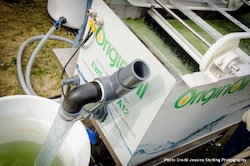 “Worldwide, more fish is now being farmed than beef,” said Riggs Eckelberry, president and CEO of OriginOil. “While this is good news, the aquaculture industry will have to address the environmental and operational problems it faces if it is to continue to grow, including the fact that fish is often farmed under toxic conditions. Our Coachella Valley showcase is intended to serve as a living demonstration of the feasibility of clean, sustainable aquaculture.”
OriginOil’s commercial fish farming pond water treatment system can rapidly remove ammonia, bacteria and other aquatic invaders from pond water. And farmers who want a healthier and less-expensive alternative to fish meal can use OriginOil’s algae harvesting system to produce nutritious fish feed. Together, the OriginOil Aquaculture System can help spur the growth of sustainable fish farming on a global scale by reducing costs, eliminating the need for chemical treatment and improving the quality of the product.
Aquaculture is a fast-growing industry. The $100 billion industry is expected to increase by 33 percent between 2012 and 2022, compared to an increase of only 3 percent in capture fisheries, according to the United Nations (The State of World Fisheries, P. 206). But the growth is leading to operational and environmental problems, including the high costs of energy and fish feed, which have forced many fish farms in the Coachella Valley to close.
According to OriginOil, EWS works by recirculating water through a low-voltage electrical pulsing system that causes contaminants or algae to coagulate, or clump together. The clumped-up material then enters a second stage in which low-power electrical pulses generate a cloud of micro-bubbles that gently lift the concentrate to the surface for harvesting.
The EWS Aqua Q60 commercial fish farming pond water treatment system can service 50,000 liters daily, says OriginOil, while consuming less than 20 kilowatt-hours of electricity per day (about $2.40 worth). The system is designed to reduce fish stress and improve yields, while sharply reducing or eliminating the need for chemicals and antibiotics.
The EWS Algae A60 is a mid-scale harvester that can process up to 60 liters (16 gallons) per minute of algae water. Individual EWS Algae A60 units can be assigned to manage a pond or bioreactor assembly of up to 500,000 liters. Units can be combined to achieve massive parallel processing capability. The unit removes 99 percent of the water to produce an algae concentrate. Algae-based fish feed costs up to 60 to 70 percent less than traditional fish feed.
Greenlight to Turn Waste Oil into Biodiesel at BWI
 Flying into the Washington, D.C. area will soon become a bit greener, thanks to a partnership to turn waste cooking oil at an area airport into biodiesel. The Environmental Leader reports Greenlight Biofuels is partnering with airport concessions giant Airmall USA to turn the waste cooking grease at Baltimore/Washington International (BWI) into biodiesel.
The recycling program shows the key role industries can play in promoting energy independence, says Jim Kingdon, president of Greenlight Biofuels.
On average, every 100 gallons of processed oil is equivalent to 70 gallons of biodiesel, which can offset up to 1,212 pounds of carbon dioxide emissions, the companies say.
Greenlight Biofuels has been around since 2007, and its principals have been involved in renewable energy for more than a decade.
Argentina Files Complaint on EU Biodiesel Tariffs
 Argentina is not sitting still for what it terms as “illegal tariffs” against its biodiesel going to the European Union. This story from the Wall Street Journal says, for the third time, the South American country has complained to the World Trade Organization about the EU’s block on the imported biodiesel.
Last month, the EU slapped steep import taxes on Argentine biofuel ranging from 217 to 246 euros ($298-$336) per metric ton, “having the direct and immediate effect of closing the European market to Argentine biodiesel and affecting exports worth over $1.5 billion per year,” the country’s foreign ministry said on Thursday.
A spokesman for the European Commission, the EU’s executive arm, didn’t immediately respond to requests for comment.
The first step in the dispute resolution process is a request for consultations, in which the parties involved have 60 days to try to reach an agreement, the WTO said about the latest Argentine complaint. If no agreement is reached, Argentina can then request a WTO panel be convened to settle the dispute.
EU biofuels makers say Argentina unfairly dumps its biodiesel on the European market.
Argentina is also trying to counter the effects of the EU ban on its biodiesel by increasing its own domestic biodiesel blending requirement for vehicles and start using it in power plants.
What Winter Shows You’re Going To
 Our latest ZimmPoll asked the question, “ Which winter farm shows/events are you planning to attend?”
Our poll results:
· National – 29%
· None – 24%
· All of the above – 19%
· State – 10%
· Other – 10%
· Regional – 5%
· Local – 5%
Looks like quite a few of you will be traveling to shows this winter. Be careful and we hope you find what you’re looking for.
Our new ZimmPoll is now live and asks the question, “ What is your traditional Christmas dinner?” Will there be a big bird in the middle of your family dinner table or a mouthwatering roast beef? Let us know!
Report: Global Biodiesel Market Worth $12.6 Billion
 The global biodiesel market is expected to be worth a whopping $12.6 billion in 2014. A new market research report, “Global Biodiesel Market (2009 – 2014),” put out by MarketsandMarkets, details how the European market should make up about 55.6 percent of the revenues and 28.6 percent in the Americas.
Increasing environmental concerns and the need for energy independence have led to the biodiesel market. Despite the economic recession, global biodiesel production totaled 5.1 billion gallons in 2009, representing a 17.9% increase over 2008 levels. The biodiesel market is expected to grow from $8.6 billion in 2009 to $12.6 billion in 2014. Market growth is primarily dependent on the availability, quality, and yield of feedstock, as it accounts for 65% to 70% of the cost of biodiesel production.
Biodiesel derived from rapeseed oil forms the largest segment of the overall market. Germany is the single largest producer of biodiesel with 2.8 million tons produced in 2008. The biodiesel market also offers immense opportunities countries such as U.K., India, and China, as these regions have high diesel fuel prices and a large number of diesel fueled vehicles.
While growth may be affected by feedstock availability issues and the food v/s fuel debate, the market is expected to witness a paradigm shift with the increasing conversion efficiency of existing feedstock, and the development of newer feedstock sources such as algae.
Transportation fuels still make up the lion’s share of the biodiesel market, with 70 percent of the green fuel going into vehicle tanks.
Amyris Increases Biodiesel Buses in Brazil
Amyris, Inc. has announced that the city of São Paulo is now operating 400 city buses using Amyris Renewable Diesel, which is branded locally as Diesel de Cana. In other news, Amyris announced it has successfully produced its first fragrance oil for its partner Firmenich SA.
“From fuels to consumer care products, we continue to make progress on our commercialization of No Compromise renewable products that meet our customers’ needs,” said John Melo, President & CEO at Amyris. “We are not only building on our  existing fuels market opportunities but also expanding our portfolio of renewable products, as we have shown with our successful production of a fragrance oil, the third molecule we have taken from lab to industrial scale following artemisinin and farnesene.”
The announcement regarding the expanded use of Diesel de Cana took place with the São Paulo Public Transportation Authority (SPTrans) and its industry partners. The diesel blend is produced from locally-grown sugarcane using Amryis fermentation technology. In addition a trial will begin in 2014 to pilot the use of 100 percent Amyris Renewable Diesel in several city buses.
“We are pleased to increase our supply of Diesel de Cana in São Paulo, helping bring the city closer to its goal of 100% renewable fuels in public transport while reducing air pollution,” said Adilson Liebsch, commercial director at Amyris Brasil. “Our drop-in renewable fuel has been used commercially at blends of 10-30% for two years and logged over 30 million kilometers to date. Working with Mercedes-Benz, MAN and Volvo on a 100% Diesel de Cana trial, we will build greater confidence in our fuel’s quality and performance, paving the way to expand our commercial efforts in other metropolitan areas globally.”
The city of São Paulo has more than 15,000 buses consuming about 450 million liters (118 million gallons) of diesel per year. Amyris’s sugarcane-based diesel is helping the city meet its goal of reducing fossil fuel use in the public transit system. Under city law, São Paulo is working to reduce fossil diesel use by 10 percent every year through 2018.
Congress Warned About Biodiesel Incentive Lapse
 Failure once again to renew the $1-per-gallon biodiesel tax incentive is putting jobs and the industry’s growth at risk. The incentive lapses on Dec. 31st of this year, and the National Biodiesel Board (NBB) has sent out a warning letter to Congress as that date grows near.
“This marks the third time in five years that this incentive will have expired,” Anne Steckel, vice president of federal affairs at the National Biodiesel Board (NBB), wrote in the letter. “The uncertainty this creates is a major reason why we are still so dependent on petroleum. It is incredibly disruptive, not just to biodiesel plants across the country but also to our bipartisan goals of creating jobs in new domestic energy industries and boosting our energy security by diversifying our fuel supplies.”
“Biodiesel producers, many of them small companies, are reluctant to add new jobs when there is a strong likelihood that the incentive will disappear,” the letter continues. “Many are forced to cut back production when the incentive expires, causing job losses and even plant closures.”
Steckel added that NBB is pleased to see the ongoing discussion around tax reform but urged the lawmakers to not hold up tax extenders while those long-term negotiations continue.
Losing the tax incentive comes as a second recent blow to biodiesel, as the Environmental Protection Agency has proposed limiting biodiesel volumes under the RFS to 1.28 billion gallons for the next two years.