Deepwater Wind Unveils Right Whale Protection Agreement

Joanna Schroeder

An historic offshore wind energy announcement was made today that will help to protect the right whale while development occurs of an offshore wind farm known as the Deepwater ONE Offshore wind farm. The project is being developed off the coast of Rhode Island and North American Right WhaleMassachusetts coasts, an area where the endangered right whale is frequently seen. With less than 500 right whales believed to be alive, they are highly endangered and can become confused due to underwater sounds caused by noise from the vessels doing the pre-construction site activities. The noise also impacts the right whale’s ability to communicate.
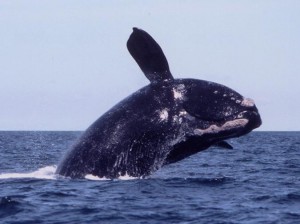
A coalition of leading environmental and conservation organizations — Conservation Law Foundation (CLF), Natural Resources Defense Council (NRDC) and National Wildlife Federation (NWF) — and Deepwater Wind today announced an agreement to implement additional protections that will minimize potential impacts on North Atlantic right whales and other marine mammals from underwater noise and construction vessels during the developer’s site characterization and assessment activities.

“We take our responsibility to be a national leader in responsible offshore wind development very seriously, and ensuring marine mammals are protected is just one way we’re fulfilling our commitment,” said Jeffrey Grybowski, CEO of Deepwater Wind during a press call this morning.

Deepwater Wind reached another similar agreement in the Mid-Atlantic Wind Energy areas (the area where the Cape Wind project is in development) and has committed to tailoring its business to protect marine animals in every area it develops a project.

Click here to listen to the media call:Historic Offshore Wind Right Whale Protection Agreement

Deepwater Wind in July 2013 acquired a 30-year lease to develop the Deepwater ONE project in the Rhode Island-Massachusetts Wind Energy Area, located in Rhode Island Sound, after winning the first-ever competitive lease auction for offshore wind energy development in America. The lease area covers approximately 256 square miles in the Atlantic Ocean, roughly 30 miles east of Montauk, N.Y. and roughly 17 miles south of Rhode Island, between Block Island, R.I., and Martha’s Vineyard, Mass.


Read More

Alternative energy, Environment, offshore wind, Renewable Energy

EIA’s Annual Energy Outlook 2014 Laughable

Joanna Schroeder

According to the SUN DAY Campaign, the U.S. Energy Information Administration’s (EIA) official launch of the complete Annual Energy Outlook – 2014 doesn’t pass the laugh test. In follow-up remarks to the preview report launched a few weeks ago, EIA’s projections for renewable electricity generation are way under the mark.

For example, the AEO2014 “Reference case,” EIA notes: “Renewable electricity generation in the United States is projected to grow by 69% from 2012 to 2040…, including an increase of EIA Annual Energy Outlook 2014more than 140% in generation from nonhydropower renewable energy sources. … Although nonhydropower renewable generation more than doubles between 2012 and 2040…, [renewable energy’s] contribution to U.S. total electricity generation is still just 16%.”

Two other scenarios offered by EIA – the Low Economic Growth and the High Oil and Gas Resource cases – suggest even lower penetration rates by renewables, cites the SUN DAY Campaign. EIA also offers several other scenarios – including the No Sunset and CHG25 cases – in which “renewables account for 24% and 27%, respectively, of total electricity generation in 2040. … In fact, renewable penetration of electricity supply in both cases meets or surpasses 16% by 2020, which is the level attained in the Reference case by 2040.”

Significantly, says the SUN DAY Campaign, these latter projections are higher than those presented in the past by EIA. However, while more credible, these scenarios will also almost certainly prove to be unduly conservative. In fact, the association cites, based on the actual growth rates for renewable energy sources (i.e., biomass, geothermal, hydropower, solar, wind) over the past decade, multiple other studies, and even analyses from EIA itself, it is likely that renewables will comprise a much larger share of the nation’s electrical generating supply by 2040 — perhaps two, three or more times higher than the Reference case level forecast by EIA.

In conclusion, SUN DAY Campaign says there are multiple grounds for challenging EIA forecasts.

Clean Energy, Electricity, Renewable Energy

DNV GL & Texas Tech Partner on Wind Energy Education

Joanna Schroeder

Student’s attending Texas Tech University now have more educational opportunities around wind energy. The University’s National Wind Institute and DNV GL are collaborating on a teaching project to expand the availability of wind power courses. Classes will be provided through both in-class and online channels enabling global access to cutting edge instruction and utilizing real-life case studies from the wind energy industry. This collaboration will strengthen future workforce development and allow students in remote locations to participate in a high-quality, certified education process.

Cielo Wind Power farm in Texas“The National Wind Institute strives to educate the next generation of wind energy professionals,” said John Schroeder, director of the National Wind Institute (NWI). “This partnership with DNV GL is another yet another step forward to advance wind energy research and education.”

The program adds depth to Texas Tech’s wind energy program by adding four classes containing up-to-the-minute wind industry case studies developed and led by DNV GL experts who can draw on the company’s 30-year history of involvement in all aspects of the wind industry.

By combining DNV GL’s industry expertise with Texas Tech’s academic excellence, students will have access to wind industry experts to provide current, real-world experiences to supplement the academic fundamentals while working to attain either a managerial or a technical focused Wind Power Certificate from Texas Tech. The program is open to qualified undergraduate and graduate students, and each course will contain cutting edge content from DNV GL, which is known for its high-quality workforce training and thought leadership in the renewable energy industry.

“Renewable energy professionals worldwide already rely on a variety of DNV GL’s existing training programs,” said Kevin Smith, director at DNV GL. “We are excited to participate with Texas Tech in training the wind industry’s future workforce and graduates with industry specific knowledge and case studies so they have increased familiarity with the latest business needs and challenges. We look forward to further collaboration with Texas Tech to educate the wide range of professionals required to meet national wind energy goals – both in the U.S. and other countries.”

This collaboration is slated to last three years and planned to start July 2014 once details are finalized.

Education, Electricity, Wind

BioEnergy Bytes

Joanna Schroeder

  • BioEnergyBytesDFAccording to a recent report from Navigant Research, annual wind power installations in 10 selected markets in Africa and the former Soviet Union will grow from 1,636 megawatts (MW) in 2014 to 3,350 MW in 2023. While growth rates in wind power markets in the developed world have plateaued or, in some cases, fallen, developing economies are expected to see robust growth in the coming years. Strong political support, rising electricity demand due to rapid economic growth, and an imperative demand for energy diversification, are all contributing to an optimistic outlook for wind power development in emerging markets.
  • Rentech Inc. has acquired all three of New England Wood Pellet’s manufacturing facilities, a $34.5 million investment that adds 240,000 tons to Rentech’s annual pellet output.
  • Greenway Innovative Energy, Inc., provider of proprietary, mobile Gas-to-Liquids (GTL) technology, has entered into a Sponsored Research Agreement (SRA) with the University of Texas at Arlington to further refine and enhance its cutting-edge technology which converts natural gas to clean synthetic fuels. The purpose of the Research Agreement with the University is to continually improve the existing Fisher-Tropsch synthesis process for the conversion of natural gas into liquid hydrocarbons, or synthetic fuels.
  • Genomatica announced the appointment of Kaspar Evertz, Ph.D., as Executive Vice President, Commercial. Evertz will lead the company’s business development, licensing, and technology transfer teams with a focus on licensing its process technologies, and the delivery and execution of those licenses. He also will be responsible for securing strategic partners to support the development of additional commercial processes through sponsored development programs.
Bioenergy Bytes

POET Nutrition’s Mike Skuodas Honored by DoD

Joanna Schroeder

Mike Skuodas, Director of Sales for Dakota Gold at POET Nutrition was honored with a Patriot Award in recognition of his support of team members serving in the South Dakota Guard and Reserve. The award was given by the Employer Support of the Guard and Reserve (ESCR), a Department of Defense (DoD) operational committee.

5.2.14 ESGR GroupThe Patriot Award was created by ESGR to publicly recognize individuals who provide outstanding patriotic support and cooperation to their employees, who like the citizen warriors before them, have answered their nation’s call to serve,” said Ron Mielke, South Dakota ESGR State Chair. “Supportive supervisors are critical to maintaining the strength and readiness of the nation’s Guard and Reserve units.”

Skuodas was nominated by Justin Schnieders, 114th Fighter Wing Aircraft Maintenance Squadron and Abby Roberts, 1742nd Transportation Company for being highly supportive of the Army and Air National Guard. Schnieders and Roberts currently work at POET Nutrition and nominated Skuodas for his support of their National Guard duties, including the availability of flexible schedules, time off for inspections and training time, and additional time to care for their Guard family as well as their own families at home.

“I am truly humbled to receive this award and accept this honor on behalf of everyone at POET and POET Nutrition,” said Skuodas. “Supporting the National Guard is part of the culture we embody here at POET. Abby and Justin have stepped up to serve our state and country, as have many other POET team members, and we will continue to do all we can to support them and their families.”

Don Dietrich, President of POET Nutrition, signed a Statement of Support to declare POET Nutrition’s support of service members employed by the organization.

Distillers Grains, military, Renewable Energy

Cape Wind Secures Another Legal Victory

Joanna Schroeder

Cape Wind has won another legal battle. Once completed, the project will be the first offshore wind farm in U.S waters. Federal Judge Richard Stearns dismissed the lawsuit that challenged Cape Wind’s Power Purchase Agreement (PPA) with NSTAR. The District Court’s decision rejected all claims against the Commonwealth of Massachusetts, NSTAR and Cape Wind.

Judge Stearns noted in his decision that the lawsuit would violate the 11th Amendment to the Constitution of the United States that gives states immunity from being sued for past actions in Federal Court. Judge Stearns also rejected the premise of the opponents’ lawsuit: “The allegation that DPU dictated that NSTAR procure power from Cape Wind at a specified price is misleading and ultimately untrue.” While Judge Stearns identified the 11th Amendment as sufficient grounsplash_picds to dismiss the lawsuit, he noted it could also have been dismissed on various other grounds.


Judge Stearns concluded his Decision by observing: “But in this case, the Governor, the Legislature, the relevant public agencies, and numerous courts have reviewed and approved the project and the PPA with NSTAR and have done so according to and within the confines of the law. There comes a point at which the right to litigate can become a vexatious abuse of the democratic process. For that reason, I have dealt with this matter as expeditiously as possible.”

Cape Wind President Jim Gordon said, “This important legal victory provides further momentum for Cape Wind to secure project financing and produce the energy, economic and environmental benefits to the region and the United States by launching a domestic offshore wind industry.”

Bill Koch, Chairman and largest funder of the opposition group, and a coal and petroleum coke billionaire, has stated publicly that his organization’s strategy is “delay, delay, delay” and to try to use the courts to serve his strategy. Taxpayers have had to bear a considerable cost of staff time at agencies and courts defending against Koch’s litigation.Read More

offshore wind, Renewable Energy

EIA Report: Solar Making Large Gains

John Davis

eiaThe latest Short-Term Energy Outlook from the U.S. Energy Information Administration (EIA) shows that the growth of solar power will continue to make good gains. EIA Administrator Adam Sieminski made the following comments in the May report:

Renewables:“U.S. solar-electric generation capacity has increased significantly in the last four years. EIA expects continued robust growth in solar electricity generation. EIA currently expects that utility-scale solar capacity will increase by over 50% between 2013 and 2015, with utility-scale solar providing about one half of 1% of total electricity generation in 2015. Growth in customer-sited solar capacity is expected to exceed utility-scale solar growth over this same period. Customer-sited units provide most of the nation’s solar power.”

Meanwhile, underground storage of natural gas supplies remains well below average but is expected to rebound through the summer and fall.

The report has some good news for drivers as well. Record U.S. crude oil inventories are expected to help push down gasoline prices by as much as 20 cents per gallon by September.

Government, Natural Gas, Solar

EPA Chief Explains RFS Proposal

Cindy Zimmerman

epa-mccarthyThe administrator of the Environmental Protection Agency explained her agency’s proposal to lower the volume requirements under the Renewable Fuel Standard (RFS) to members of the National Association of Farm Broadcasting meeting in Washington DC this week.

“Let me begin by reiterating that this administration sees renewable fuels as a big part of our way to adapt to climate change,” said Gina McCarthy. “I also know that it helps to provide some certainty in the rural economy and to create jobs.”

McCarthy explained that she went through the “gestation period” of renewable fuels. “It was my job to get the Renewable Fuel Standard originally done,” she said. “We were significantly challenged this year because of the high increase in the numbers in the statute and what we believed an inability to get all of the ethanol into the system and usable” which was why she said they “took a re-look at the numbers.”

She says they know “that re-look was not appreciated” by the agriculture community and others, but that’s why they are considering the comments received on the proposal very carefully. “I think you will see those comments reflected in the final rule,” she concluded.

Listen to McCarthy’s comments here: McCarthy RFS comments to farm broadcasters

Audio, EPA, Ethanol, Ethanol News, Government, RFS

Biodiesel Board Praises Denial of RFS Challenge

John Davis

nbb-logoThe National Biodiesel Board (NBB) joined the chorus of biofuel groups happy with the decision handed down by the District of Columbia Circuit Court rejecting a petition filed by Monroe Energy, LLC that challenged the Environmental Protection Agency’s (EPA) 2013 Renewable Fuel Standards (RFS).

“The court’s decision today is only the latest in a long series of cases in which the courts have found that the RFS is a fair and reasonable program for achieving our national energy objectives, including promoting more Advanced Biofuel such as biodiesel. The bottom line is that there was more than enough EPA-designated Advanced Biofuel available last year to meet the standards.

The RFS is working, and we strongly encourage the petroleum industry to get on board. There is plenty of room for fossil fuels and renewable fuels in the United States, and consumers will be better off with a choice.” – Anne Steckel, vice president of federal affairs for the National Biodiesel Board.

The court rejected Monroe’s arguments that the 2013 standards were invalid because the EPA was late in finalizing the volumes, and that the EPA should have reduced overall and Advanced Biofuel volume requirements when it reduced cellulosic ethanol volumes last year.

Biodiesel, NBB

Ag Secretary Blames Oil Industry for RFS Attacks

Cindy Zimmerman

vilsack-nafbDuring a meeting with members of the National Association of Farm Broadcasting on Tuesday, Agriculture Secretary Tom Vilsack had strong words for the oil industry and its attacks on the Renewable Fuel Standard (RFS).

“The oil industry has made a concerted, organized, well-financed attack on the Renewable Fuel Standard,” said Vilsack when asked about the EPA’s proposal to lower volume requirements for the RFS. “A lot of focus has been on the EPA and the administration, but it is the oil industry that has gone to court to try to limit the impact of the RFS. It is the oil industry that has gone to Capitol Hill to try to insert in appropriations bills and other bills an elimination or curtailment or restriction of the Renewable Fuel Standard.”

“It’s the oil industry working in concert with others that’s made it very difficult to expand higher blend availability,” the secretary continued. “So, what the EPA is doing I think is responding to the need to make sure that there is a strong, defensible RFS.” Vilsack says USDA shares that desire with the EPA. “Because there is no question there is a concerted attack and it is well-financed – and there is no question where the money is coming from.”

Listen to Vilsack’s comments here: Vilsack RFS comments to farm broadcasters

Thanks to Gary Cooper, AgNet West, for providing the audio.

Audio, Ethanol, Ethanol News, RFS, USDA