Another Day, Another Oil Spill

Joanna Schroeder

An oil pipeline ruptured in Los Angeles on LA Street yesterday and in response Americans United For Change said, “Like oil spills? You’ll love what happens after dismantling the Renewable Fuel Standard. 50,000 gallons of crude oil spilled out onto the streets and in some areas the crude oil was knee-high.

Photo: LA Times

Photo: LA Times

Jeremy Funk, spokesperson for pro renewable energy and pro Renewable Fuel Standard (RFS) group Americans United for Change, said of the crude oil spill, “Whether you live in the Gulf Coast community, near a railroad in Lynchburg, VA, a farm in North Dakota, or in the middle of a major metropolis like Los Angeles, it seems nowhere in America is out of reach from the messes big oil leaves behind.”

“Headlines about oil industry spills and explosions and derailments have become a ‘dog bites man’ story,” Funk continued who stressed that the alarming rate of environmental disasters associated with oil should give the Environmental Protection Agency (EPA) serious pause before deciding whether or not to roll back the RFS. The EPA is expected to publish its final 2014 RFS rules around June 1 and there is concern they will move forward with lower renewable fuel gallons than what is called for in legislation.

“Consider that ethanol makes up 10% of the U.S. gasoline supply, and that for every gallon of ethanol produced domestically it means one less gallon sold of gasoline derived from dirty crude oil from unstable regions. That’s why the oil industry wants the EPA to help put out of business their safer, cleaner, cheaper renewable fuels competition. But if the EPA give big oil what they want and drastically cuts down the amount ethanol in the nation’s fuel supply, there’s no way to avoid a corresponding increase in demand for crude oil and an increase in the number of disasters related to transporting it.” Funk added, “So if you like oil spills — you’ll love what happens if the RFS is watered down.”

Biodiesel, biofuels, Environment, Ethanol, Oil, RFS

UCR Unveils Sustainable Grid Initiative

Joanna Schroeder

The University ofSIGI-graphic California, Riverside has launched its Sustainable Integrated Grid Initiative to research the integration of intermittent renewable energy including photovoltaic solar panels, energy storage including batteries, and all types of electric and hybrid electric vehicles. The project is the largest of its kind in the state.

“This project puts UC Riverside at the forefront of smart grid and electric vehicle research, providing a unique platform for engineers and utilities to identify and solve potential problems at scale,” said Matthew Barth, lead investigator of the initiative and the director of UC Riverside’s Bourns College of Engineering Center for Environmental Research and Technology (CE-CERT).Read More

Clean Energy, Electric Vehicles, Energy Storage, Environment, Smart Grid, Solar

BioEnergy Bytes

Joanna Schroeder

  • BioEnergyBytesDFVoith participated in Kaukauna Utilities Badger Hydro Plant’s formal dedication in Kaukauna, Wisconsin. The Badger Hydro Plant combines hydraulic capacity of the 105-year-old “old” Badger plant and the 85-year-old “new” Badger plant into a new single 2-unit plant resulting in more capacity than the previous two plants combined. Voith Hydro supplied two Kaplan turbines and automation equipment, while Voith Turbo provided the speed increasers. The 7 MW plant has a 50-year license from the Federal Energy Regulatory Commission.
  • CBD Energy Limited announced its entry into the U.S. residential solar market with the signing of a 7 KW home system under its solar installations brand, Westinghouse Solar. The 7 KW system, for a residence in Allenhurst, New Jersey, is estimated to save the customer approximately 40% on their energy bill and more than $60,000 over the life of the system. Westinghouse Solar will conduct a comprehensive energy assessment to determine whether additional energy upgrades could further increase the energy efficiency of the residence.
  • RGS Energy has closed its acquisition of Elemental Energy, LLC, a full-service solar energy firm operating under the Sunetric brand. The acquisition provides RGS Energy with immediate entry into a major market that has the highest electricity rates in the U.S. – three times higher than the national average. These high rates provide compelling economics for homeowners and businesses to adopt solar photovoltaic systems.
  • Cleveland Schools, Ohio’s second largest school district, will replace 12-to-13-year-old diesel buses with nearly 50 Blue Bird’s Propane Vision buses. The school buses will be fueled by propane autogas and will begin operation for the 2014/15 school year in the Cleveland Metropolitan School District. The school district annually estimates about $50,000 in electrical costs for powering block heaters to start their diesel buses in cold weather. Blue Bird Propane Vision buses start up in temperatures as low as minus 40 degrees Fahrenheit.
Bioenergy Bytes

Glycerolysis Considered for Biodiesel Pretreatment

John Davis

glycerolysis_reactor_system1Using low-grade, waste feed oils for biodiesel production might look appealing on the surface, but those feedstocks contain high levels of free fatty acids (FFA), which can cause soap formation. This article in Biodiesel Magazine gives a good, in-depth look at using glycerolysis as a cost-saving alternative to traditional methods of biodiesel production.

[G]lycerolysis reduces the amount of FFA in low-grade oils without use of acid or methanol, and enables them to be converted into final product, rather than removing them and reducing product yield. The resulting glycerides formed during glycerolysis are then converted directly to biodiesel via base-catalyzed transesterification. Also, glycerolysis is done at high enough temperatures to completely dry the feed oil before the transesterification process, thus avoiding the formation of excess soaps and the decanting problems that can result.

Over the past decade, glycerolysis has continued to grow in popularity among those companies successful in the industry. For example, recent articles in several industry periodicals have noted that some biodiesel producers have been using glycerolysis successfully for several years (e.g., Renewable Energy Group’s Seneca, Ill., plant).

The rate of the glycerolysis reaction is determined by two variables: the initial concentration of FFA and temperature. Many biodiesel plants run their processes using steam heating systems, and are limited to operating temperatures of 350 degrees Fahrenheit or less. Although glycerolysis can be run at these lower temperatures, reaction kinetics are vastly improved when run at temperatures at or above 450 F. However, operating temperatures approaching 500 F are not recommended due to possible glycerin decomposition, forming acrolein.

The article goes on to say that the lack of use of this high-temperature process might be more a matter of inexperience by biodiesel producers. But the authors believe the actual simplicity of the glycerolysis process could be its most appealing feature.

Biodiesel

New Technology Supports Renewable Diesel Plant

John Davis

honeywell-uop-logoNew technology is supporting the Nation’s largest renewable diesel refinery, which, in fact, is the largest advanced biofuel facility in the country. This news release from Honeywell subsidiary UOP LLC says its UOP/Eni Ecofining™ process technology powers the 130-million-gallon-per-year Diamond Green Diesel facility in Norco, La., converting inedible oils and other waste feedstocks to produce high-quality renewable diesel, also known as Honeywell Green Diesel™.

The facility, a joint venture of Darling International Inc. and Diamond Alternative Energy, LLC, a subsidiary of Valero Energy, achieved all of its performance and quality targets.

“Commercial production at the Diamond Green Diesel facility is a significant milestone for the renewable energy industry,” said Veronica May, vice president and general manager for Honeywell’s UOP Renewable Energy and Chemicals business unit. “UOP has leveraged 100 years of refining technology to make real alternative fuels, including Honeywell Green Diesel and Honeywell Green Jet Fuel™, from a range of inedible biofeedstocks.”

John Roach, senior vice president at Valero, said “Both the performance of the Ecofining unit and the quality of the diesel produced has exceeded our expectations.”

Officials say the Ecofining process can turn a variety of feedstocks into renewable diesel, and this flexibility is a key driver for the continued growth of renewable fuels.

advanced biofuels, Biodiesel

Biodiesel Producers, Farmers Take to The Hill

John Davis

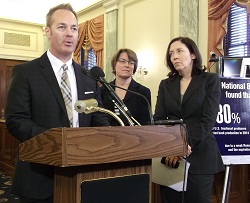
goergerBiodiesel producers and farmers who raise the feedstocks for the biodiesel industry took to Capitol Hill this week, joining a group of U.S. Senate Democrats in their calls to end policy uncertainty that is hurting their industry.

“The uncertainty caused by these policy setbacks in Washington, with this proposed retreat on biodiesel volumes under the Renewable Fuels Standard (RFS) and the expiration of the [$1-a-gallon federal biodiesel] tax incentive is threatening to unravel [the good built up by the biodiesel industry],” said Terry Goerger, a third generation farmer from Mantador, North Dakota. He added that this is especially hard on the industry that took cues from Congress and the Obama Administration and took the risk to try to build up biodiesel. “We feel like the EPA (Environmental Protection Agency) and the Administration is pulling the rug out from underneath us.”

christjansenBryan Christjansen, who manages Renewable Energy Group biodiesel plants in Albert Lea, Minn. and Mason City, Iowa, echoed those sentiments, saying his company believes in the long-term future of biodiesel but wonders if Washington does.

“If the Administration chooses to go with a short-sighted EPA proposal, it does not just put domestic fuel into jeopardy, but it also harms the local economies and billions of dollars in investments,” he said.

haasJeff Haas, CEO of General Biodiesel in Seattle, said that while his company, as well as much of the biodiesel industry, wants to invest and grow, not knowing what the EPA or Congress will do next makes the industry feel like it is just floating adrift.

“We’re nearly halfway through the year, and we still don’t know what the RFS volume will be or whether the biodiesel tax incentive will be reinstated,” adding that the industry relies on these policies for direction. “It’s analogous to setting off across the ocean without a compass for six months.”

Haas also said that some of the best and brightest in biodiesel are losing confidence and leaving the industry because of the uncertainty, and the delays are just wins for opponents of renewable energy.

presbyWayne Presby, owner of White Mountain Biodiesel in North Haverhill, N.H., said his company was founded on the Obama Administration’s stated desire to lessen our dependence on foreign oil, reduce greenhouse gases, put more Americans to work, and increase our national security. But now, after investing millions in his plant alone, as well as hiring workers and buying supplies for a fledgling business in a community that desperately needed it, and making a successful biodiesel production facility, they can’t expand and grow that business because of the uncertainty in biodiesel policy.

“The industry is constantly taking two steps forward and two steps back because of the policy uncertainty.”

Listen to what the group had to say here: Biodiesel Industry Concerns

Audio, Biodiesel, EPA, Government, REG, RFS, Soybeans

Advanced Biofuels Industry: Obama Please Reconsider RFS

Joanna Schroeder

More than two dozen advanced biofuel producers have submitted a letter to President Obama today calling on him to reconsider the proposed Renewable Fuel Standard (RFS) rule for 2014. Led by the Advanced Ethanol Council and the Biotechnology Industry Organization (BIO), the groups write: “The RFS is necessary because the highly consolidated, President Obamavertically integrated oil industry is not otherwise going to allow market access for renewable fuels”.



The letter continues, “To reduce the 2014 blending requirements and volumes in future years, EPA is proposing to use its general waiver authority based on ‘inadequate domestic supply.’ But EPA is putting forward a novel interpretation of the word ‘supply’ to mean the ability of current infrastructure to deliver renewable fuel blends to consumers, instead of the available supply of renewable fuel to obligated parties. We believe that this new interpretation is inconsistent with the plain meaning of the statute and its legislative history. But the bigger issue is that this interpretation has the practical effect of handing the future trajectory of the RFS to the oil industry by virtue of the fact that the oil industry itself controls the distribution of fuel to consumers.

The threat that oil companies could simply lie down on the RFS to avoid obligations vastly increases supply-chain risk for new projects, as opposed to those already in the ground. Given that more than 90 percent of future blending obligations under the RFS are for advanced biofuels, the Administration’s new methodology would actually scuttle U.S. investment in advanced, low-carbon biofuels in direct conflict with the Climate Action Plan and your Administration’s goals with regard to reducing oil dependence and promoting advanced biorefineries via USDA and DOE programs.

“We are most concerned about the current proposal’s impact on climate change. Our industry has invested billions of dollars in the development and commercial deployment of ultra-low carbon biofuels during your Administration alone. These investments were made based on the expectation that when we succeed, the RFS will be maintained as a mechanism to create a market for our fuels. The current proposal would break that promise by handing the RFS to incumbent industries that want to see it fail. And by any account, the real world alternative to renewable fuels is marginal, high carbon intensity oil,” the letter concludes.

advanced biofuels, AEC, BIO, RFS

BioEnergy Bytes

Joanna Schroeder

  • BioEnergyBytesDFHanwha SolarOne Co., Ltd., a global photovoltaic manufacturer of high-quality, cost-competitive solar modules, announced it has completed the installation of 31 MW in a EPC commercial rooftop project in Guangdong Province, China.
  • The Nuview Union School District has launched a comprehensive sustainability project that includes solar energy systems, energy efficiency measures and improved lighting components that are guaranteed to save the district over $7 million in its first 20 years of operation. Chevron Energy Solutions designed and built the project that includes solar generation capacity at three district locations, upgraded HVAC systems, and energy-saving LED lighting. In total, the project is expected to reduce the district’s utility-purchased electricity costs by approximately 85 percent. Chevron’s work with Nuview will also include hands-on labs to engage students in developing science, technology, engineering and math (STEM) skills.
  • Ecoppia, a developer of autonomous water-free photovoltaic solar panel cleaning solutions, announced that its commercially-deployed E4 robotic cleaning system has now cleaned over one million panels. The autonomous energy-independent water-free E4 robots use a soft microfiber and controlled air flow cleaning system to remove 99% of dust daily, keeping panels at optimal production 24/7/365.
  • Collins Bus Corporation has announced that it is accepting orders for its new compressed natural gas (CNG) model that provides an estimated 250-300 mile range, decreases greenhouse gas emissions by up to 15% and reduces operating costs. Built on a Ford E-450 6.8L cutaway chassis backed by a Ford Factory 5-year/60,000-mile engine and powertrain warranty, Collins’ CNG bus features the Westport WiNG™ Power System dedicated natural gas fuel system certified by the California Air Resources Board (CARB) and U.S. Environmental Protection Agency.
Bioenergy Bytes

Biofuels Industry Urges VP Biden to Stand RFS Strong

Joanna Schroeder

The Iowa biofuels industry is asking United State Vice President Joe Biden to stand “RFS Strong”.

A recent Reuters article claimed that Vice President Biden played a major role in attempting to get the Obama administration to gut the Renewable Fuel Standard (RFS). The article detailed an exchange between Vice President Biden and Philadelphia Congressman Robert Brady, US VP Joe Bidenwho contacted Biden on behalf of the Carlyle Group, an alternative asset management firm which had previously purchased two oil refineries in Brady’s district that were struggling due to lower profit margins. Biden reportedly told Brady he could fix the issue.

“If accurate, this report would confirm our worst suspicions—that Vice President Biden and the Administration have done an about-face on their support for cleaner fuels, consumer choice and cutting oil dependence,” said Iowa Renewable Fuels Association (IRFA) Executive Director Monte Shaw. “Iowans and all Americans deserve to know where the Vice President stands on the RFS. Does he really want to walk away from the only federal policy allowing market access for renewable fuels in the face of a century of policy preferences for petroleum? Abandoning the RFS would result in less competition, less consumer fuel choice and higher fuel prices, while strengthening the oil industry’s near monopoly over the transportation fuel sector.”

If the claim is true, IRFA points out that the move to advocate for oil companies to the detriment of renewable fuels would represent a sharp break from Vice President Biden’s track record of supporting the RFS and decreasing America’s dependence on foreign oil. The alleged exchange would also be a departure from the Administration’s commitment to innovative American renewables and pursuit of energy independence, more American jobs, and a brighter climate future.

In response to the claims, IRFA joined dozens of biofuel and ag leaders in submitting a letter to VP Biden requesting a meeting and urging him to revisit the issues he has around the RFS. The Environmental Protection Agency (EPA) is rumored to be releasing its final 2014 renewable fuel volumes (RVO) on or around June 1, 2014.

The letter reminds the Veep that he “campaigned in Iowa in 2007 and 2008 as a strong champion of the bipartisan, common sense Renewable Fuel Standard”. The authors urge: “Please do not be fooled by the crocodile tears coming from the oil industry, who claim to be concerned about rising gasoline prices. Their argument is preposterous on its face”.

In part, the letter reads: “This has already become a full-blown campaign issue in Iowa in 2014, and it will be a major issue for every candidate who visits Iowa in 2016. This is a crucial juncture for America’s renewable fuel industry, and we cannot allow the oil industry to dominate the debate or bully our political leaders into backtracking to greater foreign oil dependence.”

Biodiesel, biofuels, Ethanol, Iowa RFA, RFS

Ethanol on the Rails

Cindy Zimmerman

ethanol-report-adIn the last couple of weeks there have been two derailments of trains carrying crude oil, one in Virginia on April 30 and one in Colorado on May 9. These incidents are just the latest in a string of accidents that began last summer when a runaway oil train carrying Bakken crude derailed and exploded in Lac-Megantic, Quebec, killing 47 people. Other trains carrying Bakken crude have derailed and caught fire in Alabama, North Dakota, and New Brunswick, Canada.

rail-fireWhile crude oil has been the common denominator in these accidents, ethanol has been caught in the cross fire despite its nearly perfect safety record in rail transportation.

In this edition of “The Ethanol Report,” Renewable Fuels Association (RFA) president and CEO Bob Dinneen discusses the safety record of ethanol shipments via the DOT-111A railcar, RFA’s program of safety training and best practices within the ethanol industry, and the need to focus on the root cause of recent derailments, track conditions and human error, and not exclusively on railcar design. Most importantly, he emphasizes “ethanol is not oil.”

Ethanol Report with RFA president Bob Dinneen on rail safety

Subscribe to “The Ethanol Report” with this link.

Audio, Ethanol, Ethanol News, Ethanol Report, RFA, safety, transportation