New research from the University of Washington is laying the foundation to use woody biomass from poplar trees into sustainably produced biofuels and biochemicals. A five-year $40 million dollar study funded by the U.S. Department of Agriculture (USDA) is in its last year and results will seed a wood-based cellulosic ethanol production facility.
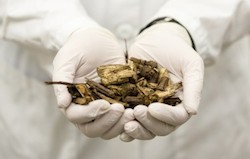
Poplar materials, including bark, leaves and wood, are used to make cellulosic ethanol.Dennis Wise/University of Washington
ZeaChem, one of the industry partners in the study, is moving ahead with plans to build a commercial production facility in Boardman, Oregon, in 2016 that will produce cellulosic ethanol and biochemicals from poplar trees grown specially for those industries.
“We’ve established that poplar is a viable and sustainable feedstock for the production of fuels and bio-based chemicals,” said Rick Gustafson, a UW professor of bioresource science and engineering, who leads the project. “We’ve provided fundamental information that our industry partners can use to convince investors that production of fuels and chemicals from poplar feedstock is a great investment.”
The research team is known as the Advanced Hardwood Biofuels Northwest and they have set up five demonstration tree farms with different varieties of poplar. None of the trees is genetically engineered, but instead researchers bred them to thrive in different environments and to grow fast. The trees can gain up to 20 feet a year, allowing for a harvest every two or three years.
When a poplar tree is cut, its stump naturally sprouts new shoots and the next generation of trees grow out of the parent stumps. Each tree can go through about six cycles of this regrowth before new poplars must be planted, explained Gustafson.Read More