

 The power of soybean-based biodiesel will be on display this Friday and Saturday nights in Jefferson City, Mo., as the Midwest Xtreme Truck and Tractor Pull, a National Tractor Pullers Association Grand National event, comes to town.
The United Soybean Board (USB) and soybean checkoff sponsor the event at the Cole County Fairgrounds as a way to showcase the homegrown, environmentally friendly and renewable biofuel:
 USB staff and Missouri Soybean Merchandising Council staff will be on hand educating pull attendees on the benefits of soy biodiesel and will be available for media interviews. Biodiesel has the best energy return of any liquid fuel, along with increased lubricity, high cetane and the highest BTU content of any renewable fuel.
As part of its sponsorship, the soybean checkoff supplies NTPA with biodiesel to fuel pulling sleds and some track-grooming equipment. In addition, all NTPA on-road diesel-powered vehicles run on biodiesel blends during the 82-event tractor-pulling season.
 In what should be a cautionary tale to American lawmakers who might want to raise revenues from biodiesel sales, a leader of Germany’s biofuels industry says high taxes on biodiesel in that country are killing the green fuel there.
 A Louisiana biodiesel plant that needs intense heat to turn animal fats and waste materials into the green fuel has chosen a Texas company that specializes in the process control system that uses hydrogen to create the heat needed.
 “The idea was born from a simple observation of a fish in an aquarium,” said researcher Asfaw Beyene, a mechanical engineer at San Diego State University. “Many flying and swimming animals have superior efficiencies than manmade devices. The primary difference between natural motion and motion of manmade devices is lack of geometric adaptability to varying flow conditions.
 More state vehicles in Texas will be running on something other than the non-renewable petroleum the state is known for.
 Officials at a biodiesel plant in Mississippi have finished the commissioning process for the 8-million-gallon-a-year facility.
 Kum & Go L.C. has recently opened an E85 station in Neosho, Missouri. The company, headquartered in West Des Moines, Iowa, opened the 3,400-square-foot convenience store after only 84 days of construction.
 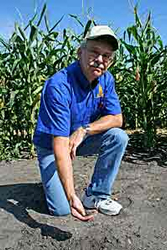 When the ethanol by-product known as dried distillers grains with solubles (DDGS) is heated at high temperatures under limited oxygen to make synthesis gas, or syngas, the remains are a fine, dust-like ash. SDSU Soil Testing Laboratory manager Ron Gelderman set out to learn whether that residue could be applied to fields as a soil nutrient, since the ash likely would be discarded in a landfill otherwise.
 Culver