

The State of North Dakota has launched a program that will make $2 million in grants available for fuel station owners who install new, multifuel pumps that will mix ethanol right at the point-of-sale.
This post on InForum, the forum of Fargo-Moorhead, says buyers will be able to choose from pure gasoline up to E85 ethanol:
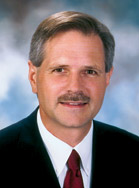 “We’re excited about this initiative because it’s a win for consumers, farmers, retailers and ethanol producers,” said Gov. John Hoeven, during a Friday news conference announcing the state Department of Commerce Biofuels Blender Pump incentive program.
Service station operators, through a mix of grants and incentives, will be able to purchase and install the $25,000 blender pumps for less than $2,500, said Kent Satrang, CEO of Petro Serve USA.
North Dakota will provide grants up to $5,000 per blender pump and $40,000 per retail service station.
The North Dakota Corn Growers Association and Corn Utilization Council have allocated $500,000 to provide $2,500 per pump.
The remaining incentives include federal tax credits and ethanol industry incentives.
“The idea here was to partner the abundant corn fields of rural North Dakota with the massive Bakken oil fields of western North Dakota,” Satrang said.
One goal is to raise ethanol volumes by replacing old gas pumps with innovative biotech blender pumps, he said.
North Dakota ethanol producers hope the new pumps will keep more of the green fuel in the state, since it costs 15 to 25 cents per gallon to ship it out-of-state.
More information is available here.
 Dallas-based Evolution Fuels, Inc. has announced a plan to put the biodiesel it produces in five of its own truck stops.
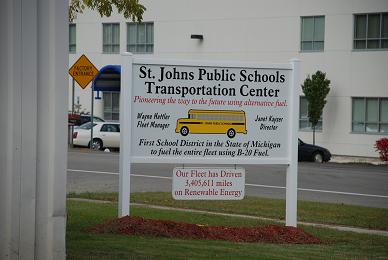 A school bus in Michigan has just hit 300,000 miles, and the bulk of those miles have come while running on biodiesel.
 Coming to Omaha, Nebraska on November 10-12, the Operators’ School is designed to educate ethanol producers on the ins and outs of alcohol production, the latest troubleshooting techniques and technology used in the industry. The three day conference will be held at Scott Conference Center at 6450 Pine Street.
  According to the
  The second award included the Clean Fuels Foundation and the
  President Clinton was the keynote speaker during the closing session at the
 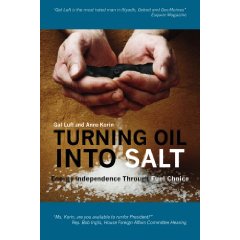 What do salt and oil have in common? In its time, the world was overdependent on the strategic commodity (oil today and salt more than 100 years ago). Our country (nor the world) is “salt dependent” but the world is oil dependent, but not in the way that most people define oil dependence. “That is what energy independence means: that it no longer matters who holds the reserves, that oil becomes much less relevant to global affairs, that it becomes just another commodity,” writes Gal Luft and Anne Korin, in “Turning Oil Into Salt Energy Independence Through Fuel Choice.”
 Representatives from the
  A Minnesota corn grower has been named to the board of directors for
  Pestorious also served three years on the Board of Directors of the American Coalition for Ethanol, representing the Minnesota Corn Growers Association, as well as on the board of the Ethanol Promotion and Information Council, until its merger with Growth Energy last year, and previously served as a member of the Renewable Fuels Association in his role for the last 10 years as Chair of POET-Glenville. He also serves on the boards of POET-Hanlontown (Iowa), a 50-million gallon-a-year plant, and POET-Lake Crystal (Minn.), a 55-million gallon-a-year plant, and serves as Chair of SoyMor, a 30-million gallon biodiesel plant.
  President Barack Obama was touting renewable energy during his visit this week to the Massachusetts Institute of Technology.