

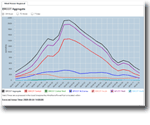
 Weather Services International (WSI), in conjunction with Genscape’s Enva, have launched WindCast IQ, the first wind generation forecasting service designed for energy traders. Wind Energy has seen a big boost with the move to alternative energy and has become the fastest growing source of power generation in North America. However, along with growth comes growing pains, and the increase in wind energy has also been a cause of congestion and price volatility in many regions.
The solution, according to WSI, is WindCastIQ, which gives clients highly accurate hourly forecasts for up to 7 days of wind generation at the ISO-level, regional and wind farm level. The first two products will cover the Midwest (MISO) and Texas (ERCOT) the regions with the highest wind power generation and impact on power markets.
“Wind power is an important source of clean energy and getting accurate wind generation forecasts is a growing challenge for all 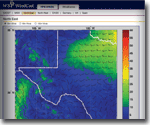 market participants,” said Ira Scharf, General Manager of WSI’s Energy and Risk Division. “The combination of WSI’s highly skilled wind power forecasting teamed with Enva’s expert understanding of the power grid creates an ideal pairing of forces to give energy traders and wind farm operators a true market edge.”
According to the company, this product provides market participants previously unattainable levels of forecasting accuracy by combining WSI’s skillful turbine-height wind forecasts and Enva’s wind generation models and analysis of grid & market factors. Accuracy is further enhanced through calibration with Genscape’s real-time power flow monitors installed at key wind farms.
 The
The  A Texas biodiesel plant will expand its operation by four-fold.
 A Florida-based algae-biodiesel company has found an international market for a by-product of its clean energy business.
 Students across the country recently had a chance to have a blast with biofuels.
  With a little sugar, water, yeast, and a balloon, kids watched how yeast breaks down sugars.
 The
The  California-based
 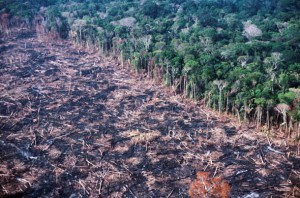 The Science magazine article that was published last week and co-authored by Tim Searchinger, a lawyer, has added another level of controversy to the indirect land use change (ILUC) debate. The article suggested the land use effects of fuel produced from various forms of biomass were miscalculated, in part, because they cause deforestation around the world as land is cleared to grow so called “energy crops”. EPA has yet to rule on RFS2 (
 The
The 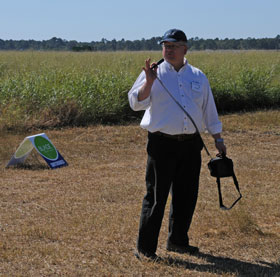 We’ve certainly heard a lot about switchgrass as a biomass option for the production of ethanol. How many of you have seen it growing?
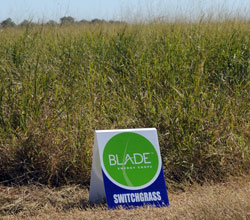 Switchgrass is native to the United States everywhere east of the Rockies. Ceres, has been working on varieties that will yield better in different growing environments though. Cory says that they don’t expect it to displace corn in Iowa but in the southeast with the difficulties in cotton and tobacco it becomes a viable alternative on open acres. He provides some estimates of what the crop can mean financially as the market for a fuel crop like switchgrass develops.