

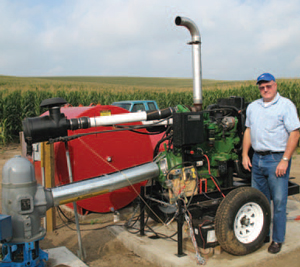
 You can’t burn ethanol in a diesel engine. Nope. Just not done. Like mixing oil and water.
But what if you added more water to the ethanol? And came up with a way to mix the hydrated-ethanol blend with the diesel… or better yet, biodiesel… right at the point of ignition? Ahhh… then you’d have something that National Corn Growers Association chairman and Nebraska corn farmer Bob Dickey calls the CleanFlex Power System… a new venture he has formed with Ron Preston, president of CleanFlex. Together, they hope to get the 60 million diesel engines in the U.S. to burn some ethanol as well.
They don’t have a Web site, yet, but you can contact CleanFlex at 402-480-0346.
 In this edition of the Domestic Fuel Cast, listen to Bob and Ron as they discuss how this process works and how it will help renewable fuels meet the next round of emission requirements set to kick in in 2011.
Listen to the podcast here: [audio:http://www.zimmcomm.biz/domesticfuel/DFCast-10-16-09.mp3]
 The full study, based on the GREET model for corn ethanol emissions, can be downloaded
 “This kind of research has global implications for climate change, energy security and the long-term stability of our local and national economy, particularly as it can help develop the rural infrastructure and jobs we need,” said Barbara Wells, president and CEO of ArborGen.
 This edition of “The Ethanol Report” features comments from Geoff Cooper with the
 Renewed World Energies Corp. is working on turning a 5 acre site into an algae biomass farm that will make biodiesel as well as producing electricity at Georgetown, South Carolina with hopes of being in production by late next year.
 A new study shows that the ultimate form of solar power could be biodiesel.
 Dallas-based
  The Midwest is prime real estate for