IDED Approves $5.25 Million Project LIBERTY Grant

Joanna Schroeder

Photo Credit: West Central Tribune

Photo Credit: West Central Tribune

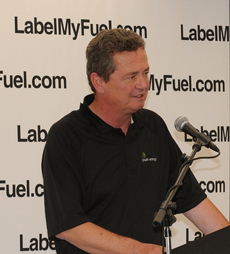
The Iowa Department of Economic Development (IDED) has approved an agreement for the final $5.25 million in financial assistance for Project LIBERTY, Poet’s cellulosic pilot project that will convert corn cobs to ethanol. The announcement ups the total of Iowa’s financial contributions to the project to $20 million. Poet and IDED has been in talks since 2008.

“The state has shown vision and leadership in helping our nation continue down this important path to eliminate the need for dirty and imported oil,” said Project LIBERTY Director Jim Sturdevant. “We appreciate the opportunity to partner with Iowa in commercializing cellulosic ethanol.”

Project LIBERTY is a 25 million gallon-per-year cellulosic ethanol plant in Emmetsburg, Iowa that uses corn cobs as feedstock. POET plans to begin construction this year on the plant, which will be co-located with POET’s current grain-ethanol plant at the site. POET’s pilot-scale plant in Scotland, S.D. is already producing cellulosic ethanol at a rate of approximately 20,000 gallons per year.

In addition to the funds from the state of Iowa, the project has also received funds from the Department of Energy.

*post update* See more photos from the POET Project Liberty media event here.

Cellulosic, Company Announcement, corn, Ethanol, POET

Biodiesel, Ethanol Part of Illinois Sustainability Award

John Davis

IDOTBiodiesel and ethanol, along with some gas/electric hybrids, are credited with helping the Illinois Department of Transportation win a sustainability award in that state.

This press release from IDOT says the agency made exceptional progress in 2009 in a statewide effort to become a more sustainable agency and win the Green Government Award from the Illinois Green Government Coordinating Council:

“We are pleased to have received this award,” said [Illinois Transportation Secretary Gary Hannig]. “We work hard each day to ensure our construction projects adhere to the highest environmental standards, while maintaining the safety and effectiveness of our roads. Our efforts to improve construction methods, promote fuel conservation and enhance green practices all are a part of our overall effort to build a cleaner, greener Illinois.”

The award was based on several practices and efforts that IDOT initiated. One of the strides that IDOT made was creating a more environmentally friendly vehicle fleet. The fleet includes 741 alternative vehicles, 36 gas/electric hybrids and one E85/electric. The diesel fleet is now 100 percent capable of burning biodiesel fuel.

The agency made several other efforts to make its roads and rest stops greener. You can read more about Illinois’ sustainability efforts here.

Biodiesel, Ethanol, Ethanol News, News

Propane Buses to be Tested in Minnesota Cold

John Davis

KrapfschoolbusSome students in Minnesota will soon be breathing easier on their way to school … no, not because they won’t be hit up with that big algebra test. A school in the Minneapolis-St. Paul area is testing propane in one of its buses.

The Star-Tribune reports that Eastern Carver County school drivers have been testing the propane bus to see if can hold up to that “special kind of cold” that only a Minnesota winter can bring:

Should it pass the test, starting up every morning and running well all day, district leaders say they’ll likely make the switch this spring with most of their buses when their new busing contract goes out to bid.

That would make Eastern Carver County Schools the first Minnesota district to convert from diesel to propane-fueled buses, and it could pave the way for other districts to follow suit.

The St. Francis School District has already ordered a smaller school bus that runs on propane for transporting special education students, and it’s set to arrive as early as next month.

Other Minnesota school districts eagerly waiting to try out the new bus include Minneapolis, Bloomington, Waconia and Pequot Lakes.

Propane is already being used in school districts in California and Texas, but, of course, they don’t have the kind of weather Minnesota basks in during the winter. Now, some bus drivers in the land of 10,000 lakes remember trying to use propane in the winter back during the 1970s and ’80s and the trouble with stalling during the cold. But these new propane-fueled buses seem to have those cold weather blues licked.

Plus, with the cheaper cost for propane … it runs just between $1.50 and $1.75 a gallon – much less than diesel’s $2.85 a gallon – plus a federal tax refund is available for propane … you can see why the schools are testing the clean-burning fuel to further offset the cost of the fuel purchase. No need to test your algebra skills too hard to see that it adds up to savings for schools and easier breathing for students (especially if it’s test day).

Biodiesel, Propane

Biodiesel Conference BOGO Registration Extended

John Davis

NBB10 logoThe new Renewable Fuels Standard … aka RFS-2 … is set to be released in just the next few days. That’s why the National Biodiesel Board has extended the regular registration rates, as well as the “buy one, get one (BOGO)” offer to bring a friend for free to the National Biodiesel Conference & Expo, Feb. 7-10, at the Gaylord Texan Resort and Conference Center in the Dallas suburb of Grapevine, Texas.

bogoThere’ll be no better place and time to talk about what RFS-2 will mean to the biodiesel industry, and our friends at NBB have invited six EPA senior policy analysts and officials to the conference to explain the ramifications of the ruling. In the meantime, the NBB has this Web site and this video from Joe Jobe to act as a primer, so you can ask better questions at the conference.

Of course, Domestic Fuel will be there, and we’ll have all the updates on the conference blog, including what the RFS-2 will bring.

Biodiesel, Biodiesel Conference, NBB

Government Paper Waste Fuels Truck in DC

Joanna Schroeder

The Washington Auto Show is in full swing and for the first time ever, a car is being fueled on government paper waste. The two companies behind this feat are Novozymes and Fiberight. Novozymes has been a partner on many cutting edge biofuels projects so I reached out to both companies to learn a bit more about creating ethanol from paper waste.

Novozymes_NA_DFMy first question for Fiberight CEO Craig Stuart-Paul was how they selected Novozymes as their project partner. He said that they needed a company that could supply commercial quantities of enzymes for their project and Novozymes was able to do that. However, Stuart-Paul noted that was not the only reason they were selected. The company was very willing and open to working with Fiberight’s technology and came out to their facilities in Blairstown, Iowa and Lawrenceville, VA to see the technology first hand. He also added that the quality and reactivity of Novozymes’ enzymes work well with their substrates and enzyme recycling processes.

The specific enzymes that was used in the process were the Cellic CTec and HTec. According to information provided by Novozymes, these are advanced enzymes for hydrolysis of lignocellulosic materials. As the technologies for advanced biofuels are developed, the pilot plants will require significant enzyme volumes and stable formulations to aid the researchers. Cellic CTec and HTec are able to do that and this ability represents a major step towards commercialization of next generations biofuels.

Effective enzymes also help reduce the cost of production – a major barrier for advanced biofuels to overcome in order to be competitive. I asked Stuart-Paul what their current cost per gallon was today, and what he thought it would be as the technology is refined.

“We believe (given the price support discussed) we are below $2.80 per gallon as of today. We believe we will get below $1.50/gal once the plant in Blairstown is running with all unit processes in operation including enzyme recycling,” said Stuart-Paul. “To make this happen we will need to prove that volume production is possible using our pilot plant experience as design basis. Fiberight is fortunate that our Blairstown plant will enable us to prove this during 2010.”

Cellulosic, Company Announcement, Ethanol

Growth Energy Works With Ricardo to Optimize Fuel Economy

Cindy Zimmerman

growth energyEthanol advocacy organization Growth Energy will be working with automotive technology provider Ricardo to optimize flexible fuel vehicles with ethanol boosted direct injection (EBDI). The ten month project will use Ricardo’s EBDI flex fuel engine, developed from a production V6 gasoline engine, to re-power two GMC Sierra 3500 HD pickup trucks to demonstrate how highly optimized engines fueled on ethanol can provide a cost-effective, low-carbon alternative to fossil fuel.

growth energyMaking the announcement at the Washington Auto Show Tuesday morning were Ricardo President Kent Niederhofer (left) and Growth Energy Co-Chairman (Ret.) Gen. Wesley Clark, pictured here with the engine. “EBDI engine technology offers a uniquely American solution for a wide range of vehicle applications, combining extreme optimized flex-fuel engine technology offering high fuel economy, low emissions and uncompromised performance using a source of renewable fuel produced here in the United States,” said Niederhofer.

Clark added, “Through this project with Ricardo we aim to be able to put potential customers in the driving seat and demonstrate to them that with EBDI technology, ethanol can deliver performance and fuel economy and offers an attractive and sustainable transport solution using an American produced renewable fuel. Consumers should have a choice at the pump – and domestic ethanol should be one of those options for fuel.”

Read more from Growth Energy.

Ethanol, Flex Fuel Vehicles, Growth Energy

Growth Energy Poll Says Most Support Fuel Origin Labeling

Cindy Zimmerman

Most Americans say they would like to know where their fuel comes from, according to a new poll by Growth Energy. The poll of 1200 registered voters found that 68 percent support country-of-origin labeling on gasoline, 15 percent oppose and 17 percent don’t know.

growth energyThe polling data was released in conjunction with an announcement by U.S. Rep. Bruce Braley, D-Iowa, that he intends to introduce legislation mandating that all gasoline sold in the U.S. carry country-of-origin labeling (COOL). Growth Energy launched a Labelmyfuel.com initiative last August at Farm Progress Show, in an effort to create more market transparency for American consumers of foreign petroleum.

“Congressman Braley’s bill would let U.S. drivers know where they are sending their dollars when they gas up. If the oil is from Venezuela, or Abu Dhabi, or Saudi Arabia, let people know. Americans deserve to know where their money goes – whether it stays here or goes overseas,” said Tom Buis, CEO of Growth Energy. “Knowing that 68 percent of people in America support COOL for Fuel tells us that Congressman Braley is on the right track.”

According to Growth Energy, as much as 60 percent of all American gasoline is refined from overseas oil at a cost to taxpayers of at least $50 billion to protect oil shipping routes.

Ethanol, Growth Energy

Concept Bike to Run on Biodiesel

John Davis

While they haven’t received as much press as their alternatively fueled cousins, motorcycles that run on biodiesel are carving out a bit of a niche. Well, maybe this next design will punch a hole right through everyone’s thinking!

This post on Gas 2.0 introduces us what could be the next generation of bad motor scooters:

MetalbackMeet the Metalback motorcycle concept. Designed by Jordan Meadows, a man with plenty of street cred when it comes to vehicular design. The Metalback concept combines alternative fuels and recycled materials in a missle-shaped machine drawn straight from some science fiction dystopian future. And it just plain old looks cool.

This is purely a concept right now, so don’t go expecting to buy one of these anytime soon. But it does seem practical. The Metalback is powered by a V4 engine that runs on biodiesel, which many would argue is more practical than electric motorcycles currently are due to their range limit and high cost (though I doubt this machine would be very cheap either).

The Metalback is even “painted” green, as the recycled aluminum is treated with just a patina that allows a little natural oxidation that actually protects the metal … kind of like how a statue turns green. Check out more information at JordanMeadowsDesign.com.

Biodiesel

Biodiesel Maker Contends Study Proves Algae’s Worth

John Davis

A recent study that contends algae-based biodiesel is no more environmentally friendly than conventional row-crop feedstocks has generated some controversy, as well as quite a few comments. And even the algal-biofuel industry seems to be split on the issue.

As you might remember from my story last week, University of Virginia researchers have concluded that algae’s environmental footprint is larger than other terrestrial crops, and the environmental impact of algal-based biofuels needs to be better studied before major investments in algae production are made.

ABOLogoThe Algal Biomass Organization has taken exception with the study with the group’s executive director, Mary Rosenthal, pointing out several concerns about the report:

· Assumptions about algae growth systems. The report uses a first generation, raceway-style pond system as its benchmark. Many leading algae companies abandoned that approach years ago and have a variety of more advanced cultivation systems, some of which are unrelated to the methods the authors sought to assess.
· Assumptions about co-location. By assuming the production facility is not co-located with a large CO2 emitter, calculations for sourcing CO2 are flawed, resulting in a higher attribution of CO2 for algae plants. Most commercial-scale algae projects are being developed alongside major emitters in order to beneficially reuse CO2 that will take the place of equivalent carbon emissions from petroleum fuels.
· Assumptions about water use. The study assumes fresh water and non-potable salt water are equal. A sustainable industrial algae production model uses non-potable, non-agricultural water in the process of making liquid fuels.

OriginOilWhile agreeing with ABO’s contentions with the study, Riggs Eckelberry, CEO of algae-biofuel maker Origin Oil, says the research does prove that the old way of turning algae into biodiesel is not a valid method anymore. And it’s not a method his company practices.

“It basically puts a tombstone on those earlier approaches [to algal-biodiesel production].”

riggsEckelberry says the Virginia study confirms earlier research that OriginOil did that found you need to co-locate algae-growing operations with other CO2 producers, you can’t use vast amounts of land, and non-potable water must be used, among other things. But Eckelberry says the algae industry has done a poor job getting that word out, with his own company’s research all but ignored months ago. He hopes this will serve as a wake-up call for the algae industry’s advocacy group.

“I think they’ve been looking for a focus and some traction as an organization. And from the e-mails I’ve received and forwarded [from the ABO’s Rosenthal], I think they’ve found it.”

Eckelberry says he’s forwarding his information to the ABO in hopes the industry can work together to show that algae-based biofuels are truly the greenest fuels on the planet.

You can hear my entire conversation with Riggs here: [audio:http://www.zimmcomm.biz/domesticfuel/Riggsinterview.mp3]


algae, Audio, Biodiesel, biofuels

Waste Management & Harvest Power to Partner

Joanna Schroeder

Waste Management continues to build its reputation in the development of alternative energy with the announcement that they have partnered with Harvest Power to expand next generation organics recycling facilities across the United States and Canada. Waste Management now joins founding investors Kleiner Perkins Caufield & Byers and Munich Venture Partners, as investors in the project.

IMG_4666The largest food and yard waste composting facility in North America, located in Richmond, British Columbia, is owned and operated by Harvest Power. In addition to building and operating large-scale organics recycling facilities, the company is also developing several high-solids aerobic and anaerobic digestion and composting technologies which will accelerate the decomposition of organic materials to produce renewable energy or biogas. Once the biogas is formed, it can be converted into electricity, liquefied natural gas (LNG) and into high quality, nutrient-rich compost products.

In a release today, Tim Cesarek, Managing Director of Organic Growth at Waste Management said, “We want to extract more value from the materials we manage than anyone else in our industry through new and emerging processing and conversion technologies. Combining Waste Management’s industry leadership and expertise in the collection and management of a wide range of segmented waste streams with Harvest’s leading technologies and industry knowledge will be key to developing new, higher value added end markets for organic materials and accelerating the growth of organics recycling across North America.”

North America generates over 180 million tons of organic waste each year and is a valuable resource for the production of renewable energy.

“Through partnerships with leaders like Waste Management, and by designing, building, owning and operating our own facilities, we will be turning more organic waste into renewable energy and high quality compost,” added Paul Sellew, Co-Founder and CEO of Harvest Power. “Our goal is to harvest the power in organic materials to create more sustainable communities, and we look forward to expanding our business with our new partner.”

bioenergy, biogas, Company Announcement, Liquefied natural gas (LNG), Waste-to-Energy