

Yesterday I declared this the Week of Oil. While the Obama administration is calling for more green jobs and support of the clean tech industry, it is also calling for more research on ‘clean coal’ and more off-shore drilling. It’s these last two items that really seem to fire people up so I decided it was high time I learned more about oil’s world and I began by reading “Crude World: The Violent Twilight of Oil,” by Peter Maass.
 This book takes you on a journey around the world and throws you into the violence that surrounds nations’ quest for oil. It’s not pretty. To reiterate what most people already know, the majority of oil left in the world lies in volatile areas. And not just the Middle East, but areas of Africa and South America. Too many people believe that oil leads to wealth and the revival of a country. However, too often, it leads to corruption by government officials, increased poverty and unrest – not to mention the environmental devastation that occurs.
The sad thing is that despite knowing better (America is all for human rights, right?) our own corporations support these evil regimes. A case in point that Maass discusses is Equatorial Guinea and its corrupt dictatorial President Teodoro Obiang. His reported salary is $60,000 a year (US dollars) but it was recently discovered that he has bank accounts in access of $700 million. The bank accounts reside in the U.S.
So while he’s rolling in the dough, the people of his county are uneducated, underfed and lacking in basic amenities like clean water and electricity. Eventually, the Senate released a report detailing “money laundering and foreign corruption” after being tipped off by journalist Ken Silverstein, and in the report wrote that oil companies operating in the country “may have contributed to corrupt practices in the country.” Naturally, the oil companies denied paying bribes (which is illegal), a few hands were slapped and business as usual resumed. The only true losers were the citizens of Equatorial Guinea.Read More
 If you’re wanting to know where biodiesel will sit at the oil company table then you’re in luck because we had a morning panel discussion here at the National Biodiesel Conference that included experts in the field to talk about it. The RFS-2 will likely mean that these companies will be adding biofuels to their product lines which has the potential to double biodiesel production in a single year. You’ll hear this talked about in the discussion.
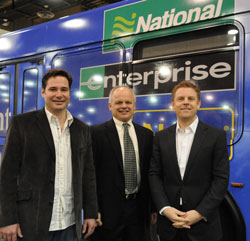 Enterprise Holdings made a major announcement this morning at the National Biodiesel Conference.
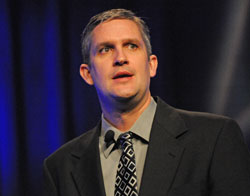 Today’s National Biodiesel Conference general session featured National Biodiesel Board Chairman Ed Hegland. He’s completing his final term as Chairman.


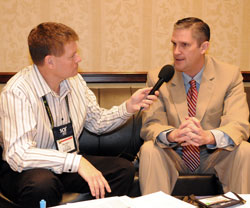 The Chairman of the National Biodiesel Board is Ed Hegland, seen here as a guest on today’s AgriTalk show.