

It wasn’t too long ago that the ethanol industry experienced the perfect storm…high energy prices, high corn prices and low ethanol prices. Also during this time food prices rose. Why? While the reality was that high energy prices were a major factor (oil was more than $15o per barrel at its peak), ethanol was blamed over and over again as the major culprit. Today, research papers are still being published saying that ethanol was not the main offender; yet the debate is still active. So this week, I read the book, “The Economics of Food,” by Patrick Westhoff. To disclose Westhoff’s background, he grew up on an Iowa farm, has a Ph.D. in agricultural economics from Iowa State University and currently co-directs the Food and Agricultural Policy Research Institute (FAPRI) at the University of Missouri.
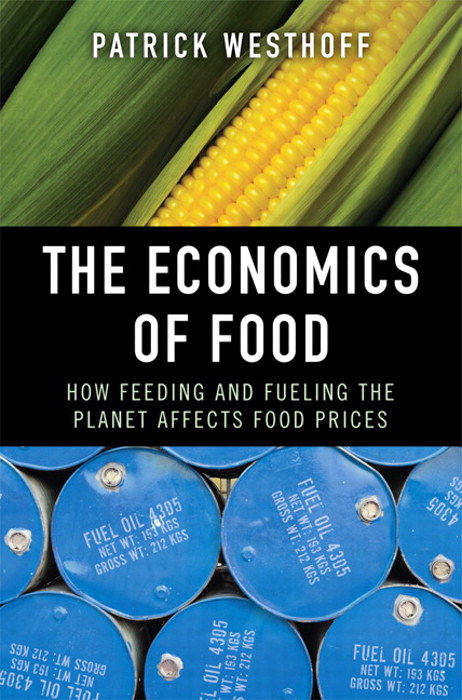 Westhoff acknowledges very quickly that ethanol did have a role in rising food costs.”Biofuels played an important role in the rise and fall of food prices between 2005-2009, but other factors were also at play. Anything that affects the amount of food produced or consumed in the world will have some impact on food prices.” After explaining what some of those other factors are, he writes, “Thus, a first rule of thumb: Increasing biofuel production raises the price of food.” (Author’s italics.)
Westhoff presents both sides of the “food and fuel” debate in his book and says that in certain arguments, both sides are right (the proponents and opponents). He then stresses that biofuels did not play as large of a role in rising food prices as detractors claim, but he also said that biofuels played a larger role in food prices that biofuels supporters acknowledge. After he lays out the true impact of biofuels and food prices, he then lays out some possible scenarios for the future.Read More



 You may be interested to know how grain quality affects ethanol production and DDGs. If so, then you would interested in Leland McKinney’s presentation at the Corn Utilization and Technology Conference, held recently in Atlanta. I spoke with him to learn about his research on this topic. Leland is Extension State Leader in the Dept. of Grain Science at Kansas State University.
 No time like Independence Day to renew the call for renewables to increase our energy independence.
 In a letter to President Obama, U.S. Senator Amy Klobuchar (D-MN) and six other senators expressed concern that the Department of Energy (DOE) has not yet completed testing higher blends of ethanol gasoline, which would allow the Environmental Protection Agency (EPA) to issue a waiver for gasoline with blends of ethanol higher than 10 percent.
 As the nation’s worst oil spill in history threatens the Gulf Coast’s energy, tourism and fishing industries, Florida is continuing efforts to promote the production of renewable energy from biomass resources in the Sunshine State.
