 Propel Fuels, a west coast retailer of ethanol and biodiesel, has received $11 million in grants from the U.S. Department of Energy and the California Energy Commission to build and operate 75 self-serve alternative fuel stations across the state over the next two years.
This article in the Silicon Valley/San Jose Business Journal says the effort will reduce the amount of non-renewable oil used and greenhouse gases given off, while putting more people to work:
The statewide station project, or the Low Carbon Fuel Infrastructure Investment Initiative, has the potential to create more than 450 jobs, while displacing 39 million gallons of petroleum and 187,500 tons of carbon dioxide emissions each year, according to Propel.
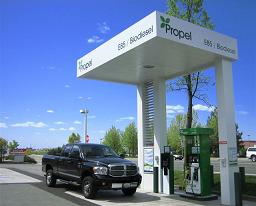 About 7 million of funding for the project was awarded by the U.S. Department of Energy’s petroleum reduction program. Another $4 million was granted through the state of California’s Alternative and Renewable Fuel and Vehicle Technology program. California has the largest fleet of alternative fuel fleet vehicles in the country.
Propel said it will match the grant funding with $16 million in private investment to speed up the build-out of Propel’s network of fueling stations.
“This grant brings a new choice to Californians looking to do their part to reduce our nation’s dependency on imported oil and help meet the state’s emission reduction goals,” Propels chief executive officer Matt Horton added in the release. “As advanced biofuel production facilities prepare to break ground in the state, this fueling infrastructure is a critical link between California’s citizens and the next generation of low carbon fuels.”
California Energy Commission officials say this will help bring the needed next generation of biofuels to nearly half a million flex fuel vehicle owners in the Golden State.

 The
The  According to
  When built in conjunction with the sugar milling operation, plants employing AdvanceBio’s sugar-based ethanol process will have the same, low-greenhouse gas footprint found in Brazil’s existing cane-based fuel ethanol industry. “The facilities will be extremely self-sufficient. In addition to eliminating costs associated with outside sources of fossil fuels, power and process water, our technology eliminates the need for extensive waste treatment processes and the cost of transporting large volumes of liquid vinasse back to the cane fields. These ethanol production facilities will also meet stringent U.S. pollution and occupational safety regulations,” said Dale Monceaux, Principal.