

 Canadian canola could miss out on demand from Canada’s soon-to-be-implemented biodiesel mandate.
This analysis from Reuters says the country’s second most-popular crop might be a much lower choice as a biodiesel feedstock because of some ambiguity in Canada’s requirement that could be started this coming April:
Canada has finished selecting biodiesel plant proposals to receive funding from a C$1.5-billion ($1.5 billion) program, aiming to cut greenhouse gas emissions by 17 percent by 2020 from 2005 levels through mandates of 5 percent ethanol and 2 percent biodiesel in conventional fuel pools.
None of the successful proposals are for large-scale plants in Western Canada that would use canola as the main feedstock. Canada has not set a specific start date for the 2011 biodiesel mandate that would require 500 million liters per year of renewable diesel, creating uncertainty for investors.
It’s up to Canada’s environment department to make a regulatory change that sets a start date. The fact it hasn’t yet done so has left the industry impatient, although the environment minister reassured a biofuels conference this week that the government’s commitment is intact.
In the meantime, Canada has slim prospects of turning much of the yellow-flowering crop into biodiesel, even though the canola industry is counting on biodiesel production worldwide to account for 2.5 million tonnes, or 17 percent of its targeted 15-million-tonne harvest by 2015.
But if look at what some are doing in the private sector, you might feel a little more confident about north-of-the-border canola making it into biodiesel. Last week, I told you how Monsanto was upping its investment in Canadian canola in advance of the biodiesel mandate. However, canola oil still remains very popular in food applications, which would also drive Monsanto’s investment.
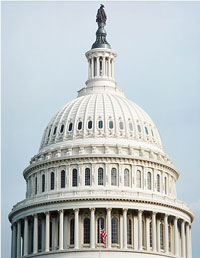 After defeating a compromise measure proposed by Sen. Max Baucus (D-MT) to extend the Bush tax cuts only for the middle class, the talk on Capitol Hill is now turning to a deal that would keep all of the tax cuts in exchange for extending unemployment benefits.
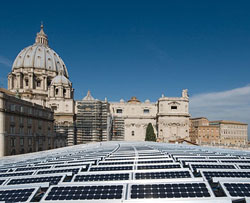 The Vatican has unveiled a new book detailing the Holy See’s solar power initiatives.
 Vatican City, which is a sovereign city-state consisting of about 110 acres with a population of around 800 people, has a goal of meeting 20 percent of its energy needs with renewable sources by 2020, the target date set by the European Union for its members. That is likely to include a fleet of electric vehicles and possibly a solar-powered electric Popemobile. That idea was discussed during last week’s press conference by Cardinal Lajolo and Milan Nitzscke, communications director for SolarWorld.




 Brazilian President Luiz Inacio Lula da Silva
  In a
In a