ACE Conference 2026

GE to Supply Brazilian Wind Project

John Davis

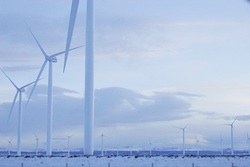
U.S.-based General Electric will provide more than 400 megawatts of wind turbines for a project in Brazil.

This company press release
says the GE commitments will include 258 of GE’s advanced 1.5 and 1.6-megawatt wind turbines:

Customers making commitments to GE from Brazil’s 2010 Alternative Energy Auction are Renova Energia S.A, Dobreve Energia S.A. (DESA), Contour Global and Bioenergy. Projects from the four customers are located in the states of Bahia and Rio Grande do Norte.

“Being able to supply the best technology fit for Brazil’s wind conditions is at the center of our continued success in the country’s wind auctions,” said Victor Abate, vice president—renewable energy for GE Power & Water. “We are focused on making our customers the most competitive in Brazil as they concentrate on helping the country reach its renewable energy goals.”

The 2010 auction commitments build upon GE’s success in winning more than 400 megawatts of wind turbine commitments in Brazil’s first technology-specific energy auction, held in 2009.

“We have had success in winning a quarter of the megawatts awarded in the past 12 months in Brazil. These relationships support our positioning as one of Brazil’s wind energy leaders and, most importantly, represent an important step towards our long term vision as key players in this country,” said Jean Claude Robert, GE’s wind director for Latin America.

GE will supply the turbines, as well as erecting and servicing them for two years.

Wind

Canadian Canola Could Lose Out on Biodiesel Mandate

John Davis

Canadian canola could miss out on demand from Canada’s soon-to-be-implemented biodiesel mandate.

This analysis from Reuters says the country’s second most-popular crop might be a much lower choice as a biodiesel feedstock because of some ambiguity in Canada’s requirement that could be started this coming April:

Canada has finished selecting biodiesel plant proposals to receive funding from a C$1.5-billion ($1.5 billion) program, aiming to cut greenhouse gas emissions by 17 percent by 2020 from 2005 levels through mandates of 5 percent ethanol and 2 percent biodiesel in conventional fuel pools.

None of the successful proposals are for large-scale plants in Western Canada that would use canola as the main feedstock. Canada has not set a specific start date for the 2011 biodiesel mandate that would require 500 million liters per year of renewable diesel, creating uncertainty for investors.

It’s up to Canada’s environment department to make a regulatory change that sets a start date. The fact it hasn’t yet done so has left the industry impatient, although the environment minister reassured a biofuels conference this week that the government’s commitment is intact.

In the meantime, Canada has slim prospects of turning much of the yellow-flowering crop into biodiesel, even though the canola industry is counting on biodiesel production worldwide to account for 2.5 million tonnes, or 17 percent of its targeted 15-million-tonne harvest by 2015.

But if look at what some are doing in the private sector, you might feel a little more confident about north-of-the-border canola making it into biodiesel. Last week, I told you how Monsanto was upping its investment in Canadian canola in advance of the biodiesel mandate. However, canola oil still remains very popular in food applications, which would also drive Monsanto’s investment.

Biodiesel, International

Congress May Make Deal on Tax Cuts

Cindy Zimmerman

After defeating a compromise measure proposed by Sen. Max Baucus (D-MT) to extend the Bush tax cuts only for the middle class, the talk on Capitol Hill is now turning to a deal that would keep all of the tax cuts in exchange for extending unemployment benefits.

Baucus had proposed a compromise amendment late Thursday that would have continued unemployment benefits through January 2012 while extending the tax cuts to those making $250,000 or less. The measure would have also extended the blenders tax credit for ethanol for one year at a rate of 36 cents per gallon while maintaining the 54 cents per gallon tariff on ethanol imports and reinstated the expired $1-per-gallon production tax credit for biodiesel and biomass diesel and the small agri-biodiesel producer credit of 10 cents per gallon through 2011.

Domestic ethanol organizations supported the Baucus measure when it was proposed last week. “Senator Baucus’s approach is a good one, recognizing the importance of this investment and providing some market stability as good faith efforts to responsibly reform ethanol tax policy continue,” said Renewable Fuels Association President and CEO Bob Dinneen. Growth Energy CEO Tom Buis commented that the Baucus proposal for extending the ethanol tax credits was “not as high and as long as we had hoped” but that such an extension would “provide certainty in the market and give Congress the opportunity to consider longer term solutions.”

Joel Velasco with the Brazilian Sugarcane Industry Association (UNICA) was not so supportive, especially of keeping the ethanol tariff at its present rate while lowering the blenders tax credit. “The ethanol import tariff shouldn’t exist at all. But if it must, the tariff should be a direct offset of the tax credit that protects Americans from subsidizing foreign production, not a punitive trade barrier,” Velasco said.

The White House reportedly wants to see a deal done this week in Congress to extend the unemployment benefits that ran out for many last week and may be prepared to accept an extension of the tax cuts as well in order to make that happen.

Biodiesel, Ethanol, Ethanol News, Growth Energy, RFA, UNICA

Vatican Powered From Above

Cindy Zimmerman

The Vatican has unveiled a new book detailing the Holy See’s solar power initiatives.

“The Energy of the Sun in the Vatican” was presented last week during a press conference by Cardinal Giovanni Lajolo, president of the commission governing Vatican City State. It details two solar projects undertaken by the Vatican in the last two years – the installation of 2,400 solar panels on the roof of the Vatican audience hall in 2008 and a solar cooling unit for the main cafeteria in 2009. Both projects were the work of German-based SolarWorld, one of the world’s largest solar energy businesses. The Vatican reports that the solar projects have resulted in saving about 305 tons of carbon dioxide emissions.

Vatican City, which is a sovereign city-state consisting of about 110 acres with a population of around 800 people, has a goal of meeting 20 percent of its energy needs with renewable sources by 2020, the target date set by the European Union for its members. That is likely to include a fleet of electric vehicles and possibly a solar-powered electric Popemobile. That idea was discussed during last week’s press conference by Cardinal Lajolo and Milan Nitzscke, communications director for SolarWorld.

The cardinal said if a sponsor offered the pope an electric-powered vehicle that “was in working order, efficient and suitable, why not? It would be a sign of his environmental concern.” Nitzscke said the Pope’s customized vehicle could be powered with electricity from solar panels. “This is something we have to discuss with the people who are in charge of the security aspect, but of course this is possible,” he said. Because the popemobile is bulletproof, the car would be heavier than most electric vehicles so it would be a challenge to design one that could accelerate quickly.

The current traveling Popemobile is a modified white Mercedes-Benz with bullet-proof windows.

Electric Vehicles, International, Solar

Home of Little Green Men Soon Home of Green Fuels

John Davis

Algae-to-biofuel maker OriginOil, Inc. has been tapped to help build a new Advanced Algae Center devoted to algae commercialization … growing little green microbes where little green men were once rumored to have landed.

This company press release says Sustainable Resources, Inc. (SRI) has agreed to contract with OriginOil to plan and deploy the new center on the site of the original Aquatic Species Program in Roswell, New Mexico, scheduled to start sometime next year:

“We just didn’t have the time to reinvent OriginOil’s expert team and sophisticated modeling in the short time available, which made the expense a no-brainer,” said Joe Ortiz, CEO of SRI. “We are also very excited that they intend to use our facility for their own commercial testing and to integrate with other technologies.”

“Like us, algae players are always looking for resources to test and validate their technologies while retaining absolute control,” said OriginOil CTO Brian Goodall, PhD. “There’s also tremendous interest in integrating multi-vendor technologies in a convenient location. So we’re really being paid to help build something that we very much need ourselves. It’s important to add that we will have no role whatsoever in technology selection – this will be an open environment from the start.”

“We are happy to devote our hard-won expert resources to help SRI build a world-class testing and piloting platform for the long term,” said Riggs Eckelberry, OriginOil CEO. “Because we plan to integrate our technology into others’ systems rather than distributing it ourselves, we are focused only on partners who will help us prove ourselves in the field. SRI’s Advanced Algae Center fits our focus perfectly, complementing our first commercial partner, Australia’s MBD Energy.”

Roswell, New Mexico was once the headquarters for the US Department of Energy’s Aquatic Species Program from 1978 to 1996. It is also rumored to be the site where a UFO crashed in the late 1940s. No word if ET plans to be at the new center’s ribbon cutting.

algae, Biodiesel

American Ethanol Show Car

Chuck Zimmerman

As a follow up to yesterday’s announcement about the NASCAR American Ethanol sponsorship here’s a photo of the show car that will be used for on-location promotional opportunities.

The No. 15 American Ethanol showcar will not be used in a NASCAR race.

In this photo General Wesley K. Clark (Ret.) drops the American Ethanol green flag at the NASCAR Victory Lap on Las Vegas Boulevard. Clark was in Las Vegas for the announcement of the partnership.

You can see more photos from the announcement event online.

The announcement was made during the Myers Brothers NMPA 2010 Awards Luncheon at the Bellagio Hotel in Las Vegas.

American Ethanol, NASCAR

San Fran Grease-to-Biodiesel Plant Gets Green Light

John Davis

After being stalled for the past couple of years, it looks like a San Francisco facility that will turn used cooking oil into biodiesel will finally become a reality.

The San Francisco Chronicle reports the city’s Port Commission has finally given the green light to the Darling International, Inc. 10-million-gallon-per-year plant on San Francisco’s waterfront:

Darling has been operating at Pier 92 since the 1960s, and already creates tallow by melting down bones, grease and other animal waste products from meatpacking facilities, grocers and restaurants. The tallow is then sold and used to make soap and animal feed, but will now also be used to produce biofuel.

The plan received unanimous support from the commission Tuesday after a brief round of largely supportive public comment.

“We’re taking a local waste product, converting it locally into biofuel that will be used locally to create local green jobs,” Mark Westlund, spokesman for the city’s Department of Environment, told commissioners. “That’s about as green as you can get.”

San Francisco uses a blend of biodiesel in all of its 1,500 diesel vehicles, but the fuel is often delivered by truck or rail from as far away as the Midwest. The city’s goal is to get all of its biofuel from local sources.

Darling made some concessions from the original plan, first proposed back in 2008, to address neighborhood concerns about the chemicals that are used to produce biodiesel.

Last month, Darling announced a deal where the company bought another renderer that also had a biodiesel operation.

Biodiesel

NASCAR Partnership With American Ethanol

Chuck Zimmerman

NASCAR is in the middle of making an announcement of a “major long-term partnership with American Ethanol which is being led by Growth Energy.

You can see a video that was just published below. I hope to have some audio from the announcement added after the official public announcement which is taking place in Las Vegas as of this posting.

Pictured here is Bart Schott, President, National Corn Growers Association, who was one of the people making remarks.

Post Update: You can listen to and download the audio of the announcement here: American Ethanol NASCAR Announcement
Growth Energy, a coalition of U.S. ethanol supporters including farmers and members of the ethanol supply chain, becomes an official partner of NASCAR, using the sport to bring its message of American ethanol to millions of race fans. American Ethanol will support drivers, teams and tracks with marketing, promotional activities, advertising and a season-long weekly contingency award in 2011.

NASCAR made the American Ethanol partnership announcement just weeks after announcing a switch in its major national series to Sunoco Green E15, a new 15-percent ethanol blend fuel made with corn grown in the United States.

Financial terms of the six-year agreement were not disclosed. Pictured is NASCAR CEO/Chairman Brian France.

American Ethanol will participate in NASCAR’s Prize Money & Decal Program, also known as the contingency program, with the creation of the “American Ethanol Green Flag Restart Award” in the NASCAR Sprint Cup Series, while also providing weekly prize money for eligible competitors in the NASCAR Nationwide Series and NASCAR Camping World Truck Series based on finishing position. The NASCAR Sprint Cup Series weekly award will be given to the participating driver who records the fastest average speed on restarts and who finishes the race on the lead lap.

The American Ethanol partnership also includes the National Corn Growers Association as well as others.

Growth Energy, NASCAR, NCGA, Video

Qatar’s Solar-Power Stadiums to Host 2022 World Cup

John Davis

In what’s being described as a bit of a stunning announcement, the tiny Middle Eastern country of Qatar has been picked as the site for the 2022 World Cup, soccer’s biggest event. So how did a small country that will be subject to temperatures of above 120 degrees Farhenheit during World Cup play get the games? This inhabitat.com article I first told you about last June says solar power will play a major role in keeping the players and fans cool when the temperatures soar:

Three new eco stadiums and sports complexes will be built close within the city limits allowing fans as well as teams to easily access the arenas. The Al-Wakrah stadium will be able to host over 45,000 spectators and be located in a mixed-use complex along with an aquatic center, spa, sports facilities and a mall, which will continue to be utilized all year long even after the competition ends. Then the Al-Khor and Al-Shamal Stadiums will also be constructed with seating capacity greater than 45,000. Qatar plans on using solar technology to power carbon-neutral technology in order to cool the stadiums and keep the temperature inside less than 27 degrees celsius.

Ironically, Qatar is an petroleum-rich nation that has decided to go with green technology for this project.

International, Solar

Biodiesel Industries’ Navy Project Wins California Grant

John Davis

Biodiesel Industries, Inc. has picked up a nearly $1 million grant from the California Energy Commission’s Alternative and Renewable Fuel and Vehicle Technology Program for its at a naval base in California.

The company says the Biofuel Production Plant grants provide funding and financial assistance for the development of new biofuel production plants based in the Golden State and enhance the operation of existing plants to increase statewide biofuel production and reduce greenhouse gas emissions:

Biodiesel Industries’ “ARIES© Bioenergy Project” was ranked in the top three among the 44 projects competing for grant funding, resulting in the company’s selection as a grant recipient in the amount of $886,815. This multi-year project will demonstrate the use of advanced biodiesel production techniques utilizing algae in an integrated energy system monitored by the ARIES© platform (Automated Real-time, Remote, Intelligent Integrated Energy System).

ARIES© is a highly automated, transportable biodiesel production unit with the capability to be controlled from a remote location. These features ensure reliable process control and optimal production yields in a sustainable system that can be readily and widely deployed. Under this grant, the system will be adapted to fully integrate algaculture, anaerobic digestion of waste products and self-generated combined heat and power. This unique approach will enable the production of biodiesel to be self-sustainable, produce excess renewable energy and substantially reduce greenhouse gases.

Project work will be conducted at Naval Base Ventura County at Port Hueneme, Calif. in conjunction with the ARIES© Biodiesel Production demonstration and validation program under an ongoing Cooperative Research and Development Agreement with the Naval Facilities Engineering Service Center.

The ARIES system allows many scalable facilities using next-generation feedstocks, producing billions of gallons of biodiesel each year, to be operated remotely. You can read more about the project at the Biodiesel Industries, Inc. website.

Biodiesel, Government