Tom says the technical sessions were extremely well attended. In fact, chairs had to be added to some of them due to the attendance in them. He says there were over 2,000 in attendance this year. That may not be as high as several years ago but shows that the industry is resilient and upbeat for the future. Tom Bryan Interview
I have several more interviews from this year’s event that I will be posting over the coming days. Thanks a lot to BBI International for allowing me to attend and for all the support they provide us. Their crew is top notch and a joy to work with.
There are several proposed amendments to current ethanol tax policy including the VEETC and tariff. Many believe that these incentives will disappear at the end of the year, but what would happen if they were extended? Today, the blender’s credit (VEETC) is 45 cents and the ethanol tariff is 54 cents. According to research conducted by University of Missouri economists, this action would boost corn-based ethanol production as well as corn prices.
Seth Meyer, economist with the MU Food and Agricultural Food and and Policy Research Institute (FAPRI) ran a “what-if” scenario on FAPRI computers. With incentives in place, the results showed fuel production from corn would increase by 1.2 gallons over current production levels and corn prices would increase by 18 cents per bushel. In addition, the model predicts that corn acreage would increase by 1.7 million acres.
Earlier this year, the team ran the scenario without tax credits and tariffs. However, this time the scenario was run on the assumption that they would continue but did not factor in any changes to current biofuel mandates.
“This analysis looks at an alternative scenario that keeps ethanol tax credit and tariff at current levels,” said Pat Westhoff, director of MU FAPRI. “There is debate about federal support of the ethanol industry. At a Paris meeting last week, G-20-nation trading partners raised concerns about U.S. support of biofuels. The revised baseline gives FAPRI a tool to study proposed policy changes.”
Westhoff notes that U.S. ethanol policy is complex with a broad set of assumptions. It is assumed that the blender of record who receives the tax credit would keep part of the benefit and then share part of the benefit with station owners. From there, it is assumed station owners would pass along the savings to consumers at the pump. In addition, the tax credit is also designed to allow blenders the ability to pay more for ethanol and ethanol producers the ability to pay farmers more for corn. However, this is not always the case.
Westhoff concluded, “Our work suggests that how benefits of the blender’s tax credit are shared among fuel consumers, ethanol plants and corn farmers is very sensitive to market conditions.”
Today U.S. Senators Jeff Merkley (D-OR), Tom Carper (D-DE), Tom Udall (D-NM) and Michael Bennet (D-CO) introduced the Oil Independence for a Stronger America Act today in an effort to eliminate dependence on foreign oil by 2030 and create a National Council on Energy Security that would be charged with providing recommendations to the President and Congress to ensure America’s energy goals are met. More specifically the act calls for more production and use of electric vehicles, increase in travel options (more public transportation including high-speed trains), infrastructure improvements, development of alternative transportation fuels and reduce the use of oil to heat buildings.
“America’s dependence on oil from the Middle East, Nigeria, and Venezuela makes us increasingly vulnerable to economic and national security risks,” said Merkley. “American entrepreneurs and workers have the ingenuity and grit necessary to break this addiction to foreign oil – the challenge is whether politicians in Washington are willing to choose American strength over vulnerability.”
With all of the proposed pieces of alternative energy legislation that have been introduced and voted on over the past few weeks, as an aside, I thought I would provide a bit of education on how a bill becomes a law. Remember, School House Rock?
Now that you know how the process works, let’s see what the industry is saying.
Michael McAdams, President of the Advanced Biofuels Association said, “This legislation authored by Senators Carper, Merkley and Bennet is precisely the way our nation must rethink, and how Washington must confront, our energy challenges. By resisting the past temptations of picking a winner, the bill instead offers a comprehensive approach that focuses on the future of all biofuels, including advanced drop-in, algae, and cellulosic fuels to deliver as many gallons to back out foreign oil as quickly as possible.”
He concluded, “Developing renewable energy alternatives is an inevitable part of our shared global future and America should help lead the way. This bill puts us on the road to doing just that by encouraging the development of a robust and thriving domestic advanced biofuels market.”
The Oil Independence for a Stronger America Act would reduce oil consumption in the U.S. by over 8 million barrels per day by 2030, enough to end the need for oil imports from beyond North America.
The biofuels industry is making a come-back with several successful IPOs (initial public offering) over the past few months. Today, KiOR announced its initial public offering of 10,000,000 shares of Class A common stock at $15 per share. The company raised nearly $138 million of proceeds from the IPO which occurred on June 24.
Other successful IPO’s include the much-awaited IPO of Gevo back in February. The company raised an estimated $123.3 million after setting the share price at $15. In total, the company sold 8.223 million shares. There were concerns as to what level of interest the IPO would generate after Amyris went public last September with less than stellar results. In total, Amyris raised $84.8 million after setting in shares at $16. The company had originally hoped to go out with an offer between $18-$20 a share.
But despite set-backs for the biofuels industry, the real IPO winner so far this year has been Solazyme who raised nearly $227 million – nearly double the money raised by others in the biofuels sector. The per share price was $18, ironically 10 percent higher than company execs predicted several weeks prior to the official IPO.
So why did Solazyme rake in the big bucks while the others merely fared well? While I am by no means a financial guru, I believe part of their success lay in the fact that Solazyme is already making profits by selling bioproducts and biochemicals. Earlier this year, the company launched a cosmetic product that is being sold in Sephora stores nationwide. The other companies, while they have contracts and are producing fuels at smaller scales, are not making profits yet. Therefore, investing in these companies is a bigger gamble.
Another reason why Solazyme’s strategy may be effective is that they are able to use their profits from their bioproducts and biochemicals to help fund it algal-biofuels research while companies like Gevo have no products yet. Therefore, Gevo needs to raise funds just to deploy its technology at commercial scale, which it is now doing. They have broken ground on the retrofit of an ethanol plant in Luverne, Minnesota.
With a solid showing on Nasdaq, at least for now, hopefully these second generation biofuels companies are paving the way for more IPOs and more private investment dollars – a much needed element if the industry is to move to commercialization.
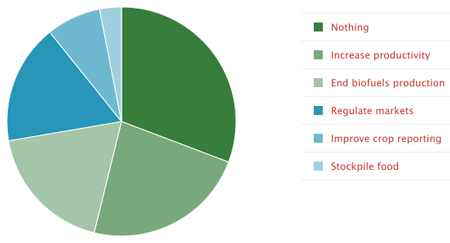
Our latest ZimmPoll asked, “What can G20 ag ministers do to stabilize food prices?” The answer is Nothing, 31%; Increase productivity, 23%; End biofuels production, 18%; Regulate markets, 17%; Improve crop reporting, 8% and Stockpile food, 3%. Can they actually do any of these things? Well, I guess they can do nothing. They met recently and did come up with “a plan.” Interestingly, stockpiling food is part of their plan. Hmm . . .
Our new ZimmPoll is now live. We’re asking the question, “What do you think of USDA’s proposed GIPSA rule?” Let us know what you think. Don’t know much about GIPSA? Check out this link to find a series of posts on the subject.
ZimmPoll is sponsored by Rhea+Kaiser, a full-service advertising/public relations agency.
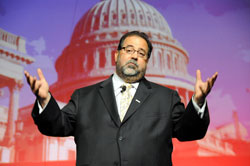
At the 2011 Fuel Ethanol Workshop the Reverend of Renewable Fuels, Bob Dinneen, CEO, Renewable Fuels Association took the stage as a keynote speaker. Bob started his presentation with a report on several policy issues and then moved to a “conversation” with attendees in which he took questions.
Bob first touched on yesterday’s EPA announcement of a label for E15. He says it’s not everything they hoped for but it’s not as bad as had been feared. It does show that the EPA considers E15 a viable fuel. Hopefully we’ll see the fuel in the market soon. Bob then moved on to the latest votes in Congress and what was really going on in the background and what those votes really mean. You can listen to Bob’s presentation here: Bob Dinneen Keynote
You can also watch Bob on stage with the first part of his presentation before he took questions and answers:
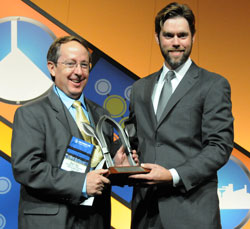
This morning at the 2011 International Fuel Ethanol Workshop, the 2011 Award of Excellence was presented to Dr. Bruce Dale, Michigan State University, by BBI International VP, Tom Bryan.
Dale, professor of chemical engineering and associate director of the office of biobased technologies at Michigan State University, received the award for his extensive research in the areas of indirect land use change (ILUC) and the production of cellulosic ethanol. Earlier this year, he co-authored an analysis of ILUC which found no correlation between U.S. biofuel production and land use change in other countries.
In accepting the award, Dr. Dale recounted how he was the son of a mining engineer and that the towns where he grew up are now ghost towns because the ore has been depleted. “Because the industry on which they were based is not a renewable industry,” he said. When he became a chemical engineer and realized that he was most likely to end up working for the oil industry, he committed himself instead to develop large-scale renewable fuels.
The ethanol industry was in full force this past Sunday during the NASCAR Toytota/Save Mart 350 race at Sonoma Infineon Raceway. The winner of the race was Kurt Busch driving the #22 car and ethanol-sponsored Clint Bowyer #22 finished in fourth place. Rounding out the top spots were Jeff Gordon #24 finishing second and Carl Edwards #99 finishing in third place.
Among the estimated 100,000 fans at the race was ethanol enthusiast Paul Wikoff. He reported, “The air was full of the loud sound of E15 fuel powerfully propelling these cars forward at speeds averaging over 90 miles per hour on this twisty track of 1.99 miles, with 110 laps for completion.” The track has 11 turns and cars finishing the race completed 1, 210 turns, a different challenge compared to the traditional oval track.
The National Corn Growers Association hosted dozens of ethanol enthusiasts during the race and Dr. Mike Lynch, Managing Director of Green Innovation for NASCAR, made a visit to the grandstand box sponsored by American Ethanol. Lynch is credited with helping to bring Sunoco Green E15 to NASCAR and said during his remarks that the drivers and the dyno testing witness the added horsepower gain for the race cars.
Darrin Ihnen, Chairman of the National Corn Growers Association, was also in attendance and voiced his special gratitude to those in California that have embraced clean, renewable, and domestic ethanol fuel. The ethanol industry has been facing some hurdles in recent months with proposed legislation that would make ethanol ineligible for state funding programs including the California Ethanol Producer Incentive Program.
Michigan State University (MSU) is partnering with Wayne County Airport Authority (WCAA) who operates the Detroit Metropolitan Airport and Willow Run Airport to grow, harvest and process biomass crops on airport owned land. This is the first of its kind partnership in the Midwest and demonstrates WCAA’s commitment to advancing aviation biofuels development.
“How does aviation protect itself in the future against the depletion of fossil fuels and the uncertainty of foreign sources of energy?” asked WCAA Interim CEO Genelle M. Allen. “Part of the answer may be to grow it.”
The AgriEnergy Technology Demonstration project is funded by a $476,000 grant from the Michigan Energy Office, part of the Michigan Economic Development Corporation. Combined, the two airports have nearly 1,700 acres of property that could be suitable for growing biomass crops. Already, WCAA has leased three acres of land to MSU Extension where several biomass crops have already been planted, including canola and oriental mustard seed, and this fall will be harvested, refined and tested.
Allen added, “WCAA has been interested in exploring the potential of developing airport-owned property around both airports for bioenergy production for some time. If successful, this project could attract businesses to the vicinity of the airports that would produce alternative fuels for use in aircraft and other vehicles. This project has possibilities for not only bringing economic development to Southeast Michigan, but also protecting land around our airports from further encroachment.”
In addition to airport property, the grant also includes bioenergy sites on other types of land not traditionally used for growing biofuel crops such as vacant urban lots and highway right-of-ways. According to MSU Extension Project Manager Dennis Pennington, he expects the project will also determine the economic impact of growing, refining, storing, and transporting the biomass as a drop in fuel alternative, aka biojet fuel.
The project is expected to be completed by February 2012.
DDCE has selected Nevada, Iowa for its cellulosic ethanol biorefinery to be located adjacent to Lincolnway Energy, LLC’s corn-ethanol plant. The company has entered into an agreement to purchase land when completed, where the plant will be sited. The biorefinery will be one of the first commercial scale cellulosic ethanol plants producing fuel from corn stover, corn cobs and leaves, remaining after grain harvesting. Currently, DDCE is producing fuel at its demonstration facility in Vonore, TN and is in the process of scaling up the process to globally license its end-to-end production system.
“We’re producing cellulosic ethanol sustainably and economically today, and the market is ready and interested to deploy large-scale biorefineries,” said Joe Skurla, CEO of DDCE. “We are purchasing the site next to Lincolnway because it will meet the business needs for our project, and provides potential economic and environmental synergies for both facilities.”
This fall, the company plans to collect thousands of tons of stover from Iowa fields with its 2011 Stover Collection Program. This program will help create cost effective harvesting and distribution techniques. DDCE is collaborating with Pioneer Hi-Bred and Iowa State University to establish best practices in harvesting, storage, and transportation, and assure the agronomic and environmental integrity of cornfields.


 The mood was very upbeat at the 27th International Fuel Ethanol Workshop. I spoke with Tom Bryan, BBI International, about how he would characterize this year’s event which concluded yesterday.