RFA E-15 Ad

Making the Deserts Bloom with Biofuels

John Davis

After spending the past year in the desert myself, I can tell you personally that the prospect of seeing ANYTHING growing, whether it is a plant or animal, is quite a highly anticipated event. And being in that desert far from home really helped bring home how much this country needs domestically produced fuels. That’s why this story from the U.S. Geological Survey’s blog caught my eye. Researchers, such as the USGS’s Sasha Reed (pictured below), are looking at how to get the most out of biofuel production in the arid regions of the American Southwest, while preserving the fragile environment…

“Even renewable energy has consequences, and we want decision makers to have the data available to make informed decisions about incorporating a variety of energy sources into our national energy portfolio,” Reed says…

…Reed and her colleagues are using a two-pronged approach to unravel the biofuel potential of the American Southwest. First, they are using remote sensing and modeling to help determine the amount of energy that could be added to our national energy portfolio by biofuel production. Second, they are using biogeochemistry to assess how different approaches to biofuel development will affect greenhouse gas emissions, water availability and quality, air quality, and soil fertility and stability.

Obviously, in the desert, water is a big concern. Trying to find ways to reduce the amount of water taken away from helping hold soil in place (which, without that water creates a whole new problem… DUST!) is a large part of the focus of Reed’s work. She says more dust has a compounding effect, such as making snow melt faster, which leads to water shortages in areas of the Southwest. The hope is this USGS work will give land managers and policy makers more information to make better decisions about when, where and how to produce biofuels in those desert areas.

algae, Biodiesel, biofuels

Biodiesel Board’s Weber on Biomass R&D Committee

John Davis

A man well-known to the biodiesel community will be taking his seat on a top-level, federal government committee looking at helping the rural economy, while making the country more energy secure.

Alan Weber, who has served as a consultant on new resources for biodiesel for the National Biodiesel Board and vice president of Missouri-based MARC-IV Consulting, has been tapped to serve on the USDA’s and U.S. Department of Energy’s Biomass Research and Development Technical Advisory Committee.

The prestigious committee helps USDA and DOE in meeting important goals of a healthier rural economy and improved national energy security. Weber will advise the agencies on overcoming technical challenges through research and development that will lead to a greatly expanded biobased industry.

Weber has been involved with biodiesel for more than 20 years, helping establish the NBB’s Washington, DC office. He’s a master’s graduate of the Agricultural Economics program at the University of Missouri, where he served as a program director for industrial uses from renewable resources.

Biodiesel, NBB

Biodiesel Becomes Key Part of Mechanic Training

Joanna Schroeder

It won’t be long before mechanics across the U.S. know all about biodiesel. The National Automotive Technician Education Foundation (NATEF) has awarded the Automotive Service Excellence accreditation to NBB Biodiesel for Diesel Technicians curriculum. The curriculum was created to provide technically sound information to mechanics about biodiesel and eliminate misperceptions.

“We are delighted to have the National Biodiesel Board as an accredited training organization; it is important to have good technical information to educate the next generation of diesel technicians in advanced biofuels,” said Dave Milne, President of the Automotive Training Managers Council, a division of ASE.

The National Biodiesel Board (NBB) says greater acceptance and knowledge of biodiesel will help all Americans enjoy the benefits of the renewable fuel.

Rachel Burton, a diesel technician who leads the NBB program and has trained more than 300 instructors said, “NBB had the foresight to recognize that educating diesel technicians early is critical to its mission of increasing public acceptance of biodiesel, a relatively new fuel. Knowledge is power.”

The NBB program has had a partnership with Universal Technical Institute, a leading provider of entry-level technicians, since 2009. Technicians who take the course may receive Continuing Education Credits and for those taking classes in a college setting, the course may count for credits towards a degree.

advanced biofuels, Biodiesel, biofuels

Europe Set to Dominate in Solar Power

Joanna Schroeder

Europe is sitting pretty to dominate in the use of solar power. The solar industry is expected to grow up to 150GWp by 2020. According to a report by McKinsey, “Solar power: Darkest before dawn,” the solar industry is entering a period of maturation. Over the next few years, this will lead to more stable and expansive growth for companies that can manage costs while still being innovative.

Germany is the global leader in solar power accounting for more than a third of the world’s photovoltaic capacity. The country is also positioned well for growth as McKinsey cites five key areas of growth: off-grid, residential and commercial in sun-rich areas, isolated grids, peak capacity in growth markets and large-scale power plants. Strategies for success in these areas and others will be topics of discussion during the Intersolar Europe that kicked off on June 11, 2012.

“Those companies who survive the current consolidation wave will experience a bright future. Especially the rooftop segment and downstream business models are expected to drive the industry forward,” said Tobias Rothacher, photovoltaic industry expert at Germany Trade & Invest in Berlin.

Darkest before dawn reports that the industry is suffering from growing pains as demand is expected to increase between 400 to 600 GWp by 2020 even with the reduction or end of tax credits. This upward trend is especially creating opportunities for companies who offer comprehensive design, installation and service packages.

“Germany has supported own consumption of solar power for years. The coming grid parity era is ushering in an era of new business opportunities,” added Rothacher. We expect Germany to continue to be the top business location, as innovations and industry standards are developed here.”

Electricity, Energy, Solar

Wind Farm in Oklahoma Secures Financing

Joanna Schroeder

The 235 mW Chisholm View wind project in Garfield and Grant Counties, Oklahoma has secured nearly $220 million in project financing. Enel Green Power North America and EFS Chisholm, LLC signed a capital contribution agreement with a syndicate led by J.P. Morgan. Funds will be released during the 4th Quarter of 2012 subject to the achievement of several requirements and at this time, a tax equity agreement will be signed by the parties. There is already a long-term purchase agreement in place for the energy produced by the wind farm.

Under U.S. law, tax equity agreements allocate tax benefits from renewable energy generation companies to passive investors. The syndicate will be providing funds to the project in return for an equity interest with voting rights in the Chisholm View wind project.

Francesco Starace, Enel Green Power CEO and General Manager, said: “We are pleased about the closing of this agreement, which further demonstrates the Group’s commitment to North America. Enel Green Power has a diversified footprint in this region, in which we mainly operate hydro, wind, geothermal as well as solar capacity. We wish to expand this capacity further by leveraging on such a multi-technology approach, which, along with a presence in 16 countries, makes EGP unique in the global renewables scenario.”

Electricity, Energy, Wind

Ethanol Discussed at Clinton Global Initiative

Growth Energy CEO Tom Buis recently participated in a working group on clean fuels and transportation, emphasizing the important role of ethanol as a domestically produced energy. This occurred as leaders from across the United States gathered at the Clinton Global Initiative to discuss some of today’s most challenging problems.

During the working group, Buis highlighted the importance of American ethanol and the multifaceted benefits of a clean burning, domestically produced renewable fuel.

“Ethanol is not a political issue, it is an American one,” Buis said. “Ethanol is a true American success story and we must continue to educate the public about the tremendous benefits of ethanol. This is a domestically produced American fuel that creates jobs, stimulates our economy, revitalizes rural areas and reduces our dependence on foreign oil, and I am proud to share that message with the leaders gathered here at the Clinton Global Initiative.”

Currently, the ethanol industry supports more than 500,000 jobs, and in 2011 alone, contributed approximately $50 billion to our national gross domestic product. Today, ethanol makes up 10 percent of our nation’s fuel supply, with the ability to contribute more. As the industry awaits final clearance to introduce E15, a 15 percent blend of ethanol, into to the marketplace for consumers, estimates show an additional 136,000 jobs would be created when E15 becomes commercially available.

“We have the ability to greatly reduce our addiction to foreign oil and create jobs right here in America that cannot be outsourced,” said Buis. “By adding Flex Pumps and Flex Fuel vehicles, Americans can fill up their tanks and know that they are supporting the American economy, instead of sending their hard earned dollars overseas.”

Buis also highlighted the critical role the Renewable Fuel Standard (RFS) plays in the continued success of the ethanol industry. The RFS is the first major American energy policy implemented since the first OPEC oil embargos. In 2005, the year the RFS was first implemented, the U.S. was importing 60.3 percent of its oil, and in 2011 that number had dramatically dropped to 45 percent.

Ethanol, Growth Energy

TransFerm Yeast Product Available

Joanna Schroeder

Mascoma Corporation has released a yeast product for the ethanol industry called TransFerm that is being joint marketed by Lallemand Ethanol Technology. The product is derived using the Mascoma Grain Technology (MGT) platform. TransFerm is a drop-in substitute for fermenting yeast that according to Lallemand lowers costs for corn ethanol producers because it eliminates the need to purchase enzymes currently used in production.

“The ability of TransFerm(TM) to enhance ethanol production, combined with the complementary capabilities of our two companies, positions us for a successful commercial launch of this product,” said Bill Nankervis, President of Lallemand’s Specialty Division.

Nine corn ethanol producers participated in commercial-scale trials and produced nearly 50 million gallons of ethanol.

“We are well positioned to continue the successful commercialization of TransFerm(TM) and transform enzyme delivery in first generation ethanol,” added Bill Brady, President and CEO of Mascoma. “The commercial agreements we have in place with ethanol producers, as well as the commercial-scale trials already underway provide us with a strong foundation from which to grow.”

Ethanol

ImagineSolar CEO Speaks on Industry Careers

Speaking on the opening day of the 38th IEEE Photovoltaic Specialists Conference (PVSC), Austin Solar Day, Michael Kuhn, CEO of ImagineSolar, said the solar and smart grid industries are launching an expanding wave of new technologies and business models that are disruptive to the traditional energy industry.

The IEEE PVSC is the premier technical conference covering all aspects of PV technology from basic material science to installed system performance. Kuhn presented what is happening in the solar and smart grid industries, what is creating their growth, and what career opportunities are available now. He gave an overview of several solar career pathways. He also spoke about diverse career opportunities being created as the smart grid is implemented across the nation.

“There is a need for specialized training and continuing education to stay on top of this wave,” Kuhn said. “Career opportunities in this field are available to everyone including engineers, electricians, entrepreneurs, and other professionals.”

The solar industry has grown significantly over the past decade as the shift from nonrenewables is ugmented by the vision of a sustainable future in the U.S. The solar industry boasts a job growth rate of 6.8% annually, compared to the national employment growth rate of 0.7% (Source: The National Solar Jobs Census 2011).

Solar career opportunities include installation, production, design, sales, marketing and more. The smart grid offers new career avenues for those in information technologies, software, energy, wireless/telecom, finance, contracting, and consumer products. A CABA research study projects that by 2015, the smart grid will be approaching a $10 billion industry in North America. In 2010 it was worth only $5.6 billion. High-tech training in these clean energy careers is paramount.

View Michael Kuhn’s entire presentation.

conferences, Solar

Ethanol and Environmental Groups Unite for RFS

Cindy Zimmerman

Ethanol, environmental, science and advanced biofuels groups jointly signed a letter to Congressional leaders this week asking them to protect the Renewable Fuel Standard (RFS) and extend expiring tax incentives for cellulosic biofuels.

The letter was signed by the American Coalition for Ethanol (ACE), the Advanced Ethanol Council (AEC), the Union of Concerned Scientists (UCS), the Natural Resources Defense Council (NRDC), the Great Plains Institute, the Environmental and Energy Study Institute (EESI), the Institute for Agriculture and Trade Policy, the Advanced Biofuels Association and the Biotechnology Industry Association (BIO).

Specifically, the letter calls on Congress to leave the RFS unchanged, stating that “[a]ny effort to open up the RFS would send a chilling signal to a sector where decades-old policies and incentives continue to push investment dollars to the incumbent petroleum industry.” The group calls the RFS a “cornerstone” of the emerging advanced biofuels industry in the United States.

The letter also calls on Congress to extend existing tax incentives for cellulosic biofuels – both the Producer Tax Credit and Accelerated Depreciation – while it continues to deliberate on more comprehensive tax reform. “We support ongoing efforts to more comprehensively reform energy tax policy to level the playing field between incumbent industries and cleaner alternatives and enhance U.S. competitiveness in the global $2.4 trillion clean energy marketplace,” the letter states. The group letter adds that “[a] reformed tax policy should reflect 21st century energy challenges by complementing the RFS, rewarding environmental performance and driving innovation.”

Read the letter here.

ACE, advanced biofuels, AEC, Ethanol, Ethanol News, Government

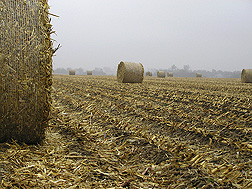
The Future for Corn Stover in Biofuels

Cindy Zimmerman

The future of using corn stover for advanced biofuels was one of the discussion topics at last week’s Corn Utilization Technology Conference in Indianapolis.

Nathan Mosier with the Department of Agricultural & Biological Engineering at Purdue University, told the conference that the corn refining industry has done a great job of using the corn kernel to create various value-added products. He’s working on similar developments with corn stover “to break it into its constituents in a way that allows us to add value and produce more products that can be sold.”

Mosier says he’s been working with several companies, like Mascoma, that are getting close to commercial applications that would be used to make cellulosic ethanol. “We’re making a lot of advances in being able to launch the very first products, but I think there’s a lot of opportunities for higher value products that may be lower volume, but in the context of a biorefinery where we can use materials like corn stover instead of petroleum to make not only fuels, but specialty chemicals, plastics and polymers.”

Listen to an interview with Nathan Mosier from CUTC here: Interview with Nathan Mosier

2012 CUTC Photo Album

advanced biofuels, Audio, corn, CUTC, NCGA