ACE Conference 2026

Engine Experts Talk Ethanol

Cindy Zimmerman

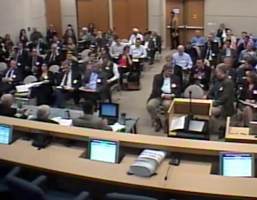
nec14-engine-panelSpecialists in the areas of auto, motorcycle and small engines presented their experience with ethanol fuels in the real world during the National Ethanol Conference.

The panel was moderated by radio host and automotive expert Bobby Likis of Bobby Likis Car Clinic in Pensacola. “In 43 years, more than 200,000 cars have rolled through the doors of my automotive service shop,” said Likis. “Not one of my customers has lost or damaged an engine due to ethanol.” Comments by Bobby Likis, radio host and automotive expert

The panel featured:
Dr. Andrew Randolph, Technical Director with Earnhardt Childress Racing Engines – Comments by Andrew Randolf, Earnhardt Childress Brian West, Oak Ridge National Laboratory Deputy Director Fuels, Engines and Emissions Research – Comments by Brian West, Oak Ridge National Laboratory Bryan O’Neill, Auto Service Consultant and Vice President of the Iron Order International Motorcycle Club, Pensacola Chapter – Comments by Bryan O'Neill, motorcycle expert and advocate

O’Neill’s related that his own ride – a 2012 Victory Cross Country that “runs like a scalded dog” – has run on only E10 “from day one.” Regarding the use of E15, O’Neill made it clear that the bikers he knows are well aware that it is illegal to use that in their rides and they are capable of reading labels at the pump. “We’re bikers and I admit we’ve been known to do some dumb things, but we’re not stupid,” he said. “We know what to pump. It’s that simple.”

O’Neill is the star of a Bobby Likis Car Clinic/RFA video on motorcycles and ethanol.

2014 National Ethanol Conference Photo Album

NEC Coverage sponsored by Patriot Renewable Fuels LLC

Audio, automotive, Ethanol, Ethanol News, Motorcycle, National Ethanol Conference, RFA

Hawaii: Using More Renewables and Less Oil

Joanna Schroeder

Hawaii is addressing its lack of fossil fuels by converting its energy to renewables. The state imports nearly all of its energy, including the petroleum that fuels more than 70 percent electricity generation. This effort is the subject of the U.S. Energy Information Administration’s (EIA) latest Today in Energy report.

Another reason the state is attempting to diversify its electricity supply is since their electricity generation costs are tied closely to petroleum prices, residential electricity rates are three times the national average. The EIA explains that Hawaii’s islands are not connected by transmission lines, so each island must have enough generating capacity to meet local demand and provide emergency reserves.

Screen Shot 2014-02-20 at 7.10.42 PMIn the face of these challenges, Hawaii’s grid operators have turned to a combination of renewable sources (with lower costs than oil-fired generation), distributed generation, and energy efficiency programs that lower the overall demand for electricity in the state.

The petroleum share of electric generation has been declining, from a high of 81 percent  in 2002 to 72 percent in 2013 (through November), while at the same time, generation from renewable sources has climbed from a 4 percent share in 2002 to more than 12 percent in 2013. Generation from coal comes from a single 180-megawatt (MW) facility on Oahu and has been relatively steady at 13-15 percent of total generation each year.

EIA has finds that total utility-scale electric generation has declined from 2007 through 2012. This reduction is attributable to distributed generation and net metering policies that encourage electric generation from homes and businesses, mostly from solar photovoltaic installations, and increased energy efficiency measures.

Hawaii produces renewable electricity from biomass, geothermal, and hydroelectric but recent new wind and solar projects have resulted in large increases in renewable electricity production. In 2012, wind accounted for 36 percent of total utility-scale renewable generation in Hawaii with an increase to 42 percent in 2013 (through November). Utility-scale solar generation has increased more than fivefold from 2012 to 2013 but still accounts for less than 2 percent of utility-scale renewable generation in Hawaii. However, EIA reports utility-scale data understate total solar generation in Hawaii because totals do not include the much larger output from small-scale solar power installations.

Hawaii’s installed renewable nameplate capacity in 2013 was just over 600 MW, more than triple the amount that in 2005. Nearly 57 MW of additional renewable capacity is currently under construction and slated to enter service during 2014.

Alternative energy, Renewable Energy, Solar, Wind

LA Rooftop Solar Program Shining Bright

Joanna Schroeder

According to a report from J.R. DeShazo, director of UCLA’s Luskin Center for Innovation, Los Angeles’ new rooftop solar energy program is delivering on its goal of cost-effective, clean power to thousands of electricity customers. The report also finds that the program should be expanded. Under the feed-in-tariff (FiT) program, electric power generated by solar rooftop installations on office and retail buildings, warehouses and apartment complexes is soldclean solar LA first project to the Los Angeles Department of Water and Power (LADWP) for use by its residential and business customers.

After numerous interviews with primary stakeholders, including solar developers and participating property owners, the UCLA researchers evaluated the initial two phases of the program, representing about 40 megawatts (MW) of solar power. These two allocations received a total of 256 program applications. Based on the rollout, the research team concluded that the “FiT 100” is on track to deliver 100 MW of carbon-free energy by 2015 – enough to power more than 21,000 homes annually.

The report also finds the program is on track to deliver on the jobs, economic and sustainability goals outlined when city officials approved the program in 2012. And the cost of power – averaging 15 cents per kilowatt-hour – is lower than any other similar FiT program in North America.

“The Los Angeles Business Council has been one of the strongest advocates for a viable feed-in-tariff program to produce 100 megawatts of solar electricity,” said L.A. City Council member Mitchell Englander. “Together the City of Los Angeles and the LABC have made great strides towards our efforts to reduce the City’s dependency on coal, moving away from centralized generation toward a more distributed model while creating thousands of local jobs in the process. Although the first and second tranches were successful, this study highlights an opportunity to make the process more user-friendly and cost-efficient in the future.”

In addition to clear environmental benefits, the installation of the first 40 megawatts is on course to generate 862 jobs, and the full 100 MW program is expected to create more than 2,000 jobs – 1,370 direct jobs plus 785 more indirectly related to the program, according to the UCLA study. The FiT 100 is also expected to deliver approximately $300 million in direct investment in the City of Los Angeles by solar companies and other businesses involved in the program. Once the full FiT 100 program is in place, the UCLA research team estimates that as many as 2.7 million tons of greenhouse gases will be displaced from the environment every year.Read More

Electricity, Renewable Energy, Solar

Ethanol Report on New Economic Study

Cindy Zimmerman

ethanol-report-adAt the 19th annual National Ethanol Conference in Orlando, the Renewable Fuels Association unveiled a new study by ABF Economics entitled “Contribution of the Ethanol Industry to the Economy of the United States.”

The author of that study was John Urbanchuk, who is the go-to economist for the biofuels industry – but he was unable to be at the conference so we caught up with him by phone for this edition of “The Ethanol Report.” Ethanol Report with economist John Urbanchuk on new ethanol economic study

Subscribe to “The Ethanol Report” with this link.

2014 National Ethanol Conference Photo Album

NEC Coverage sponsored by Patriot Renewable Fuels LLC

Audio, Ethanol, Ethanol News, Ethanol Report, RFA

BioEnergy Bytes

Joanna Schroeder

  • BioEnergyBytesDFRenewable Energy Group (REG) has hired Todd Robinson as Director, Investor Relations. Robinson has spent more than 20 years in banking, investment, finance and treasury operations at companies including Wells Fargo, Deloitte & Touche, Pioneer Hi-Bred International, Pella Corporation, and HSBC Securities (USA), Inc. He will work with REG senior management and with the company’s investor relations firm, ICR, to enhance REG’s availability to the investment community.
  • Leading figures in geothermal power development will be participating in the GEA International Geothermal Showcase in Washington, D.C. on Earth Day, April 22. This includes speakers engaged in projects in Kenya, Tanzania, Switzerland, Romania, Turkey, Italy, Japan, Indonesia, Guatemala, El Salvador, Nevis, Colombia, the United States, Iceland and more. In addition to examining geothermal power projects around the world, panels will present leading market analysis discussing the state of the geothermal sector, a top level expert discussion of geothermal project risk reduction, and presentations from leading financial institutions including the World Bank, the Export-Import Bank of the U.S., and the Overseas Private Investment Corporation.
  • Ferrostaal Industrial Projects GmbH, a project developer facilitating worldwide investments, is taking a majority stake in the ‘Sainshand’ wind farm project in Mongolia. With 190 GWh of electricity every year, ‘Sainshand’ will be the largest wind park in Mongolia. The investment in the project amounts to approximately 120 million US dollars and is intended to connect to the grid as early as the end of 2015.
  • Green Charge Networks has announced the launch of a new white paper, The Next Energy Frontier: Power Efficiency. The white paper addresses the rising electricity cost facing America’s businesses. The paper also examines the state of energy efficiency initiatives and what will be the next frontier in savings – Power Efficiency.
Bioenergy Bytes

RFA Ethanol Industry Outlook and Pocket Guide

Cindy Zimmerman

nec14-guideEvery registration packet at the National Ethanol Conference included two new publications from the Renewable Fuels Association – the annual 2014 Ethanol Industry Outlook and 2014 Pocket Guide to Ethanol.

The publications offer both a comprehensive look at the ethanol industry today and a succinct industry overview in a pocket-sized package. They include information about the Renewable Fuel Standard (RFS), next generation biofuels, expansion of higher level ethanol blends, the global marketplace, food vs. fuel, and an updated map of biorefineries across America.

If you would like to get copies of the publications contact RFA’s Chris Findlay at 202-289-3835 or cfindlay@ethanolrfa.org – and both are available on line.

2014 Ethanol Industry Outlook
2014 Pocket Guide to Ethanol

2014 National Ethanol Conference Photo Album

NEC Coverage sponsored by Patriot Renewable Fuels LLC

Ethanol, Ethanol News, National Ethanol Conference, RFA, RFS

West Coast Offshore Wind Project Moves Ahead

Joanna Schroeder

The first offshore wind project proposed for federal waters off the West Coast has just taken a big step forward. Secretary of the Interior Sally Jewell joined by Governor John Kitzhaber and Bureau of Ocean Energy Management (BOEM) Director Tommy P. Beaudreau, announced that BOEM has given the green light for Principle Power, Inc. to submit a formal plan to build a 30 megawatt offshore wind pilot project using floating wind off the coast of Coos Bay, Oregon.

City of Coos Bay Oregon“Today’s announcement is consistent with President Obama’s commitment to take actions that will create jobs and develop clean, domestic energy that powers our economy,” said Jewell. “This pioneering project would demonstrate floating wind turbine technology capable of tapping the rich wind energy resources in deep waters offshore Oregon. As we look to broaden our nation’s energy portfolio, the innovative technology and its future application hold great promise along the West Coast and Hawaii.”

According to the National Renewable Energy Laboratory, the West Coast holds an offshore wind capability of more than 800 gigwatts of wind energy potential. This is equal to more than three quarters of the country’s entire power generation capacity. In addition, total U.S. deepwater wind energy resource potential is estimated to be nearly 2,000 gigawatts.

“Today marks a milestone in ocean renewable energy, and also the next big leap for cutting-edge innovation necessary to meet our energy and carbon reduction goals,” said Governor Kitzhaber. “These critical partnerships with our federal, regional, tribal, and local partners are advancing an energy future that supports a healthy economy and good jobs while strengthening Oregon’s legacy of environmental stewardship.”

BOEM has issued two non-competitive leases (Cape Wind in Nantucket Sound and an area off Delaware) and three competitive leases (two offshore Massachusetts-Rhode Island and another offshore Virginia). The competitive lease sales generated about $5.4 million in high bids for about 277,550 acres on the U.S. Outer Continental Shelf. Additional competitive auctions for wind energy areas offshore Maryland, New Jersey and Massachusetts are expected in 2014.

offshore wind, Renewable Energy

Analysis: RINs Price Drop Indicate EPA Reversal

John Davis

A drop in prices for biodiesel and ethanol Renewable Identification Numbers (RINs) could indicate that the government’s proposal to cut the amount of the green fuels to be blended into America’s fuel supply will be reversed. In an analysis by University of Illinois agricultural marketing expert Scott Irwin, lower RINs suggest the market believes odds are the Environmental Protection Agency (EPA) will end up opposing its proposal.
RINs220
Since late January 2014 D6 prices have once again risen rapidly relative to D4 prices. The price of a D4 and a D6 with 2014 vintages stood at $0.46 and $0.34, respectively, on January 27, 2014, little changed since early December 2013. Six trading days later on February 5 the price of a D4 and D6 had risen to $0.55 and $0.50, respectively. In other words, the price of D6 RINs increased by about 50 percent over a span of just six days! Obviously, something dramatic must have happened to change the market’s perception of the value of D6 RINs relative to D4 RINs. The conceptual model presented in Figure 1 strongly suggests that RINs market traders were convinced there is a much higher chance that the EPA will reverse the write down of the 2014 renewable mandate in final rulemaking, expected to be released in late spring or early summer.

Implications

Once again, the RINs market may be providing an early warning signal about a change in EPA policy. The recent rise of D6 ethanol prices relative to D4 biodiesel prices indicates that RINs traders believe the odds of the EPA reversing the proposed write down of the renewable mandate for 2014 in final rulemaking have increased sharply.

Another good indicator of a possible reversal are the words of Administrator of the EPA, Gina McCarthy herself, who recently told the meeting of the National Association of State Departments of Agriculture, “I have heard loud and clear that you don’t think we hit that right…[the final rule will be] in a shape that you will see that we have listened to your comments.”

Biodiesel, EPA, Ethanol, RFS, RINS

19th National Ethanol Conference is a Wrap

Cindy Zimmerman

nec14-bob-zepThe 19th annual National Ethanol Conference was one of the best ever, with strong attendance and a program that rocked.

Personally, Renewable Fuels Association (RFA) president and CEO Bob Dinneen thought the Led Zeppelin 2 concert for the networking reception was the highlight of the conference, but there were lots of other great acts.

“It was a substantive agenda and from start to finish there were really good conversations about issues of real importance,” Dinneen said at the conclusion of the event on Wednesday. “I’m really happy with the content, but just the mood around the room was really phenomenal.”

An address by the EPA official
in charge of making the proposed changes in the volume obligations under the Renewable Fuel Standard (RFS) was definitely another highlight of the conference. “He truly is just trying to do the right thing,” Dinneen said about Chris Grundler, EPA Director of the Office of Transportation and Air Quality. “I think the world of him. I may not agree with everything he says or does but I know that he’s doing it sincerely.”

nec14-pacSomething new at the NEC this year was the membership PAC auction that was held to support the RFA Political Action Committee which started just last year. “We hadn’t had one up until that point,” said Dinneen, who gave a lot of credit to auctioneer Todd Barlow of Kentucky for helping to raise a good amount of dollars for a good cause. “It really is challenging to raise money in this fashion but it was a lot of fun and we’re going to continue to grow this event.”

Among the more entertaining acts of the conference were the traditional Washington Insiders panel and the global ethanol panel. Attendance was more than 1100 at the event in Orlando, more than the past two years, and they are the “right people, people that are truly invested, truly committed, truly looking to build a future for their companies and their communities as well,” said Dinneen.

The RFA’s marching orders in 2014 are simple – Protect the RFS and tell the government #KeepYourWord. Next year the 20th anniversary National Ethanol Conference will be held in Dallas. Interview with Bob Dinneen, RFA at close of NEC14

2014 National Ethanol Conference Photo Album

NEC Coverage sponsored by Patriot Renewable Fuels LLC

Audio, Ethanol, Ethanol News, National Ethanol Conference, RFA

Iowa E85 Sales Set Record in 2013

Joanna Schroeder

Iowans have purchased a record number of gallons of E85 (85 percent ethanol, 15 percent gas) in 2013. According to the Iowa Renewable Fuels Association (IRFA), total E85 sales in 2013 reached 10,854,117 gallons, up nearly 20 percent from 2012 and an increase of more than 130,000 gallons from the previous record in 2011. The sales figures were reported by the Iowa Department of Revenue. manning_ia_pumpE85 sales in Iowa finished strong in 2013 setting a fourth quarter record at 2,784,326 gallons, up more than 67 percent from fourth quarter 2012 and an increase of more than 700,000 gallons from the previous fourth quarter record in 2010.

To learn more about Iowans choice of ethanol blends, I spoke this afternoon with Grant Menke, policy director for IRFA. My first question: how much more can we do with E85 and higher blends of ethanol in Iowa. “We can do a whole lot more,” answered Menke. Iowa is a 1.5 billion to 1.6 billion gallon gasoline market and the state is at 11 million gallons for E85. “So there is clearly a lot of growth that needs to take place there. With a strong growing RFS (Renewable Fuel Standard) we really think this can happen.”

Menke noted that consumers who purchased E85 last year did so at very competitive prices. He said he remembers buying E85 during the third quarter at $1.10 per gallon less than a gallon of E10. He said ethanol is a homegrown fuel, good for the economy, good for farmers, and good for the environment. It’s a win-win-win. “If we can continue to price this fuel well, which the RFS allows us to do, we’re going to continue to break records in the future,” stressed Menke.

I asked Menke why it was so important to not only keep the RFS in tact, but moving forward. He noted that the Environmental Protection Agency (EPA) comment period for the 2014 RFS has been completed and the ball is now in the EPA and White House’s court. They have heard from tens of thousands of RFA supporters as to why a reduction in the RFS would be devastating to this industry: first generation, biodiesel and cellulosic ethanol. “If we want to continue to diversify our fuel supply with cleaner, homegrown, renewable fuels, we need a strong growing RFS,” added Menke.

IRFA aids retailers who want to offer consumers more choices at the pump, and noted that retailers who diversify their fuel offering (biodiesel, higher blends of ethanol) can have financial success in this space. Menke said they are hoping to break records in 2014.

Listen to my interview with Grant Menke here: Iowa E85 Sales Set Record in 2013

Audio, biofuels, E85, Ethanol, Iowa RFA