ACE Conference 2026

A Toast to Making Ethanol from Grape Biomass

John Davis

univofadelaideRaise your glass in a toast to some researchers from Down Under, as they have figured out how to make ethanol out of some of the leftovers from wine-making. University of Adelaide researchers in Australia showed they could make about 100 gallons of ethanol by fermenting a ton of grape marc – the leftover skins, stalks and seeds from wine-making.

Global wine production leaves an estimated 13 million tonnes of grape marc waste each year. Nationally it is estimated that several hundred thousand tonnes are generated annually and it is generally disposed of at a cost to the winery.

“This is a potentially economic use for what is largely a waste product,” says Associate Professor Rachel Burton, Program Leader with the Australian Research Council (ARC) Centre of Excellence in Plant Cell Walls in the School of Agriculture, Food and Wine.

PhD candidate Kendall Corbin analysed the composition of grape marc from two grape varieties, cabernet sauvignon and sauvignon blanc. She also investigated pre-treatment of the grape marc with acid and enzymes.

Ms Corbin found that the majority of the carbohydrates found in grape marc could be converted directly to ethanol through fermentation with a yield of up to 270 litres per tonne of grape marc.

What was leftover from this ethanol-making process is suitable as an animal feed or fertilizer.

biomass, Ethanol, Ethanol News, Research

Ethanol Rail Opportunities & Challenges

Joanna Schroeder

hyderThis past winter was a tough one on the rail industry with lots of cold and snow. Among industries affected was the biofuel industry including ethanol transportation. During the ACE Ethanol Conference, Hasan Hyder, assistant vice president grain and grain products for Union Pacific, addressed some of these issues and discussed new opportunities.

Hyder gave a brief history of the rail industry with a focus on safety, service and supply chain efficiency. He also discussed longer-term opportunities and challenges ethanol and the rail industry face together. One great opportunity and challenge- transporting the growing amount of American made biofuels around the country.

To learn more about Union Pacific, and their commitment to the ethanol industry, listen to Hasan Hyder’s presentation: Hasan Hyder, Union Pacific

2015 ACE Annual Meeting Photos

ACE, ACE Ethanol Conference, biofuels, Ethanol

GREET Model Advances

Joanna Schroeder

When determining how much a fuel reduces greenhouse gas emissions as compared to pure gasoline, most use Argonne National Laboratory’s GREET Life-cycle model (Greenhouse Gases, Regulated Emissions, and Energy Use in Transportation Model). In recent years, the model has seen some advancements and during the recent ACE Ethanol Conference, Dr. Jeongwoo Han, assistant energy system analyst with Argonne National Labs, discussed these changes.

HanAs he explained, GREET has been updated and used to evaluate/update the environmental impacts of ethanol. Han’s presentation discussed the recent life-cycle analysis results of ethanol with the technology advancement as well as key issues in life-cycle analysis.

To learn more about advancements in the GREET Life-cycle Model, listen to Dr. Jeongwoo Han’s presentation: Dr. Jeongwoo Han Presentation

2015 ACE Annual Meeting Photos

ACE, ACE Ethanol Conference, Audio, Carbon, Ethanol

PHG Energy to Build Waste-to-Energy Plant in TN

Joanna Schroeder

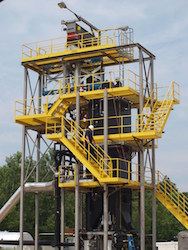
PHG Energy (PHGE) will be constructing a new biomass gasification plant that will convert more than 30 tons of composted material per day into thermal energy and biochar. Sevier Sold Waste (SSWI), located in Pigeon Forge, TN, contracted the PHG Energy. SSWI operates a garbage composting plant that processes more than 10,0000 tons per year from the Sevierville, Gatlinburg, Pigeon Forge and the Great Smokey Mountains National Park. All the municipal solid waste (MSW) is processed through the plant, with 60% of it being made into compost. The carbon footprint of the facility will be reduced by over 450 tons of CO2 emissions each year, according to EPA calculators.

PHG Energy's Large Frame Gasification Unit (PRNewsFoto/PHG Energy)

PHG Energy’s Large Frame Gasification Unit (PRNewsFoto/PHG Energy)

“This new installation will help us reduce the amount of compost we need to transport by converting it into a biochar material, creating a new revenue stream for us,” said Tom Leonard, director of SSWI. “The energy from the gasification system will be used in a thermal oxidizer promoting odor control in the buildings and will allow us to defer other upgrades. This represents a significant savings from our current disposal and operating costs.”

PHGE’s gasification plants employ a thermo-chemical process that cleanly converts biomass to a combustible fuel gas. Around 90% of the biomass that is gasified in the PHGE system becomes fuel gas, and the only remaining residue is the charcoal-like biochar, that in SSWI’s case will be sold to a local industrial user as a renewable source of fuel to displace coal consumption.

The cost of the Pigeon Forge facility is $2.25 million. The project has been awarded a $250,000 Clean Energy Tennessee Grant through the Tennessee Department of Environment and Conservation (TDEC). The project will showcase PHGE’s second installation of its Large Frame gasifier, believed to be the world’s largest downdraft unit and capable of more than 60 tons per day throughput.

“This project is important to us for several reasons,” noted PHGE President Tom Stanzione. “This is our second municipal project to receive approval this year and demonstrates the growing confidence in our technology. We have a strong research and development commitment to converting MSW to energy and reducing landfill usage, and this is another significant step in that process. It is also very important to us that we have been able to prove the commercial value of our biochar as a commodity, and that it has become a positive factor in the economic equation of our systems.”

bioenergy, biomass, Waste-to-Energy

BioEnergy Bytes

Joanna Schroeder

  • BioEnergyBytesDF1New York State Assembly members Kevin Cahill and Barbara Lifton introduced a carbon tax bill into the Assembly this week. The bill would tax carbon emissions with the ultimate goal of reducing carbon dioxide emissions. This is an ambitious effort that starts a discussion at the state level on what a market-based solution to climate change should look like. The bill would implement a carbon tax that would start at $40 per metric ton of carbon dioxide and increase in $10 increments annually up to $180 per metric ton, which would entirely eliminate carbon dioxide emissions in New York State.
  • JA Solar Holdings has announced that Australia’s 70 MW Moree Solar Farm (MSF) has begun to install the batches of solar modules provided by JA Solar since June. MSF is located 10 km south of Moree, in northern New South Wales. The project is owned by Fotowatio Renewable Ventures. Project financing totaling $164 million, including a $102 million grant from the Australian Renewable Energy Agency and $47 million of debt financing from the Clean Energy Finance Corporation, was secured in August 2014, and construction of the farm broke ground in November 2014.
  • China Ming Yang Wind Power Group has announced that it entered into a framework agreement with CGN Wind Energy, one of the new energy arms of China General Nuclear Power Group and Shenzhen Energy to jointly invest in a fund management company, namely Guangdong Oriental Millennium Renewable Energy Industry Fund Management Co. Ming Yang expects to make a limited partner capital commitment of up to RMB1 billion to the Guangdong Renewable Energy Industry Fund to managed by Oriental Millennium.
Bioenergy Bytes

U of North Dakota Gets Biomass Research Funding

John Davis

My Approved PortraitsFederal funding to the tune of $250,000 is headed to the University of North Dakota for research to study biomass as a biofuel and solar energy absorption by nanoparticles. North Dakota Democratic Sen. Heidi Heitkamp welcomed the research dollars.

“North Dakota has a rich heritage of conservation and we must continue to develop and use our natural resources responsibly,” said Heitkamp. “That also means continuing to invest in new technologies and supporting North Dakota’s renewable energy potential including wind, solar, and advanced biofuels, and these federal funds will help UND continue such critical research.”

The funding is made available through the National Science Foundation to work with their International Research Experience for Students for Technologies to Mitigate Global Climate Change.

biomass, Research, University

Company to Get Biodiesel Boost from End of License

John Davis

inventurelogoUsually, a licensing agreement opens up the door for companies to prosper in the biotech and biofuels world. But an Alabama-based biotechnology company says it is getting a boost from the end of one of its agreements. Inventure Renewables says the mutual termination of its agreement with Alchimia, Inc. for exclusive licensing rights in North and South America will open up Inventure’s patented process technologies possibilities with American agricultural processors and traditional biodiesel manufacturers.

“We’re really motivated for the rapid expansion the retention of our licensing rights will allow,” said John Brown, Inventure Renewables’ Chief Operating Officer. “The extensive corn and soybean processing facilities in the United States will be obvious partners for Inventure, as our technologies will allow them to convert waste streams into revenue streams by turning low or no value biomass into carbon-neutral biofuels, biochemical and biomaterials. The same opportunities will be present in South America, where vast amounts of soy beans and sugar cane are processed.”

Inventure Renewables is currently negotiating with several leading agricultural processors.

Biodiesel, Biotech

ARF Reacts to Hillary Clinton’s Ag, Energy Plan

Joanna Schroeder

Presidential candidate Sec. Hillary Clinton (D) made another visit to Iowa this week where she unveiled her agriculture and rural policy plan. She called for strengthening the Renewable Fuel Standard (RFS) so that it continues to drive the development of advanced cellulosic and other advanced biofuels. Clinton called for more consumer choice at the pump with better access to ethanol blends such as E15 and E85 as well as biodiesel. She also called for more renewable energy to be phased into the electricity sector.

Sec Hillary ClintonAmerica’s Renewable Future (ARF), who is meeting with candidates to discuss the benefits of biofuels, released the following statement in response to the plan.

“We thank Sec. Clinton for her commitment to Iowa’s farmers, consumers, and investors with her call of a strengthened RFS. We enthusiastically echo that call, especially in light of President Obama’s Environmental Protection Agency’s (EPA) disastrous Renewable Volume Obligation (RVO) proposal. The EPA’s proposal is another example of conceding to the oil industry’s demands at the expense of clean, domestic renewable fuels and American jobs.

Billions of dollars were invested by famers and local investors to produce biofuels with the promise of a strong RFS. Reducing the RVO will strand capitol and punish the pioneers who invested in clean, homegrown renewable energy. The RFS has created 73,000 jobs here in Iowa and hundreds of thousands more around the country that cannot be outsourced, reduced our dependence on foreign oil, helped clean our air, and provided consumers savings at the pump.

Iowa’s rural communities and economy depend on the RFS for stability and growth and the EPA must get it back on track and focus on protecting the jobs and economic progress it has yielded.”

Agribusiness, Biodiesel, biofuels, E15, E85, Ethanol, RFS

Biodiesel & Bioheat Forum Great Success

Joanna Schroeder

Minnesota Soybean Research and Promotion Council (MSRPC) hosted the Biodiesel/Bioheat Forum recently and it was a huge success said Keith Schrader, Chairman of MSPRC. He told DomesticFuel that what promoted the Council to put the event together was having gone to New York City for the past few years to participate in the Bioheat Tour.

biodiesel-bioheat-15-schrader“So I went out this Winter and saw what they were doing in the heating oil market out there and the diesel market,” said Schrader. “We thought we’d really like to have these guys come and spread the good news they have about their industry here in the Midwest. So we invited them to come and look around our industry and then do the Forum.”

The event featured a wide, diverse group with retailers, associations, research organizations, fuel marketers and more and who really want to spread the word on how successful the Northeast has been with biodiesel (new York City uses B20 to offset the emission problems due to heating oil) and Bioheat.

The goal of the Forum, that was achieved, was bigger awareness with retailers and fuel marketers in the Midwest to understand how successful these programs are in other parts of the country. And the people who visited the Midwest enjoyed the opportunity to meet the growers who are growing and producing the biodiesel they use every day.

Learn more about the Biodiesel and Bioheat Forum by listening to Chuck Zimmerman’s interview with Keith Schrader: Keith Schrader, MN Soybean Research & Promotion Council

Biodiesel/Bioheat Forum Photo Album

advanced biofuels, Audio, Biodiesel, Bioheat, Soybeans

BioEnergy Bytes

Joanna Schroeder

  • BioEnergyBytesDF1ReneSola has announced that it has sold its 34.6 MW Port Farms utility scale project in the United Kingdom to Foresight Solar Fund Limited. This represents ReneSola’s second project sale to Foresight Group, a leading, independent infrastructure and private equity investment manager, following the sale of its 6.4 MW Field House project in July 2015 to other funds managed by Foresight.
  • A survey commissioned by an environmental group found that 6 in 10 voters support President Obama’s landmark climate rule for power plants. The poll, released by the League of Conservation Voters, also concluded that 70 percent of United States voters want their state governors to comply with the regulation. Only 31 percent disagreed with the rule, and 17 percent said their states’ governors should not comply. The group characterized the support for the rule as an “overwhelming majority.”
  • Climate Policy Initiative (CPI) and Climate Investment Funds have released analysis on “the Role of Public Finance in Deploying Geothermal Energy in Developing Countries.” The research relied on stakeholder dialogue as well as three case studies on geothermal projects of different sizes and development models in Turkey, Kenya and Indonesia. Among the key findings, the researchers estimate public finance for geothermal “needs to increase 7-10 fold (from USD 7.4 billion currently to USD 56-73 billion) in order to drive enough private investment to meet developing countries’ deployment targets of 23GW out to 2030.” Policy recommendations include ambitious deployment targets, feed-in tariffs and centralized data-sharing.
  • In a supplement to federal loan guarantee solicitation announcements, the Department of Energy’s Loan Programs Office (LPO) has issued guidance for potential applicants who are looking for support on distributed energy projects. This supplement joins the existing Renewable Energy and Efficient Energy Projects and Advanced Fossil Energy Projects solicitations. Distributed thermal heating and/or cooling installations, including solar thermal and groundsourced geothermal, are included.
Bioenergy Bytes