

 Former Secretary of Agriculture Tom Vilsack became current secretary under the Biden Administration this week, returning to the job he held for eight years under President Obama. Secretary Vilsack was confirmed by the Senate on Tuesday, sworn in virtually by Vice President Harris on Wednesday, and held his first press call with reporters Thursday morning.
The first issue Vilsack addressed was the priority of the Biden Administration to beat COVID-19, which is taking a higher toll on rural areas. He announced that USDA is investing $42.3 million to help rural residents gain access to health care and educational opportunities. The investments include $24 million provided through the CARES Act and will benefit five million rural residents.
“Rural areas are seeing higher infection and death rates related to COVID-19 due to several factors, including a much higher percentage of underlying conditions, difficulty accessing medical care, and lack of health insurance,” said Vilsack. “With health care and education increasingly moving to online platforms, the time is now to make historic investments in rural America to improve quality of life for decades to come.”
Vilsack said it is a different USDA that he will be leading, compared to the department he left in 2016, mainly due to COVID. He is still in Iowa and says most others in the department will continue to work remotely for now with only about 350 people at work in the building in Washington DC.
USDA Secretary Vilsack press call 42:33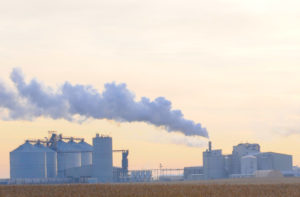 Ethanol production took a dive last week along with the temperatures as the polar vortex that hit most of the country led to electricity outages, major disruptions in the natural gas market, and transportation issues.
  The board of
  Pam has been involved in the ethanol industry since 2004. At that time, she was an elected official, serving as a county commissioner in Northeast Nebraska. As such, she created the Dakota County Economic Development Committee. A thorough SWOT analysis of the county led to the genesis of Siouxland Ethanol as an economic development project. Pam became one of the original founders of Siouxland Ethanol, wrote the business plan for the company, and became passionate about the value-added benefits of this clean source of octane. Siouxland Ethanol began as a 50 million gallon dry mill ethanol plant in Jackson, Neb., in 2007 and has expanded to producing more than 90 million gallons of ethanol a year.
 Do Low Carbon Fuel Standard (LCFS) policies conflict or complement the Renewable Fuel Standard (RFS)? That was the question Dr. Jarrett Whistance with the
  The
The 
 U.S. Representatives Angie Craig (D-MN) and Dusty Johnson (R-SD) led the Congressional Biofuels Caucus in introducing bipartisan legislation last week to ensure transparency and predictability to the Environmental Protection Agency’s small refinery exemption (SRE) process.
 Biofuels organizations filed comments this week opposing requests from refiners, several state governors, and an environmental organization that the Environmental Protection Agency waive 2019 and 2020 Renewable Fuel Standard volumes.
  Last year’s