

 For those of you not familiar with an FDA, Food Additive Petition (FAP), the folks at Phibro Chem’s Ethanol Performance Group can help you understand what it means to ethanol producers. They market the antimicrobial product, Lactrol.
We normally think of the EPA when it comes to governmental regulations in this industry but FDA is getting more involved. That’s why a company like Phibro, with years of experience dealing with the agency because of the animal health side of their business is probably a little ahead of the curve on this.
I spoke with Richard Coulter, VP, Scientific & Regulatory Affairs and Paul Duquette, Director, Global Regulatory Affairs during the Fuel Ethanol Workshop about this issue. You can see their whole team that attended the conference in the picture.
Richard said they were attending to “talk to producers to inform them of what we’re doing in the regulatory process.” He wants them to know they’re staying on top of it. He says that late in 2008 the FDA decided to join with the EPA and USDA in regulating biofuels due primarily to distillers grains being fed to animals. He says that it’s important for producers to work with suppliers that know how to deal with the total regulatory process. It sounds like Phibro knows how when it comes to the FDA.
Paul says that when it comes to the Food Additive Petition there’s a learning curve going on between the industry and FDA. He says FDA has made it clear that everything that goes into the production of ethanol must be AAFCO approved, GRAS approved, have a regulatory or enforcement discretion letter and then the FAP. Both Richard and Paul say the industry is facing more regulation in the future.
2009 Fuel Ethanol Workshop Photo Album
You can listen to my interview with Richard and paul below:
 “Good faith negotiations and old fashioned horse sense led to a deal that achieves both our energy security and environmental goals,” said RFA President Bob Dinneen. “By ordering further review of the controversial theory of international indirect land use change, Congress can allow science to catch up with policy goals.”
 The final in a series of Farm Foundation conferences looking at agricultural issues in the modern economy will be held next week in Little Rock, Arkansas and will focus on extension services and renewable energy.
 In what could be considered a paradox, an oil company has a car that won’t need any non-renewable petroleum.
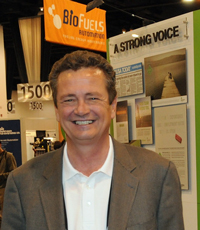 “I think everyone is really interested in moving forward,” Buis said. “Obviously we are going through some rough spots, economically, but I think people are optimistic and at the end of the day we will all win.”
 A Minnesota biodiesel facility is getting a $25 million USDA Rural Development loan that will help the refinery expand the number of feedstocks it is able to turn into the green fuel… including the by-product of another green fuel:
 USDA Rural Development is providing SoyMor Biodiesel a $25 million guaranteed loan to purchase equipment that will enable SoyMor to convert multiple types of feed stocks, including an unrefined corn oil waste product from nearby ethanol facilities, into biodiesel. In its current configuration, the plant only has the ability to process soybean oil.
 The main focus of the new $6 million, 11,000-square-foot
  The world’s energy paradigm is shifting and this shift is going to affect every company, CEO, and person in the world. But how? It’s a question I’ve often wondered about so this week I read, “Energy Shift: Game-Changing Options for Fueling the Future.” This book was unique in that it targets business leaders and helps them understand the major forces that are changing how business is being done today. The authors Eric Spiegel and Neil McArthur both work for
 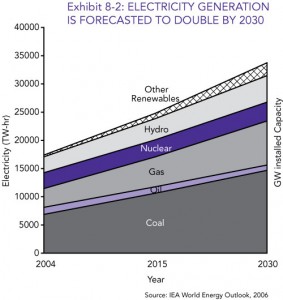 “One additional factor that may push demand even higher in the future is the advent of electricity as an alternative energy source for transportation: the the extent that
  Everything. According to the
  I reported several months ago about