

Farm state lawmakers led by Rep. Collin Peterson (D-MN) have reached a compromise with Democratic leadership in the House on the so-called climate change bill that makes it more palatable to agriculture and biofuels interests.
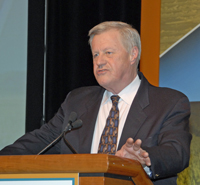 Part of the agreement includes allowing USDA to have oversight for agricultural carbon offset programs instead of EPA. “The climate change bill will include a strong agriculture offset program run by the U.S. Department of Agriculture that will allow farmers, ranchers, and forestland owners to participate fully in a market-based carbon offset program,” said Peterson. “This agreement also addresses concerns about international indirect land use provisions that unfairly restricted U.S. biofuels producers and exempts agriculture and forestry from the definition of a capped sector.”
The compromise over indirect land use issue was that bill sponsor Henry Waxman (D-CA) will ask the EPA to commission a study of indirect costs and that any method of counting those costs should be agreed to by both USDA and EPA.
Tom Buis, CEO of Growth Energy, was pleased that Peterson and Waxman were able to reach a compromise on the issue. “We believe that additional study of the issue of indirect land use change will further demonstrate that these provisions should never have been a part of the 2007 energy law to begin with,” Buis said in a statement. “This is a good first step in a longer process, including full review by the House and Senate.”
The American Clean Energy and Security Act is expected to come up for a vote on Friday and President Obama encouraged passage during his press conference yesterday. “It is legislation that will finally spark a clean energy transformation that will reduce our dependence on foreign oil and confront the carbon pollution that threatens our planet,” Obama said.
 According to the Governors Biofuels Coalition, U.S. Energy Secretary Steven Chu said in Des Moines the nation’s car manufacturers ought to make all new automobiles able to run on E85 ethanol-blended fuel. But Chu said the government could face resistance should it insist on the new standard, despite two of the nation’s three main automakers’ having recently filed for bankruptcy protection.
 This edition of the Ethanol Report features comments from
  The world’s biggest car maker is promising to launch a new fuel-cell car by the year 2015.
 A wind farm capable of generating power for 40,000 homes has been completed near the Western Oklahoma town of Elk City.
 Using 82 Acciona Windpower 1.5 MW wind turbines, Red Hills Wind Farm will generate enough clean energy to power over 40,000 U.S. homes and offset approximately 294,000 tons of carbon emissions annually. The Red Hills facility is spread across 5,000 rural acres. With the exception of the small footprint made by the 82 turbines, at about 1 acre each, land use is dominated by cattle grazing which coexist with the wind energy production.
 A year after opening on the Houston Ship Channel, the nation’s biggest biodiesel plant has a “for sale” sign out on its lawn.
 Kristy Moore received the Award of Appreciation from
  With RFA, Moore works on a number of technical and safety issues important to the ethanol industry and oversees the Technical Committee, the longest standing committee within the RFA. Moore and the committee have been responsible for increasing market share for ethanol, including opening new markets for ethanol including the southeastern states.
 If you’re interested in learning something about pitching stories to bloggers you might want to participate in a today’s webinar that’s part of the
  Students in Minnesota and South Dakota are the latest recipients of Clean Air Choice Scholarships.