

 The World Bank received a failing grade this week for its lack of support to developing countries trying to implement biofuels project. The “F” comes from the Global Renewable Fuels Alliance (GRFA) representing over 65 percent of the world’s biofuels production from 44 countries.
In a letter to Robert Zoellick, President of World Bank, from Bliss Baker, President of the GRFA, Baker wrote, “I am writing to you to express our deepest concern that the World Bank is failing developing countries in their desire to develop sustainable biofuels industries and relieve their crippling reliance on imported crude oil. Your Bank remains on the sidelines without any commitment to investing in biofuels projects while many developing countries look for scarce capital to build local projects.”
The GRFA continues to call on the World Bank to support the development of biofuels in regions that are in desperate need of relief from their dependence on foreign oil. However, despite pleas from various organizations, the World Bank remains indifferent.
Baker noted that, ”Thirty-eight of the forty-five poorest countries on earth are net importers of crude oil yet many of these underdeveloped countries possess vast amounts of biomass and potential for sustainable biofuels production.”
It is estimated that by 2050, biomass theoretically could supply 65 percent of the world’s current energy consumption, with sub-Saharan Africa, the Caribbean, and Latin America accounting for roughly half of this global potential. Several potential projects have emerged in Malawi, Zambia, Mozambique, Sudan and South Africa looking to attract investment; however, access to investment funds have been scarce.
Andrew Makenete, President of the Southern African Biofuels Association commented, “We see what many western countries have been able to accomplish in terms of energy security and attracting investment into the agricultural sector by building vibrant biofuels industries. We know that with the right support we can replicate this remarkable accomplishment here in Africa.”
 Tom Buis, CEO of
 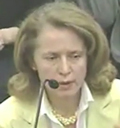 The blunder occurred when Rep. Aaron Schock (R-IL) asked Ms. Oge, who is responsible for regulating all emissions within the United States, about the indirect land use issue. “It’s my understanding that the EPA’s Renewable Fuels Standard 2 methodology assumes that for every acre of soybean crop that is used to produce biofuel, an equal acre of ground is used in the Brazilian rainforest to replace that acreage, is that correct?” asked Schock.
 In one of three recent videos posted by the ethanol organization, RFA Vice President of Research Geoff Cooper says the 2009 corn crop is going to be another huge crop. “Probably the second or third largest crop in history,” Cooper says. “Which will be more than sufficient to meet very strong demand for livestock feed, for exports and what will likely be record demand for ethanol production. All of those demands will be met and there will still be a healthy surplus of corn left.”
 Two Arizona State University researchers working on biodiesel projects have been nominated for the 2009 World Technology Award, which recognizes individuals and corporations from 20 technology-related sectors.
 Scientists Qiang Hu and Milton Sommerfeld in the College of Technology and Innovation at ASU’s Polytechnic campus, have been selected as nominees for the award for their work with algal feedstocks and biodiesel fuel. In November 2008, TIME magazine selected the researchers’ work as one of the top 10 best innovations for 2008.
  According to Terry Francl, senior economist with the
  In a move to fight a proposed change that would basically shut out soy-based biodiesel… the bulk of the nation’s biodiesel production… from the Renewable Fuels Standard, the National Biodiesel Board has launched a Web site to give people the tools to make comments on the Environmental Protection Agency’s proposal.
 Dear Biodiesel Stakeholder:
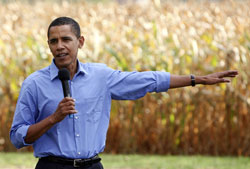 The Obama administration embarked on a
  Investors are getting back into green investing in a big way, and venture capital into solar and biofuels are two of the big drivers.
 CEO Tom Buis says they created the eTeam to be “an army of thousands of ethanol consumers and supporters who are willing to take action to spread the message that ethanol is a clean, green renewable fuel available today.”