

 Yesterday, I told you about how a biodiesel-fueled motorcycle is taking off for a 12,000-mile trip around Australia. Now, a restored 1965 Porsche made to run on biodiesel will take part in race around Newfoundland, Canada.
This article from the Rochester (NY) Democrat and Chronicle says local audiologist Steve Hart and his friend Tom Megan will compete in the Targa Newfoundland, a 1,400-mile road rally around the Canadian island:
They’ll be driving Megan’s souped-up 1965 Porsche, calling it the “Race for Hearing” to raise money for hearing aids, raise awareness of hearing loss and raise (civilized) hell on twisting two-lane roads, all on carbon-neutral, biodiesel fuel from a local source.
Four years ago, Megan decided to restore the ride. He grinded it down to the metal, welded away the rust and popped in a 1985 VW engine that runs on vegetable oil.
“I wanted to build a car that had good performance and 50-plus miles to the gallon,” says Megan. “There won’t be another car in the Targa that runs on less fuel.”
Targa’s race organizers say theirs is the first car to compete on pure biodiesel.
The five-day race starts Saturday and is expected to draw 300,000 spectators.
You can follow the racers on the Race for Hearing blog, and you can see some pretty neat pictures of the restoration of this classic Porsche here.
 The energy company serving Philadelphia with electrical power is going to use its own product to run some of its vehicles.
 The potential of a historic corn crop in the United States – planted on fewer acres – demonstrates the country’s farmers can produce more than enough corn for both food and ethanol production, said Tom Buis, Chief Executive Officer of
  The new category was introduced by the Dakar Rally organizers at the request of Brazilian rally veteran and former rally winner Klever Kolberg, who will drive the first-ever flex-fuel vehicle to take part in the prestigious race next year – a Brazilian-made 2010 Mitsubishi Pajero Sport model equipped with flex-fuel technology, with support from the
  This edition of “The Ethanol Report” features an interview with
 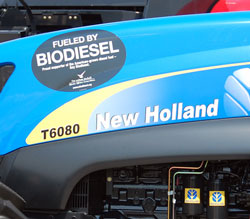 New Holland sponsored coverage of last week’s Farm Progress Show on our sister website,
  The clock is ticking down on the comment period for the expanded Renewable Fuels Standard, better known as RFS2. The Environmental Protection Agency will be taking comments until September 25th – just 18 days from now.
 Dinneen calls the principal of indirect land use being considered by the EPA “not just not scientifically sound, but silly” because it literally equates an acre of land used to grow ethanol in the United States with an acre of Brazilian land forest being destroyed. “This is a very big issue and we’re a long way from having it resolved.”
 CEO Leonard Kosar says America needs a hero in the biofuels business. “HERO BX stands for high-quality biodiesel and that is what we produce everyday using multiple feedstocks,” said Kosar. “In the future, we will utilize our proprietary blending technology to determine what the most efficient and cost competitive second and third generation feedstocks are and add them to our feedstock portfolio. We are not only a biodiesel company, we are a fuel technology company.”
 Two years ago, a biodiesel-powered motorcycle made a 3,000 km (1,800 miles) trip across Australia(see
  I was going to begin my review with a bad cliche, “solar never sleeps,” but alas it does since it harnesses the energy of the sun. But I couldn’t think of anything else clever so I decided to run with it. This week I reviewed the book, “