

Coskata Inc., has finally unveiled it’s “semi-commercial flex ethanol facility” to the world today with the New York Times taking the lead. In the article author Matthew Wald writes, “The facility, built by a company called Coskata, is not quite proof that a new era is at hand for American transportation fuels. But with the company claiming it will be able to convert wood waste into biofuel for about $1 a gallon, the plant suggests that day may be drawing nearer.”
Project Lighthouse (the name for the plant) will be able to reduce greenhouse gasses by as much as 96% over gasoline while using half of the water per gallon as compared to producing a gallon of gas. The company also claims that its process is as much as 7 times as energy positive as the fossil fuel used in the process.
In a press statement, Bill Roe, Coskata’s President and CEO said, “We are proud that we have successfully scaled our technology to this significant level. This facility is demonstrating that our efficient, affordable and flexible conversion technology is ready for commercialization. The next step is to build full-scale facilities and begin licensing our technology to project developers, project financiers and strategic partners.” Long-term, Coskata will commercialize their plants between 50-100 million gallons per year.
The difference in Coskata’s flex ethanol facility is that it will be producing ethanol from numerous feedstocks, including wood biomass, agricultural waste, sustainable energy crops, and construction waste. The feedstock flexible nature of this approach, says the company, is that it allows for true geographic flexibility, meaning facilities can be built anywhere a feedstock can be sourced or delivered.
Multiple feedstock use has proven to be financially rewarding as last month, HERO BX’s CEO Leonard Kosar noted in a media call that their company will be using 15 different feedstocks to profitably produce biodiesel this year.
Roe concluded by saying, “Coskata leverages proprietary microorganisms and efficient bioreactor designs in a unique three-step conversion process that can turn virtually any carbon-based feedstock into ethanol, from anywhere in the world. Coskata’s biological fermentation technology is ethanol-specific and enzyme independent, contributing to high energy conversion rates and ethanol yields.”
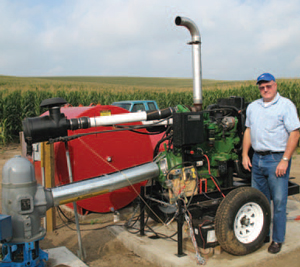 You can’t burn ethanol in a diesel engine. Nope. Just not done. Like mixing oil and water.
  In this edition of the Domestic Fuel Cast, listen to Bob and Ron as they discuss how this process works and how it will help renewable fuels meet the next round of emission requirements set to kick in in 2011.
 The full study, based on the GREET model for corn ethanol emissions, can be downloaded
 “This kind of research has global implications for climate change, energy security and the long-term stability of our local and national economy, particularly as it can help develop the rural infrastructure and jobs we need,” said Barbara Wells, president and CEO of ArborGen.
 This edition of “The Ethanol Report” features comments from Geoff Cooper with the
 Renewed World Energies Corp. is working on turning a 5 acre site into an algae biomass farm that will make biodiesel as well as producing electricity at Georgetown, South Carolina with hopes of being in production by late next year.
 A new study shows that the ultimate form of solar power could be biodiesel.
 Dallas-based
  The Midwest is prime real estate for