

Electric vehicles will be the big talk of this year’s North American International Auto Show (NAIAS) in Detroit, Michigan.
Design News says the event, which takes place over the next two weeks, will give more than 500,000 visitors the chance to see the latest and greatest in auto technology, including the green-powered ones.
 One key for the giant exhibition, traditionally a showplace for production vehicles, is the addition of a 37,000-sq-ft display area called Electric Avenue. The new area will serve as an expo for 12 manufacturers of electric vehicles, ranging from traditional automakers, such as Nissan and Mitsubishi, to entrepreneurial firms, such as SSI Racing and Saba Motors. Electric Avenue will be sponsored by Dow Chemical Co., which is involved in the development of electric vehicle battery technology.
“It’s an excellent venue for the public to see some of the vehicles that you don’t normally hear about,” noted Bill Perkins, president of Detroit Auto Dealers Assn. (DADA).
The article goes on to say that Electric Avenue will be complemented this year by a display area known as EcoXperience, which will provide visitors with a look at the battery and electric motor technology that’s making its way into the auto industry.
 Company investigators say they have found the cause of the explosion last month at the Imperium Renewables biodiesel plant near Grays Harbor, Washington state.


 As the EPA gets closer to implementing the new Renewable Fuels Standard (RFS-2), those attending this year’s
  “Because oil is a limited commodity and it is my feeling that big oil sees the ‘handwriting on the wall’” says Lee. “They know that alternative fuels are here to stay” adds Mike Shook, partner in Agri Process Innovations. Shook adds that “just as government inaction made the smaller producers nervous, I look back at 2009 and note the massive investments that big oil has made in this industry”. Both Lee and Shook agree that the biodiesel industry is headed up in a big way. “This industry will continue to adjust to problems, and it will continue to grow” says Lee, “and just like many industries before it, the inefficient players will shake out and the efficient players will make money”.
 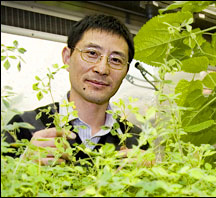 “Increasing the ‘digestibility’ of plant matter is one main approach to making plants a viable alternative energy source,” said Brookhaven biochemist Chang-Jun Liu. Plants with less lignin in their cell walls are easier to break down and convert to fuel products.
 This week, the
  The first issue of the